Archery has a quiet way of demanding your full attention. When everything is in place—your stance, your breath, your focus—it feels steady and rewarding. But that experience can fall apart quickly if you arrive at the range or your practice spot and realize something important is missing.
Forgetting a piece of gear isn’t just inconvenient. It can interrupt your session, limit what you’re able to practice, or even create safety concerns. And for many people, especially those still building their routine, it’s a surprisingly common problem.
Getting ready for archery doesn’t need to feel complicated. With a simple approach and a bit of structure, you can make preparation feel calm, consistent, and reliable.
Why It’s Easy To Forget Archery Gear
Archery setups often grow over time. What starts as a bow and a few arrows gradually expands to include protective gear, maintenance tools, spare parts, and small accessories that all serve a purpose.
The challenge is that many of these items aren’t used every single time—or they’re stored in different places. A finger tab might be tucked into a pocket from your last session. Your arm guard might be drying somewhere after use. Tools and spare parts might be stored separately from your main gear.
Without a consistent system, your preparation relies on memory. And memory tends to fall short when you’re busy, distracted, or getting ready in a rush.
The Real Cost Of Missing Small Items
It’s easy to think of small pieces of gear as optional—until they’re not there.
For example:
- Missing an arm guard can make shooting uncomfortable or unsafe
- Forgetting a release aid or finger tab can disrupt your technique
- Leaving behind a bowstring accessory or tool can prevent quick adjustments
- Not having water or snacks can shorten your practice session unexpectedly
These aren’t major failures. But they create friction. And over time, that friction can make it harder to stay consistent with your practice.
Start With A Simple Core Setup
Before trying to organize everything, it helps to define your core setup—the items you almost always need.
For most archers, this includes:
- Your bow
- Arrows
- Quiver
- Basic protective gear (arm guard, finger tab or release aid)
- Target or access to a range
If you’re newer to archery, keeping your focus on this core set helps reduce overwhelm. You don’t need to account for every possible accessory right away. You just need a reliable starting point.
Once this becomes familiar, you can gradually expand your setup with additional items like maintenance tools, spare parts, and specialized gear.
Build A Consistent Packing Routine
One of the most effective ways to avoid forgetting gear is to stop treating packing as a one-time task and start treating it as a repeatable routine.
Instead of asking, “What do I need today?” each time, you create a simple sequence you follow before every session.
For example:
- Gather your core gear
- Check protective equipment
- Add accessories or tools if needed
- Pack personal items (water, snacks, weather-appropriate clothing)
The goal isn’t perfection. It’s consistency. When you follow the same steps each time, your brain doesn’t have to work as hard to remember everything.
Keep Your Gear In One Place When Possible
A common reason items get forgotten is that they’re stored in different locations.
If your arrows are in one room, your accessories in another, and your protective gear somewhere else, it increases the chances that something gets missed.
Even a partial solution can help. For example:
- Use a dedicated range bag for smaller items
- Keep your most-used gear together
- Store backup items in a consistent place
You don’t need a perfect system. Just reducing the number of places you have to check can make preparation much smoother.
Prepare Before The Day Of Your Session
Getting ready right before you leave often leads to rushed decisions and overlooked items.
Instead, try preparing your gear the day before when you have a bit more time and attention.
This allows you to:
- Notice missing or worn items
- Replace or repair gear if needed
- Pack calmly instead of rushing
Even a few extra minutes of preparation can make a noticeable difference in how your session feels.
Where Most People Lose Track
Even with good intentions, it’s easy to lose track of what you’ve packed—especially as your setup becomes more detailed.
Common situations include:
- Thinking something is already in your bag when it isn’t
- Forgetting less frequently used items
- Skipping a check because you’re short on time
- Packing slightly differently each session
This is where having a simple external system can help. Instead of relying on memory alone, you give yourself a consistent reference point.
A Simple Way To Stay Organized Without Overthinking It
You don’t need a complicated system to stay organized. In fact, simpler usually works better.
A straightforward checklist can act as a quiet guide during your preparation. It doesn’t replace your routine—it supports it.
Instead of trying to remember everything, you can:
- Quickly scan what you’ve already packed
- Catch anything you may have missed
- Stay consistent across different types of sessions
Over time, this kind of structure reduces the mental effort involved in getting ready. It becomes less about remembering and more about following a familiar process.
Let Your Setup Evolve With Your Experience
As you spend more time with archery, your needs will naturally change.
You might:
- Add new equipment
- Adjust your practice style
- Prepare differently for competitions or hunting trips
Your preparation system should evolve along with you. What works now doesn’t need to be permanent—it just needs to work for your current stage.
Staying flexible while maintaining a simple structure helps you adapt without losing consistency.
Making Preparation Feel Like Part Of The Practice
Preparation doesn’t have to feel like a separate chore. It can become part of your overall rhythm as an archer.
When your gear is ready and organized:
- You start sessions with less stress
- You stay focused on technique and improvement
- You avoid unnecessary interruptions
It’s a small shift, but it supports a more steady and enjoyable experience over time.
A Practical Way To Support Your Routine
If the hardest part is keeping track of everything consistently, having a simple reference can make preparation easier.
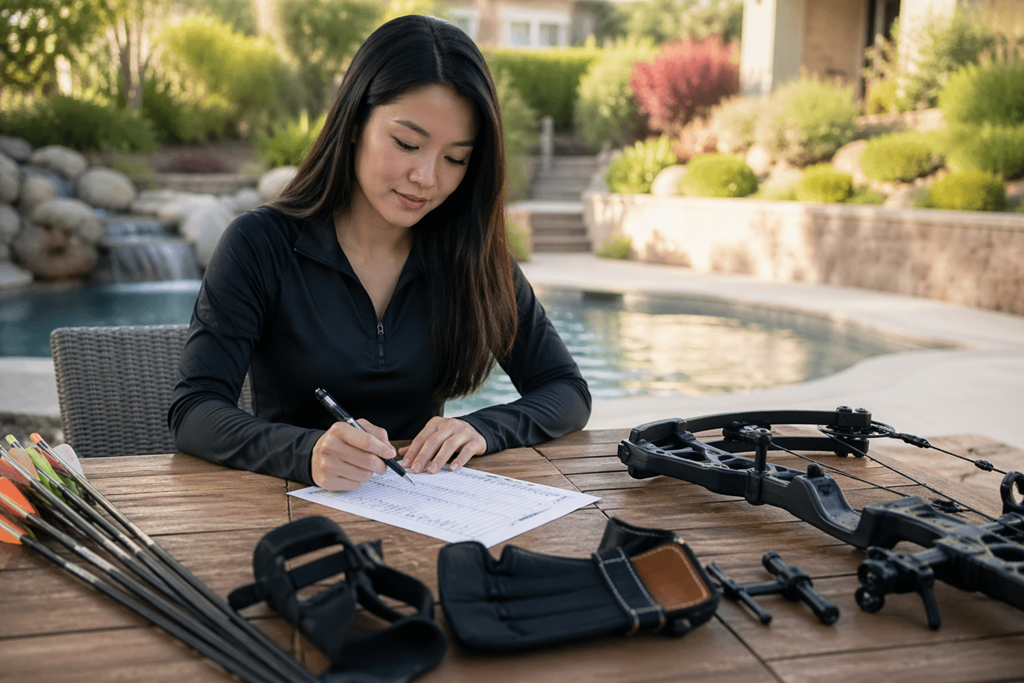
The Archery Equipment Checklist is designed to give you a clear, organized way to review your gear before each session, so you can pack with confidence and focus more on your time practicing.
Closing Thoughts
Archery is built on small, consistent actions. Preparation is one of those actions.
You don’t need a perfect system or an extensive setup. You just need a simple, reliable way to make sure the basics are covered.
When you remove the friction of forgotten gear, you give yourself more space to focus on what matters—your form, your focus, and the steady progress that comes with practice.
Download Our Free E-book!