Snorkeling often looks effortless from the outside. People float peacefully above clear water, moving slowly, watching fish drift by. For first timers, though, that calm scene can feel far away. Unfamiliar gear, open water, and the simple act of breathing through a snorkel can create tension before the mask even goes on.
That reaction is normal. Most snorkeling mistakes happen not because people lack ability, but because they rush, overthink, or feel pressure to “do it right.” With the right mindset and a few smart adjustments, snorkeling becomes far more comfortable and enjoyable than many beginners expect.
The goal here is not to turn anyone into an expert. The goal is to help first timers feel safe, relaxed, and confident enough to enjoy the experience without unnecessary stress. These tips focus on what actually helps in real situations, based on common beginner struggles and simple solutions that work.
1)) Start With Calm Shallow Water Every Time
One of the most common mistakes first timers make is choosing the wrong environment. Beautiful photos often come from deeper water or open ocean locations, but beginners benefit most from calm, shallow areas where standing up is always an option.
Shallow water offers reassurance. Knowing that feet can touch the bottom at any moment reduces anxiety and allows breathing to settle naturally. Clear visibility and gentle movement make it easier to focus on floating rather than staying upright.
Calm conditions matter more than scenery. A quiet cove or protected beach usually provides a better first experience than a dramatic reef with waves and currents. When the body feels safe, the mind relaxes, and everything else becomes easier.
2)) Practice Breathing Before Entering The Water
Breathing through a snorkel feels unfamiliar at first, even for strong swimmers. Many beginners step into the water without practicing, then feel startled when their breathing sounds louder or slower than expected.
Taking a few minutes to practice on land helps remove that surprise. With the mask and snorkel on, breathe slowly through the mouth. Focus on steady inhales and relaxed exhales. There is no need to take deep breaths. Natural breathing works best.
Once breathing feels calm on land, repeating the same rhythm in shallow water feels far less intimidating. This simple step prevents panic more effectively than almost any other preparation.
3)) Make Sure The Mask Fits Comfortably
A poorly fitting mask causes frustration fast. Leaks, pressure points, and constant adjustments distract from the experience and create stress that beginners often mistake for fear of the water.
A good mask seals gently against the face without straps pulled tight. When testing fit, place the mask on the face without using the strap and inhale slightly through the nose. If it stays in place comfortably, the fit is likely correct.
Tightening the strap too much often makes leaks worse. Comfort should always come first. When the mask feels natural, attention shifts away from gear and toward the underwater world.
Pro-Tip For First-Time Snorkelers: One of the smartest ways to avoid common beginner mistakes is to use your own snorkeling gear instead of relying on rentals. A properly fitted mask, comfortable fins, and a high-quality snorkel improve breathing, reduce leaks, and help you stay relaxed in the water. For those living in tropical locations, owning personal snorkeling gear means you can snorkel more often, build confidence faster, and enjoy consistent comfort every time you head out. Investing in high-quality equipment also lasts longer, performs better, and makes each snorkeling session safer and more enjoyable.
4)) Slow Down Everything From The Start
Many first timers kick too hard, move too fast, and tire themselves out quickly. This usually comes from nervous energy rather than a lack of skill.
Snorkeling works best at a slow pace. Gentle fin movements conserve energy and keep breathing calm. Floating is not a race. Fish are more likely to appear when the movement is quiet and relaxed.
Slowing down also improves balance and buoyancy. The slower the body moves, the easier it becomes to stay afloat without effort. Fatigue decreases, confidence grows, and enjoyment increases naturally.
5)) Use Fins Even In Shallow Water
Some beginners avoid fins, thinking they complicate things. In reality, fins make snorkeling easier, not harder.
Fins provide gentle propulsion with minimal effort. Instead of kicking constantly, the legs glide smoothly through the water. This reduces strain, prevents cramps, and helps maintain balance.
Short beginner fins work well and do not require strength. They support relaxed movement and help first timers feel more stable and in control, especially when currents are mild but noticeable.
6)) Float First Observe Second
Trying to look around immediately can overwhelm the senses. A better approach is to float calmly for a moment before actively observing anything.
Allow the body to settle on the surface. Let the water support weight. Focus on breathing until it feels steady. Once floating feels natural, looking down becomes effortless.
This order matters. Floating first creates confidence. Observing second brings enjoyment. Rushing the process often leads to tension and unnecessary adjustments.
7)) Keep The Head Neutral And The Body Flat
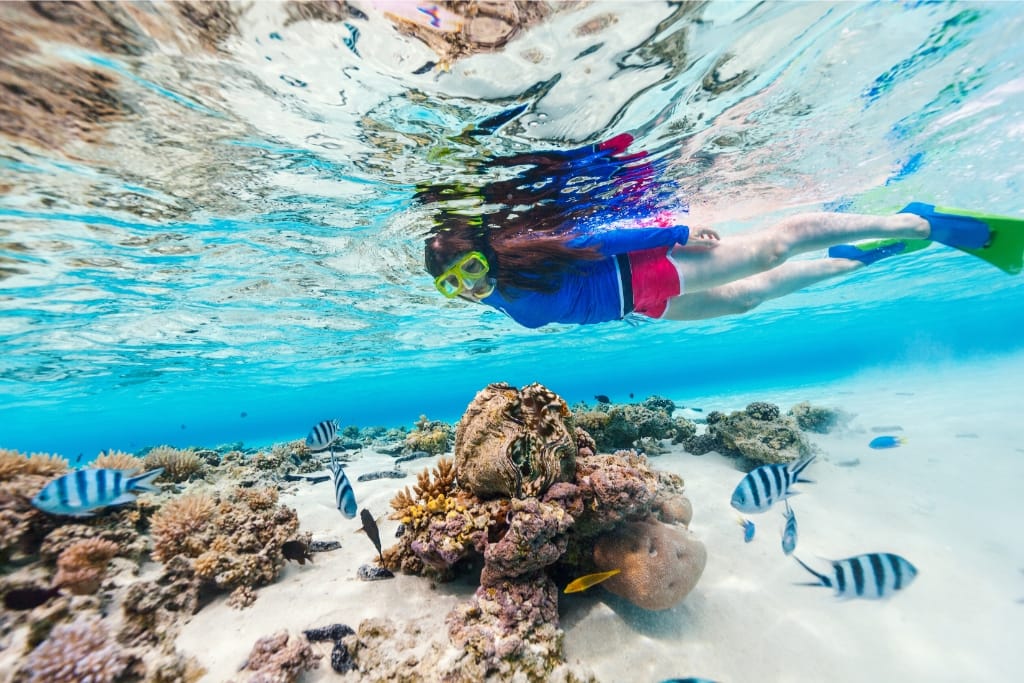
Beginners often lift their heads to look forward, which causes the legs to sink and makes floating harder. Snorkeling works best when the body stays horizontal, and the face looks down.
Keeping the head neutral allows the lungs to act as natural flotation. The body stays balanced with less effort. Fins move smoothly rather than struggling to stay afloat.
Trusting the water takes practice, but proper body position makes it far easier. When the body floats naturally, snorkeling becomes calm instead of tiring.
8)) Respect Conditions Without Fear
Ocean conditions change. Waves, wind, and visibility all affect comfort levels. Paying attention to these factors helps first timers make smart decisions without creating worry.
If the water feels choppy, staying close to shore or choosing another time is reasonable. If visibility is poor, expectations can shift toward relaxation rather than sightseeing.
There is no need to push through discomfort. Choosing conditions that match experience level leads to better memories and fewer mistakes. Comfort is a form of safety.
9)) Take Breaks Before You Feel Tired
Fatigue often sneaks up on beginners. Taking breaks early helps prevent stress and keeps energy steady.
Floating on the back, holding onto a flotation device, or returning to shallow water for a moment allows breathing to reset. These pauses support relaxation and prevent small issues from turning into bigger problems.
Snorkeling rewards patience. Resting is part of the experience, not a sign of weakness.
10)) Stay Aware Without Constant Worry
Awareness helps first timers stay safe without becoming tense. Noticing surroundings, keeping track of distance from shore, and checking in with a snorkeling partner creates reassurance.
Constant scanning for danger is unnecessary. Calm awareness works better than fear-based vigilance. Trust grows when the environment feels familiar and manageable.
A relaxed mindset allows smart decisions to happen naturally rather than reactively.
11)) Snorkel With A Buddy Whenever Possible
Snorkeling with another person adds comfort, especially for beginners. Knowing someone is nearby reduces anxiety and increases confidence.
A buddy does not need to be an expert. Simply sharing the experience creates reassurance. Taking turns resting or pointing out interesting sights makes snorkeling more enjoyable.
Even in shallow water, companionship matters. Confidence grows faster when the experience feels shared rather than solitary.
12)) End The Session On A Positive Note
Knowing when to stop is just as important as knowing how to start. Ending a session while energy remains leaves a positive impression and builds excitement for the next outing.
Pushing too long often leads to fatigue or frustration. Stopping early reinforces confidence and creates a sense of success.
Snorkeling improves with familiarity. Each calm experience builds comfort for the next one.
Why These Smart Choices Matter For First Timers
Many people searching for snorkeling tips for first timers worry about doing something wrong. The truth is that most mistakes come from rushing or expecting too much too soon.
Smart snorkeling focuses on comfort, not performance. Calm breathing, slow movement, and thoughtful preparation prevent most beginner problems before they start. These habits make snorkeling accessible even to those who feel nervous around open water.
When snorkeling feels manageable, curiosity replaces concern. Confidence grows naturally, and the underwater world becomes a place of calm exploration rather than stress.
Building Confidence Over Time
Confidence does not appear all at once. It develops through small positive experiences. Each relaxed session reinforces the idea that snorkeling can be peaceful and enjoyable.
Revisiting these snorkeling tips for first timers before each outing helps reset expectations. There is no need to master everything. Comfort and enjoyment are enough.
Snorkeling is meant to be simple. When the body relaxes, and the mind follows, the experience becomes exactly what many first timers hope for: calm, beautiful, and quietly memorable.
Conclusion
Mistakes do not define a snorkeling experience. Learning what feels comfortable and what does not is part of the process. Staying patient with yourself matters more than doing everything perfectly.
With smart preparation and realistic expectations, first timers avoid the most common issues and gain confidence quickly. These snorkeling tips for first timers focus on what actually helps in the water, without overcomplicating the experience.
Snorkeling works best when approached gently. When comfort leads, confidence follows, and the ocean becomes a place to enjoy rather than endure.
Download Our Free E-book!