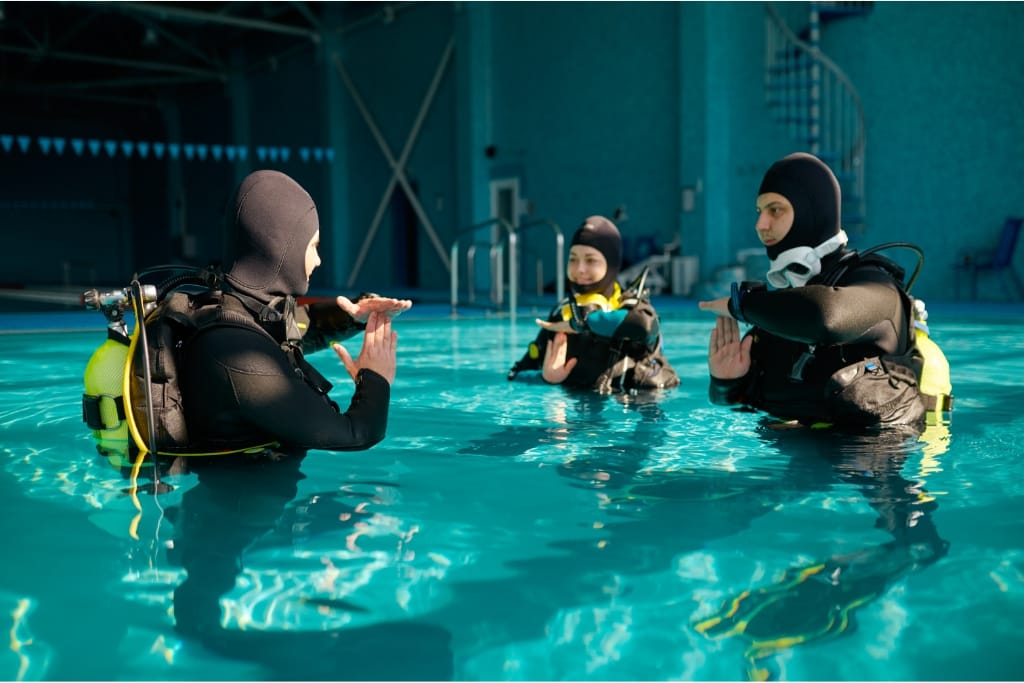
Starting a scuba diving lifestyle is an exciting endeavor. There’s curiosity, anticipation, and often a sense of personal challenge wrapped into that first certification card. At the same time, it’s normal to feel uncertain. Diving places us in an environment humans aren’t built for, and confidence develops through experience, not bravado.
Most early missteps aren’t about recklessness or poor judgment. They occur because new divers are still learning how their bodies, gear, and minds respond to underwater conditions. When we understand where problems usually arise, we can prevent them calmly and deliberately—without pressure, fear, or ego.
Below are the most common scuba diving mistakes new lifestyle divers make, why they happen, and how to avoid them while building confidence and enjoyment over time.
1)) Treating Certification as the Finish Line
Certification is a beginning, not a declaration of mastery. Many divers finish Open Water feeling unsure because the course teaches minimum skills, not long-term comfort.
Common signs that this mistake is happening:
- Feeling pressured to dive independently right away
- Assuming certification means “fully ready for anything.”
- Skipping practice dives because “we already passed.”
A better approach:
Use certification as permission to keep learning. Early dives should focus on repetition, comfort, and skill refinement. Buoyancy, trim, and air awareness improve rapidly when we treat the first 20–30 dives as practice, not performance.
Pro Tip: Certification isn’t the finish line—it’s the starting point. One of the easiest ways to keep building comfort and confidence after certification is by gradually investing in personal scuba diving gear that fits you. Owning basics like a well-fitting mask, fins, or dive computer helps reduce stress, improves consistency from dive to dive, and reinforces the habit of continued learning beyond the class. Exploring reliable scuba diving gear early supports skill development and keeps momentum going as you grow into the lifestyle.
2)) Rushing Skill Progression
There’s often a subtle pressure to advance quickly—deep dives, drift dives, wrecks, or night dives—before foundational skills feel automatic.
Why does this create problems:
- Stress increases faster than confidence
- Air consumption rises
- Decision-making becomes reactive
A better approach:
Progress when dives feel calm, not when they feel impressive. Comfort in shallow water with good buoyancy and situational awareness is the strongest predictor of long-term diving enjoyment.
3)) Diving While Sick, Congested, or Run-Down
This is one of the most underestimated scuba diving mistakes. New divers often don’t want to cancel a planned dive, especially on vacation.
Risks include:
- Ear or sinus injuries
- Difficulty equalizing
- Increased anxiety underwater
A better approach:
If equalization feels forced on land, it will feel worse underwater. Diving is optional. Health is not. Choosing to skip a dive is a mark of experience, not weakness.
4)) Overweighting “For Safety”
Many beginners add extra weight because sinking feels easier and floating feels risky. Unfortunately, this often creates more problems than it solves.
Overweighting leads to:
- Poor buoyancy control
- Constant BCD adjustments
- Increased fatigue and air usage
A better approach:
Use proper weighting checks and remove weight gradually as skills improve. Neutral buoyancy increases safety, control, and enjoyment.
5)) Ignoring Buoyancy Practice
Buoyancy isn’t instinctive. It’s a learned motor skill that improves with repetition.
When buoyancy is neglected:
- Reefs get damaged unintentionally
- Stress and task-loading increase
- Air consumption spikes
A better approach:
Treat buoyancy practice as foundational, not optional. Even five minutes per dive focused on trim and breathing control compounds into massive improvement over time.
6)) Poor Air Awareness
Running low on air rarely happens suddenly—it happens quietly. New divers often rely on guides or buddies instead of tracking their own pressure consistently.
Common causes:
- Infrequent pressure checks
- Overexertion
- Anxiety-driven breathing
A better approach:
Check the air early and often. Make it a habit, not a reminder. Calm breathing and good buoyancy do more to extend dive time than any technique or gadget.
7)) Relying Too Heavily on the Dive Guide
Guided dives are helpful, but they don’t replace personal responsibility.
Problems arise when divers:
- Stop monitoring depth and time
- Assume the guide is managing their air
- Lose situational awareness
A better approach:
Even on guided dives, we remain responsible for our own limits, air, and comfort. The guide enhances the dive; they don’t replace awareness.
8)) Weak Buddy Communication
Many divers enter the water together but don’t truly dive as buddies.
Common issues:
- Swimming too far apart
- No pre-dive communication
- Unclear signals underwater
A better approach:
Agree on hand signals, separation plans, and air checks before entering the water. Staying close reduces stress and increases safety for both divers.
9)) Not Planning the Dive (Even Simple Ones)
“Easy” dives still benefit from planning. Depth, time, entry, exit, and conditions matter more than many beginners realize.
Without planning:
- Safety stops get skipped
- Surface exits become stressful
- Air usage surprises happen late
A better approach:
Simple plans are enough. Know maximum depth, expected time, turn pressure, and exit strategy. Planning increases confidence, not rigidity.
10)) Buying Too Much Gear Too Soon
Excitement often leads new divers to buy full setups before understanding preferences or fit.
Common regrets include:
- Ill-fitting BCDs or wetsuits
- Features that go unused
- Expensive gear that feels uncomfortable
A better approach:
Rent, test, and borrow early. Buy slowly. Gear should support diving style and environment, not impulse.
11)) Skipping Equipment Maintenance Knowledge
Even rented gear requires a basic understanding. New divers sometimes assume “someone else handles it.”
Risks include:
- Missed leaks or malfunctions
- Poor pre-dive checks
- Overreliance on staff
A better approach:
Learn how equipment works and how to inspect it. Familiarity builds confidence and reduces anxiety underwater.
12)) Letting Fear or Ego Make Decisions
Fear and ego are opposite emotions, but both can drive poor choices.
Fear-based mistakes:
- Avoiding practice
- Panicking instead of pausing
Ego-based mistakes:
- Diving beyond limits
- Ignoring discomfort
A better approach:
Pause, breathe, and assess. There is always another dive. Calm decision-making is the most advanced diving skill.
13)) Forgetting That Diving Is a Long Game
Some divers burn out quickly because they expect rapid mastery or constant excitement.
This leads to:
- Frustration with slow progress
- Comparison with others
- Loss of enjoyment
A better approach:
Skill development happens quietly. Comfort builds dive by dive. The best divers aren’t rushed—they’re relaxed.
Conclusion
Most scuba diving mistakes aren’t dramatic. They’re small habits that quietly affect comfort and safety over time. When we slow down, practice intentionally, and permit ourselves to learn gradually, diving becomes what it’s meant to be—calm, immersive, and deeply rewarding.
A scuba diving lifestyle isn’t about collecting depth or certifications. It’s about building trust in ourselves underwater. Avoiding these early mistakes helps ensure that trust grows naturally, dive after dive, season after season.
Download Our Free E-book!