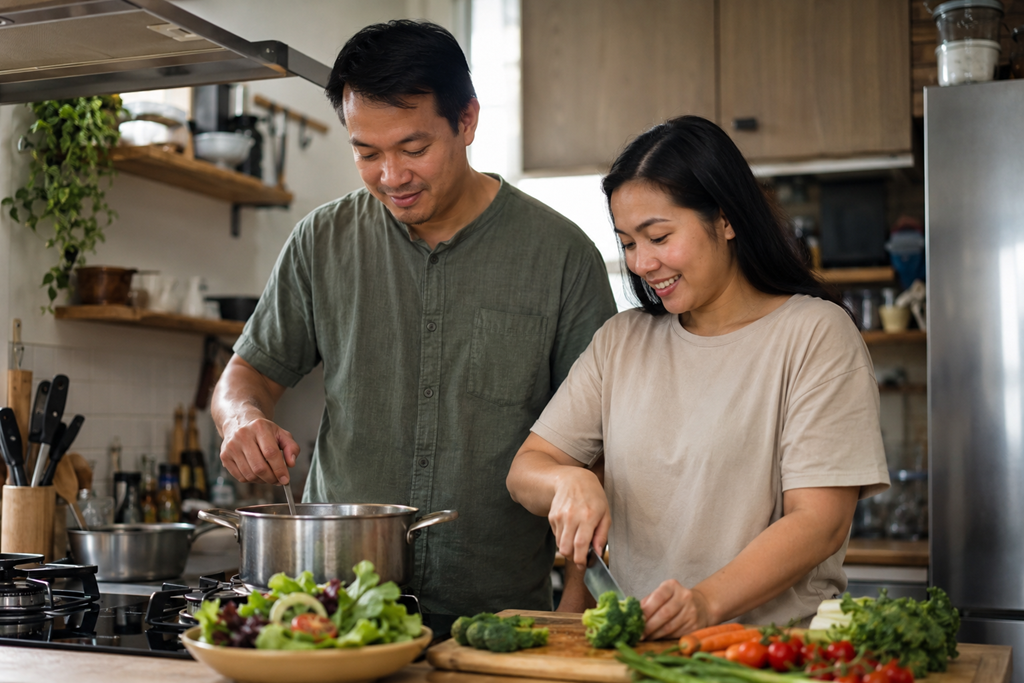
Cooking at home can support better health because it gives you more control over what goes into your meals, how much you eat, and how often you rely on convenience foods. It does not require extreme dieting, strict rules, or removing every food you enjoy. Often, the biggest health improvement comes from making everyday meals a little more balanced, a little more satisfying, and a little less dependent on last-minute decisions.
For many people, the idea of “eating healthier” feels exhausting because it gets tied to restriction. They imagine bland meals, complicated meal plans, expensive ingredients, or a long list of foods they are supposed to avoid. But home cooking can be a much calmer path. It can help you eat better without turning food into a project that takes over your life.
Healthier Eating Often Starts With Ordinary Meals
A home-cooked meal does not have to look like something from a wellness magazine to support your health. A simple dinner with protein, vegetables, a grain or starch, and some flavor can be enough. A bowl of soup, a homemade sandwich, a quick stir-fry, a sheet-pan meal, or leftovers from the night before can all be part of a healthier rhythm.
The benefit is not perfection. The benefit is awareness.
When you cook at home, you usually know more about what you are eating. You can decide how much oil, salt, sugar, sauce, or cheese to use. You can add vegetables without making them the entire meal. You can choose portions that feel satisfying instead of oversized. You can make food taste good while still keeping it grounded.
That kind of control matters because many health habits are shaped by small repeated choices, not dramatic changes.
Home Cooking Reduces the Need for All-or-Nothing Diet Thinking
Extreme dieting often creates pressure. It can make people feel like they are either “being good” or “starting over.” That mindset can be discouraging, especially when real life gets busy, stressful, or unpredictable.
Cooking at home offers a different approach. Instead of asking, “What am I allowed to eat?” it allows you to ask, “How can I make this meal support me a little better?”
That might mean adding a side salad to pasta. It might mean making tacos at home with beans, vegetables, and a reasonable amount of toppings. It might mean preparing breakfast instead of skipping it and overeating later. These are not extreme changes, but they can make meals more steady, filling, and nourishing.
The quiet advantage of home cooking is that it helps healthy eating feel less like punishment and more like care.
You Can Improve Meals Without Removing Enjoyment
One reason people resist healthier eating is that they assume it means giving up pleasure. But cooking at home can actually make food more enjoyable because you can adjust meals to your own taste.
You can use seasonings, herbs, citrus, garlic, onions, sauces, roasted vegetables, or comforting textures to make meals satisfying. You can keep familiar foods in your life while making small improvements around them.
For example, a homemade burger with a side of roasted potatoes and a simple salad may be more balanced than a fast-food version, even though it still feels familiar. A homemade pasta dish with vegetables and protein may be more supportive than takeout, even if it is not “diet food.” A homemade breakfast wrap may keep you full longer than grabbing a pastry on the run.
Better health does not always come from eating less. Sometimes it comes from eating meals that are more complete.
Cooking At Home Helps You Notice Patterns
When most meals come from restaurants, drive-thrus, delivery apps, or packaged convenience foods, it can be harder to notice patterns. You may not realize how often you are eating very large portions, drinking sugary beverages, skipping vegetables, or choosing foods that leave you hungry again quickly.
Home cooking creates more visibility.
You begin to notice which meals keep you full, which ones leave you sluggish, which snacks are really replacing meals, and which foods you reach for when you are tired. This awareness can support better choices without needing a strict diet plan.
It also helps you separate hunger from habit. Many people do not need more food rules. They need a clearer sense of what is actually happening in their daily routine.
The Goal Is Consistency, Not a Perfect Menu
A common misunderstanding is that cooking at home only counts if every meal is fresh, organic, beautifully plated, and nutritionally ideal. That belief can make home cooking feel intimidating before someone even starts.
In reality, consistency matters more than perfection.
Frozen vegetables count. Canned beans count. Store-bought rotisserie chicken can help. Leftovers count. Simple meals count. Repeating the same few meals during a busy season counts. A dinner that is “good enough” and made at home can still be a meaningful improvement over a pattern of constant takeout.
The point is not to become a perfect cook. The point is to build a rhythm that makes healthier eating easier to return to.
Simple Choices Can Make Home Meals More Supportive
Cooking at home supports health best when the meal is satisfying enough to prevent constant grazing later. That usually means including enough protein, fiber, flavor, and volume.
This does not have to be complicated. Adding beans to soup, eggs to breakfast, chicken to a salad, vegetables to pasta, or fruit to yogurt can make a meal feel more complete. Keeping a few easy ingredients available can also reduce the pressure to make every meal from scratch.
The more realistic the meal, the more likely it is to become part of your life.
That is where many extreme diets fail. They may work on paper, but they do not always fit ordinary evenings, family schedules, fatigue, budgets, preferences, or emotional stress. Home cooking can be flexible enough to meet real life where it is.
Healthier Cooking Does Not Have to Mean Cooking Every Meal
Another misunderstanding is that better health requires cooking all the time. That can make the whole idea feel impossible, especially for people with full schedules or limited energy.
Cooking at home can still help even if you only do it a few times a week. One homemade dinner can become leftovers. One simple breakfast routine can reduce rushed morning choices. One pot of soup can cover multiple meals. One planned grocery trip can make the week feel less chaotic.
The value is not in never eating out. The value is in creating enough home-based meals that your health is not completely dependent on convenience options.
That balance is often more sustainable than trying to overhaul everything at once.
Home Cooking Can Support a Calmer Relationship With Food
Food is not only about nutrients. It is also connected to comfort, family, culture, stress, pleasure, and routine. Extreme dieting can sometimes ignore that reality and turn eating into a constant mental negotiation.
Cooking at home can create a calmer relationship with food because it brings the focus back to nourishment, choice, and care. You are not just avoiding something. You are making something. You are giving yourself a meal that fits your life.
That shift can be powerful.
Instead of feeling like health requires a dramatic reset, you may start to see it as something you can support through ordinary meals, repeated often enough to matter.
A Better Way to Think About Healthy Home Cooking
Cooking at home supports better health when it makes your everyday meals more intentional, balanced, and satisfying. It does not need to be extreme. It does not need to be perfect. It does not need to follow a strict diet label.
A healthier meal can still be warm, familiar, flavorful, and simple.
The real benefit is that home cooking gives you a steady place to begin. It helps you make small adjustments without shame, pressure, or all-or-nothing thinking. Over time, those small adjustments can create a way of eating that feels more supportive, more flexible, and easier to live with.
Download Our Free E-book!