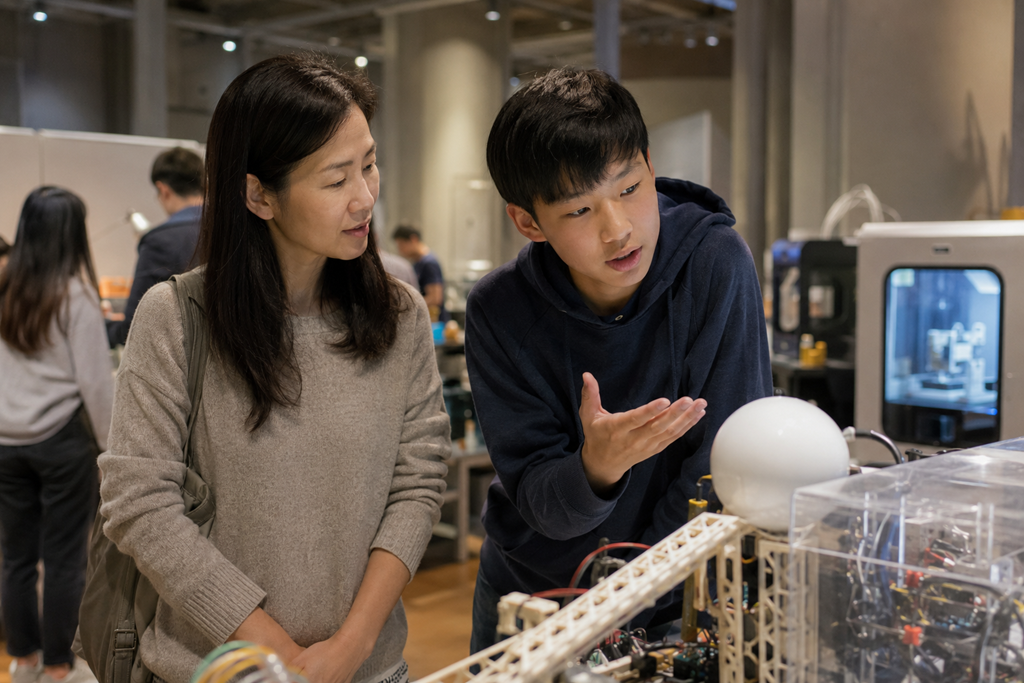
Parents can help teens prepare for an AI-shaped future by focusing less on predicting specific jobs and more on helping them build human skills that remain valuable across many kinds of work. These include communication, judgment, creativity, adaptability, problem-solving, emotional awareness, responsibility, and the ability to work well with other people.
That does not mean teens should ignore technology. It means they should learn how to use technology while also becoming the kind of person others trust, understand, and want to work with.
For many parents, this topic can feel confusing. AI seems to be changing school, work, and career planning all at once. A teen may wonder whether certain jobs will disappear. A parent may wonder whether college, trade school, internships, or creative paths still make sense. The pressure often comes from trying to know exactly what the future will look like.
But parents do not have to predict everything. A more useful goal is helping teens become flexible, thoughtful, capable learners who can adjust as work changes.
The Real Goal Is Not To Compete With AI
One of the biggest misunderstandings about AI is the idea that teens must become faster than machines or smarter than software. That is not the real goal.
AI can process information, generate drafts, summarize material, suggest ideas, and automate routine tasks. But it does not replace every part of human value. In many careers, people are still needed to ask better questions, notice context, understand emotions, make ethical choices, build trust, and decide what actually matters.
A teen who only learns how to complete assignments may struggle when the work changes. A teen who learns how to think, communicate, adjust, and take responsibility has more room to grow.
This is why parents can help most by developing the person behind the resume, not just the list of technical skills.
Communication Will Matter In Almost Every Career
Strong communication is one of the most practical skills a teen can build. It helps in school, part-time jobs, interviews, teamwork, customer service, leadership, entrepreneurship, and everyday problem-solving.
Parents can support this by encouraging teens to explain their thinking instead of only giving short answers. Ask what they noticed, why they made a decision, or how they would explain an idea to someone who is unfamiliar with it.
This does not need to become a formal lesson. Everyday conversations are enough. Talking through a disagreement, explaining a school project, writing a respectful email, or practicing how to ask for help all build communication skills.
AI may help write messages, but teens still need to know what they mean, what tone fits the situation, and how their words may affect another person.
Judgment Is Hard To Automate
AI can provide options, but it does not always know which option is wise, fair, realistic, or appropriate. That is where judgment matters.
Good judgment includes knowing when to slow down, when to ask for help, when something seems off, and when a decision affects other people. Teens build judgment through experience, reflection, and responsibility.
Parents can help by giving teens room to make age-appropriate decisions, then talking through the results. Instead of immediately fixing every problem, parents can ask questions such as:
What do you think went well?
What would you do differently next time?
Who else was affected by that choice?
What information would have helped you decide better?
These kinds of conversations teach teens that decisions are not just about being right. They are about noticing consequences.
Creativity Is More Than Making Art
When people hear “creativity,” they often think of drawing, music, writing, or design. Those are important, but creativity is broader than artistic talent.
Creativity also means finding a different way to solve a problem, connecting ideas from different subjects, improving a process, or imagining a better version of something that already exists.
This matters because AI can generate ideas, but people still need to decide which ideas are meaningful, useful, original enough, and suited to real life.
Parents can encourage creativity by letting teens explore interests that do not always look practical at first. A teen who edits videos, repairs bikes, organizes events, cooks, writes stories, builds gaming communities, cares for younger siblings, or starts a small side project may be developing useful career skills before anyone labels them that way.
The key is not whether the activity sounds impressive. The key is whether the teen is learning to experiment, improve, and finish things.
Adaptability Helps Teens Avoid Feeling Trapped
Many parents want teens to choose the “right” path early. That desire is understandable, especially when education and career decisions can affect money, time, and confidence.
But the future of work rewards adaptability. Teens need to know that changing direction does not mean failure. Learning a new tool, switching majors, trying a different job, or discovering a new interest can be part of building a durable career.
Adaptability does not mean drifting without direction. It means being able to respond when circumstances change.
Parents can model this by talking honestly about how adults learn new things too. When teens see adults ask questions, practice unfamiliar skills, or recover from mistakes, they learn that growth is not only for school.
Emotional Awareness Can Become A Career Advantage
Work is not only tasks. It is also people, pressure, feedback, conflict, disappointment, motivation, and trust.
Teens who understand emotions are often better prepared for teamwork and leadership. They can notice when they are frustrated, handle feedback without falling apart, apologize when needed, and recognize how others may be feeling.
This does not mean teens must be perfect or unusually mature. It means they slowly learn how to manage themselves around other people.
Parents can support this by naming emotions without turning every moment into a lecture. A teen who says, “That teacher is unfair,” may also be saying, “I feel embarrassed,” “I feel misunderstood,” or “I do not know how to fix this.” Helping them sort through that experience builds awareness they can use later in school, work, and relationships.
AI can imitate empathy in words, but real people still need to practice it in action.
Responsibility Still Sets People Apart
Responsibility sounds basic, but it is one of the most valuable work skills a teen can develop. Showing up on time, following through, being honest, finishing what they start, and owning mistakes can make a teen stand out.
Parents sometimes focus so much on achievement that responsibility gets overlooked. A teen may earn good grades but still struggle to manage deadlines, communicate delays, or handle basic commitments.
Responsibility grows when teens are trusted with real tasks. That might include managing part of their schedule, helping with family needs, working a part-time job, volunteering, caring for a pet, or handling a small budget.
The point is not to overload them. The point is to let them experience what it means to be counted on.
Parents Do Not Need To Turn Every Interest Into A Career Plan
One pattern that can make this issue harder is trying to convert every teen interest into a future job.
If a teen likes gaming, a parent may immediately wonder whether they should become a programmer. If they like fashion, someone may ask whether it can become a business. If they like helping friends, adults may suggest counseling, teaching, or healthcare.
Sometimes those connections are useful. But teens also need room to explore without every interest being evaluated for income potential.
Exploration helps teens learn what energizes them, what frustrates them, what they are willing to practice, and what kinds of problems they enjoy solving. Those insights can shape career choices later, even when the path is not obvious right away.
Parents can ask better questions than “What job will this become?” For example: What do you enjoy about this? What part is challenging? What have you gotten better at? What do people ask you for help with?
Those answers often reveal skills before they reveal a career title.
Technical Skills Still Matter, But They Are Not Enough
It would be a mistake to tell teens that human skills are all they need. Digital comfort, AI literacy, research skills, and basic technology awareness are important.
But technical skills change. Tools come and go. Platforms rise and fade. What lasts longer is the ability to learn new systems, question outputs, communicate results, and use tools responsibly.
A teen who learns AI only as a shortcut may become dependent on it. A teen who learns AI as a tool for thinking, drafting, testing, and improving can use it more wisely.
Parents can encourage teens to ask:
Did this tool help me understand the subject better?
Can I explain the answer in my own words?
Is the information accurate?
What did I contribute that the tool did not?
These questions help teens treat AI as support, not a substitute for thinking.
The Most Useful Support Is Often Ordinary
Parents may feel they need special programs, expensive courses, or expert-level knowledge to help teens prepare for the future. Those things can help in some situations, but the everyday environment matters too.
Teens build future-ready skills when they are encouraged to speak thoughtfully, solve real problems, keep commitments, work through discomfort, learn from feedback, and try again after mistakes.
That kind of preparation often happens in ordinary moments: a family conversation, a school challenge, a first job, a group project, a difficult friendship, a missed deadline, or a personal interest that slowly becomes something more serious.
AI may change many tasks, but it does not remove the need for capable, thoughtful, trustworthy people. Parents can help teens most by guiding them toward skills that travel with them, no matter how work changes.
The future does not require teens to have everything figured out early. It asks them to keep learning, keep thinking, and keep developing the human strengths that make their work valuable.
Download Our Free E-book!