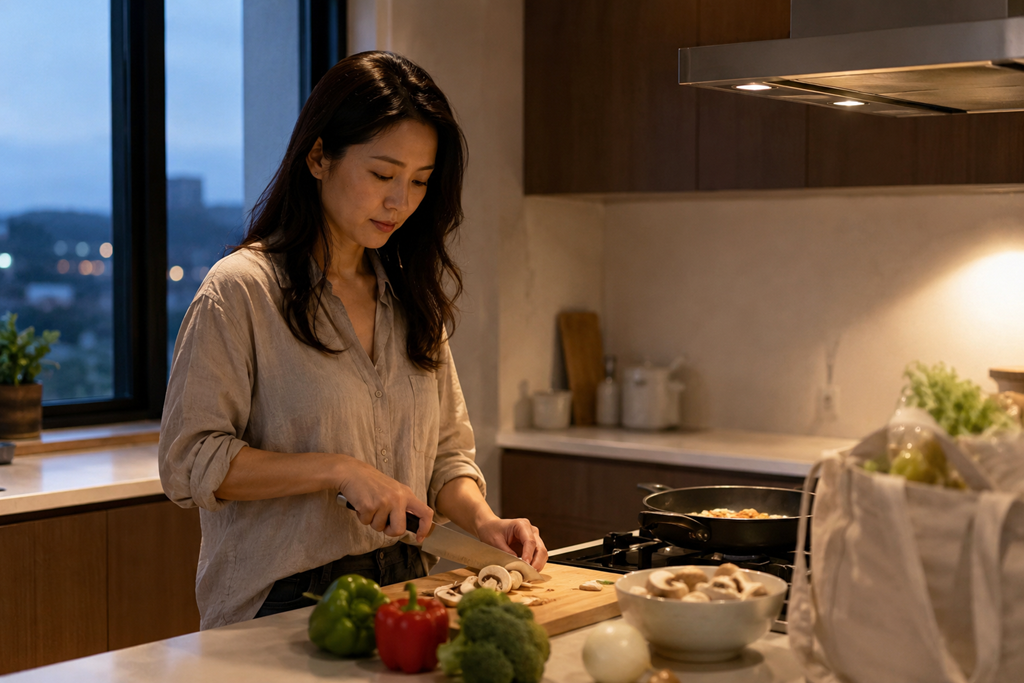
Building a cooking lifestyle around real life does not mean cooking elaborate meals every day, meal prepping perfectly on Sundays, or turning your kitchen into a full-time project. It means creating a simple, flexible way of feeding yourself that works with your actual schedule, energy, budget, and household rhythm.
For many people, the desire to cook more is real. The problem is not always motivation. It is often that their idea of “cooking regularly” is built around a version of life they are not actually living.
A busy workday, school pickups, traffic, errands, fatigue, changing schedules, and decision overload can make cooking feel harder than it looks from the outside. When cooking is framed as something that requires plenty of time, a spotless kitchen, fresh ingredients, and a clear plan every night, it quickly starts to feel unrealistic.
A cooking lifestyle that lasts has to be more forgiving than that.
Cooking More Starts With Being Honest About Your Actual Week
One of the biggest reasons people struggle to cook consistently is that they plan around an ideal week instead of a normal one.
An ideal week might include calm evenings, enough time to shop, and the energy to try new recipes. A normal week may include late meetings, tired evenings, unexpected errands, and a fridge that is not as organized as you hoped.
That does not mean cooking is impossible. It simply means your cooking habits need to match the life you actually have.
For some people, that might mean cooking three simple dinners a week instead of seven. For others, it might mean relying on easy breakfasts, repeat lunches, or a few dependable meals that can be made without much thought. The goal is not to prove discipline. The goal is to make home cooking feel possible often enough that it becomes part of your life.
When you stop expecting every meal to be impressive, cooking becomes much easier to return to.
A Cooking Lifestyle Is Not the Same as Cooking From Scratch Every Night
Many people quietly assume that a “real” cooking lifestyle means making everything fresh, homemade, and from scratch. That belief can make cooking feel heavier than it needs to be.
In real life, cooking can include shortcuts. It can include frozen vegetables, pre-washed greens, rotisserie chicken, jarred sauces, canned beans, microwave rice, simple sandwiches, leftovers, and meals assembled from what is already available.
These are not signs of failure. They are part of practical home cooking.
A sustainable cooking lifestyle is often built from a mix of fresh food, convenient ingredients, familiar meals, and realistic effort. Some nights may involve chopping and simmering. Other nights may involve reheating soup and adding toast. Both can count.
The more flexible your definition of cooking is, the easier it becomes to keep showing up in the kitchen.
Busy Schedules Need Repeatable Meals, Not Constant Inspiration
One common misunderstanding is that cooking should always feel creative. While creativity can be enjoyable, it is not the foundation of consistency.
Busy people usually need repeatable meals more than they need endless new recipes.
A few familiar meals can remove a lot of pressure from the week. These might be simple pasta dishes, rice bowls, breakfast-for-dinner meals, soups, salads with protein, tacos, sheet-pan dinners, or sandwiches that feel satisfying instead of thrown together.
Repeating meals does not mean your cooking life is boring. It means you are reducing decision fatigue.
When a meal is familiar, you do not have to spend as much energy figuring out what to buy, how long it will take, or whether it will work. That kind of predictability is what allows cooking to fit into real life.
The goal is not to be endlessly inspired. The goal is to have enough dependable options that feeding yourself feels less chaotic.
The Right Cooking Rhythm Depends on Your Energy, Not Just Your Calendar
A schedule tells you how much time you have. It does not always tell you how much energy you have.
This is why a person can technically have an hour available in the evening and still feel completely unable to cook. Mental fatigue, decision overload, physical tiredness, and household responsibilities all affect what feels realistic.
A better cooking lifestyle makes room for different energy levels.
On a higher-energy day, you might cook something that creates leftovers. On a lower-energy day, you might assemble a simple meal from prepared ingredients. On a difficult day, you might rely on something easy and still consider that a practical success.
This matters because many people quit cooking routines after a few imperfect days. They assume they have failed because they could not maintain the highest-effort version of the habit.
But consistency does not require the same level of effort every day. It requires a way to keep the habit alive at different levels.
Simple Kitchen Systems Make Cooking Feel Less Like a Production
Cooking often feels overwhelming when every meal starts from zero.
If the kitchen is disorganized, the ingredients are scattered, the basic tools are hard to find, and there is no sense of what meals are possible, even simple cooking can feel like a production.
A cooking lifestyle becomes easier when your kitchen supports your habits. That does not mean it has to look perfect. It just needs to be usable.
Keeping a few basic ingredients on hand can make a big difference. So can having a small group of meals you know how to make, storing frequently used tools where they are easy to reach, and keeping your cooking expectations modest on busy nights.
The point is not to create a magazine-worthy kitchen. The point is to reduce friction.
When the small barriers are removed, cooking feels less like a major event and more like something you can naturally do.
You Do Not Need a Perfect Meal Plan to Cook More Often
Meal planning can be helpful, but it can also become another source of pressure if it feels too rigid.
Some people do well with a detailed plan. Others do better with a loose structure. For example, instead of assigning a specific recipe to every night, they may keep ingredients for several flexible meals and decide what fits the day.
This can be especially helpful for people with unpredictable schedules.
A loose cooking rhythm might include a few easy dinners, a backup meal, leftovers, and one night where convenience is expected rather than treated as a failure. That kind of approach makes room for real life.
The mistake is thinking that a plan only counts if it is detailed and perfectly followed. In practice, a plan is useful only if it helps you make fewer stressful decisions.
A flexible plan that you actually use is better than a perfect one that collapses by Tuesday.
The Habit Gets Easier When Cooking Has a Personal Reason
Cooking is easier to sustain when it connects to something deeper than “I should.”
That reason does not have to be dramatic. It might be wanting calmer evenings, saving money, feeling better after meals, creating a more grounded home life, reducing takeout fatigue, or having a small daily ritual that feels steady.
For cooking enthusiasts, the reason may also include enjoyment. Cooking can become a creative outlet, a way to unwind, or a quiet expression of care. But even then, it still needs to fit real life.
A cooking lifestyle should support your life, not compete with it.
When your reason is clear, it becomes easier to accept simple meals, repeat meals, shortcuts, and imperfect weeks. You are no longer trying to live up to someone else’s version of cooking. You are building a rhythm that serves you.
The Patterns That Make Cooking Feel Harder Than It Has to Be
Cooking often becomes difficult because of hidden expectations, not because the meals themselves are too complicated.
One pattern is waiting for the perfect time to begin. People may tell themselves they will cook more when work slows down, when the kitchen is more organized, when they have better equipment, or when they can plan properly. Sometimes those improvements help, but waiting for ideal conditions can keep the habit from starting at all.
Another pattern is trying to change everything at once. Someone may go from rarely cooking to planning a full week of new recipes. That can feel exciting at first, but it often creates too much pressure too quickly.
A third pattern is treating convenience as the opposite of cooking. This can make people feel guilty for using shortcuts, even when those shortcuts are exactly what make home meals possible.
These patterns are understandable. Many people have absorbed an all-or-nothing picture of cooking. But real-life cooking is usually built through small, repeatable choices that fit the week you are actually in.
A Realistic Cooking Lifestyle Should Feel Supportive, Not Demanding
The best cooking lifestyle is not the one that looks most impressive from the outside. It is the one you can return to after a long day, a busy week, or a stretch of inconsistency.
That means there should be room for simple meals. Room for leftovers. Room for convenience. Room for occasional takeout. Room for seasons when cooking is easier and seasons when it is harder.
A cooking lifestyle built around real life does not ask you to become a different person before you begin. It asks you to notice your actual patterns and build around them with patience.
When cooking becomes flexible, it becomes less fragile.
You are not trying to create a perfect kitchen routine. You are creating a way of feeding yourself and your household that feels calmer, more doable, and more connected to the life you are already living.
That is what makes it last.
Download Our Free E-book!