A glamping lifestyle does not have to mean disappearing into the woods for long weekends, owning expensive gear, or constantly planning picture-perfect outdoor escapes. For most people with full calendars, family responsibilities, work demands, and limited energy, a realistic glamping lifestyle is simply about bringing more comfort, nature, rest, and intentional time outdoors into the life they already have.
That might mean a short overnight stay close to home. It might mean turning a basic campsite into a comfortable retreat. It might mean booking a ready-made cabin, safari tent, yurt, or luxury campsite a few times a year instead of trying to become a full-time outdoor adventurer.
The point is not to escape real life completely. The point is to create small, restorative outdoor experiences that fit inside real life.
Glamping Works Best When It Fits Your Actual Calendar
One of the easiest ways to misunderstand glamping is to treat it like a lifestyle that requires constant travel, elaborate planning, or a completely open schedule.
For busy people, that expectation can make glamping feel out of reach before they even begin. You may like the idea of cozy outdoor evenings, fresh air, quiet mornings, fire pits, soft bedding, and slower weekends, but still feel unsure how that fits around errands, work emails, children, appointments, bills, or limited vacation time.
A realistic glamping lifestyle starts by accepting the shape of your current life instead of fighting it.
You do not need to wait until your schedule is perfectly calm. You do not need to become a minimalist camper. You do not need to plan a full week away. In many cases, the most sustainable version of glamping is the one that works with your existing responsibilities.
A nearby one-night stay can still count. A seasonal weekend can still count. A backyard setup can still count. A comfortable campsite with fewer moving parts can still count.
Glamping becomes easier when it is treated less like a major production and more like a repeatable way to restore yourself.
The Real Appeal Is Comfort Without Complete Disconnection
Traditional camping often comes with a learning curve. There may be tents to pitch, meals to improvise, sleeping pads to tolerate, weather to manage, and gear to organize. Some people enjoy that. Others like nature but do not want every outdoor experience to feel physically uncomfortable or logistically demanding.
Glamping sits in the middle.
It allows people to enjoy the peaceful parts of being outside while keeping enough comfort to actually relax. A real bed, warm lighting, a prepared shelter, simple cooking options, clean restrooms, or climate control can make the experience feel less intimidating and more restorative.
That matters for busy people because rest has to be accessible. When life is already full, a getaway that creates more stress may not feel worth it. A glamping lifestyle works best when it lowers the barrier to being outdoors instead of adding another complicated project to manage.
This is especially helpful for people who want nature but do not want to rough it. It is also useful for couples, families, beginners, older adults, or anyone who wants the emotional benefits of outdoor time without turning the experience into a test of endurance.
A Busy Life Does Not Need A Big Escape To Feel Different
Many people assume a meaningful outdoor experience has to be far away. They picture mountain views, remote forests, scenic deserts, or dramatic lakeside cabins. Those trips can be beautiful, but they are not the only way to build a glamping rhythm.
Sometimes the benefit comes from a smaller shift.
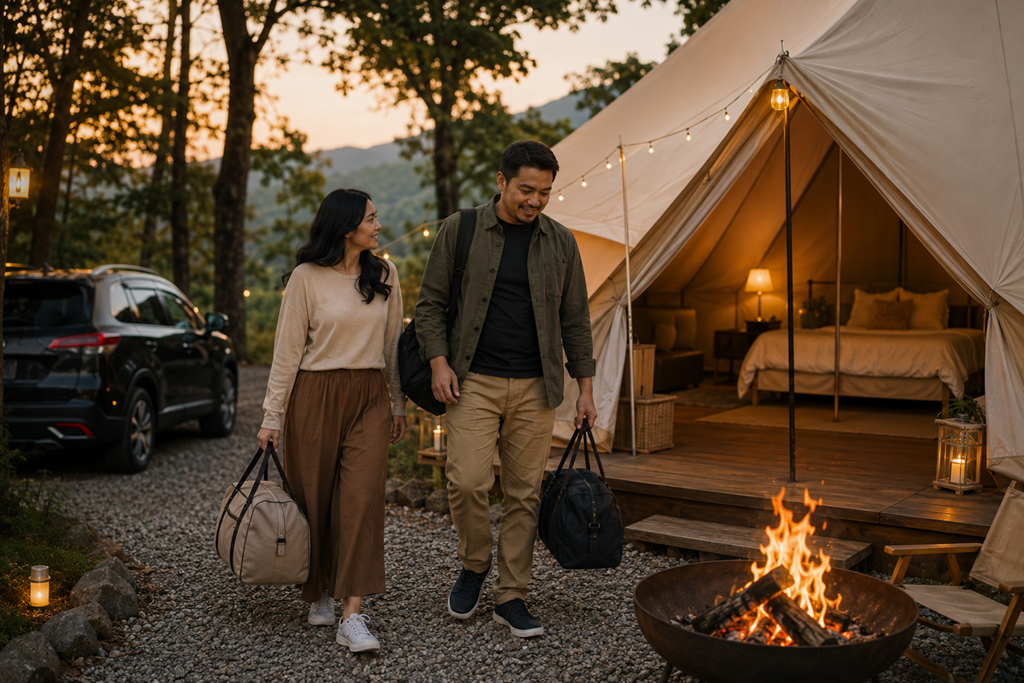
Sleeping somewhere quiet. Drinking coffee outside before checking your phone. Sitting by a fire without multitasking. Eating a simple meal under string lights. Watching the evening get darker without rushing to the next thing.
These moments are not complicated, but they can feel deeply different from normal life.
That is where glamping can become practical instead of aspirational. It gives you a way to create contrast. You are still the same person with the same responsibilities, but for a short period of time, your surroundings help you move slower.
For busy schedules, that contrast matters more than distance.
A local glamping site within an hour or two of home may be more useful than a faraway destination that takes weeks to coordinate. A short stay that actually happens is often better than a perfect trip that keeps getting postponed.
The Best Glamping Lifestyle Is Usually Simple And Repeatable
A glamping lifestyle becomes sustainable when it is easy enough to repeat.
That does not mean every trip has to look the same. It means the planning process should not drain all the joy out of the experience. If each outing requires too many decisions, too much packing, or too much recovery afterward, it may start to feel like another obligation.
A more realistic approach is to build familiar patterns.
You might return to the same type of accommodation because you know it works. You might keep a small pre-packed bin with comfortable outdoor essentials. You might choose locations with reliable amenities. You might plan around slower seasons instead of trying to force trips into already crowded weekends.
The goal is not to remove all effort. The goal is to reduce unnecessary friction.
For example, someone with a demanding job may benefit from a Friday-to-Saturday glamping stay close to home rather than a three-day trip that requires taking time off. A family may prefer a site with beds, bathrooms, and simple cooking options instead of packing an entire campsite from scratch. A couple may decide that one peaceful seasonal trip is more realistic than trying to travel every month.
Small, repeatable choices help glamping become part of life rather than something that always feels postponed.
Comfort Is Not The Same As Being Unadventurous
Some people hesitate to embrace glamping because they feel like it is not “real” enough. They may worry that comfortable bedding, prepared shelters, electricity, or private bathrooms make the experience less authentic.
But comfort does not cancel out the value of being outdoors.
For many people, comfort is what makes outdoor time possible in the first place. It can help someone sleep better, feel safer, bring family members along, recover from stress, or enjoy nature without feeling physically overwhelmed.
There is no rule that says outdoor experiences must be uncomfortable to be meaningful.
A quiet morning outside still counts if you slept in a real bed. A campfire conversation still counts if your tent has a rug and soft lighting. A weekend in nature still counts if you booked a furnished cabin instead of packing every item yourself.
The deeper question is not whether the experience looks rugged enough. It is whether it helps you slow down, reconnect, breathe, and step outside the usual pace of your life.
The Most Common Problem Is Overdesigning The Experience
Glamping can become stressful when people try to make it too polished.
Because glamping is often shown online as beautiful, styled, and highly curated, it is easy to feel like every trip needs perfect décor, matching blankets, elaborate meals, scenic photos, and a flawless atmosphere. That expectation can quietly turn a restful idea into another performance.
A real-life glamping lifestyle does not need to look like a magazine spread.
It can be simple. It can be slightly messy. It can include paper plates, practical shoes, imperfect weather, tired children, basic meals, or a cooler that is not organized beautifully. The value is not in making everything look impressive. The value is in creating enough comfort and calm to enjoy being outside.
This reframe matters because busy people often already live under pressure to optimize everything. Glamping should not become another thing to perfect.
It should give you permission to make outdoor time easier.
Planning Around Energy Is Just As Important As Planning Around Time
Busy schedules are not only about limited hours. They are also about limited energy.
You may technically have a free weekend, but if you are exhausted by Friday night, a complicated trip may feel impossible. That is why a realistic glamping lifestyle needs to consider how much effort you have available, not just what dates are open.
Some seasons of life may call for the easiest version possible: a furnished cabin, a resort-style glamping site, or a one-night stay with minimal packing. Other seasons may allow for more involvement, such as setting up your own comfortable campsite or traveling farther.
Neither version is better. They simply serve different needs.
When energy is low, choose convenience. When you have more capacity, choose adventure. When life is unpredictable, keep the plan close to home. When your schedule opens up, expand from there.
Glamping becomes more sustainable when it adapts to your real bandwidth.
A Calm Outdoor Rhythm Can Support The Rest Of Your Life
The value of glamping is not only the trip itself. It is also how the experience can help you return to everyday life with a little more steadiness.
A short outdoor reset can make the week feel less compressed. It can give couples time to talk without distractions. It can give families a shared memory that does not require constant entertainment. It can give individuals a quiet pause from screens, deadlines, and routines.
That does not mean glamping solves everything. It does not remove work stress, family responsibilities, or the need for daily routines.
But it can create a pocket of breathing room.
For many people, that is enough to make it worthwhile. Not because life disappears, but because the pace changes for a moment. The body relaxes. The mind has fewer inputs. The day feels less crowded.
A glamping lifestyle built around real life is not about chasing constant escape. It is about making room for small, comfortable outdoor experiences that help you feel more grounded.
Let It Be Smaller Than The Version In Your Head
If glamping feels appealing but hard to start, the answer may be to make the idea smaller.
You do not need a full travel calendar. You do not need the perfect destination. You do not need a luxury setup. You do not need to prove that you are outdoorsy.
You only need a version that feels realistic enough to repeat.
That may be one nearby weekend this season. It may be a simple overnight stay. It may be a comfortable campsite with fewer tasks. It may be a quiet cabin where the main plan is to rest, eat simply, and sit outside.
A glamping lifestyle becomes easier when it stops being an image to live up to and starts becoming a practical way to care for your time, energy, and need for calm.
Real life does not have to be paused before you enjoy it. The best version of glamping is often the one that fits gently into the life you already have.
Download Our Free E-book!