Lowering blood pressure naturally usually does not come from one dramatic change. For most people, it comes from a few steady lifestyle habits that are realistic enough to repeat: eating more heart-supportive foods, reducing sodium, moving more often, sleeping better, managing stress, limiting alcohol, avoiding nicotine, and working with a health care professional when blood pressure stays high. The CDC and American Heart Association both emphasize these kinds of everyday lifestyle changes as part of preventing or managing high blood pressure.
That may sound simple, but in real life it can feel frustrating. You may be trying to eat better, walk more, drink more water, or cut back on salty foods, but your numbers still feel unpredictable. You may also wonder whether you need to change everything at once.
You usually do not. A more realistic approach is to build a blood-pressure-friendly lifestyle one repeatable habit at a time.
Blood Pressure Is Influenced by More Than One Habit
One reason blood pressure can feel confusing is that it is not controlled by one single behavior. Food matters, but so do movement, sleep, stress, alcohol, smoking or nicotine use, weight, medications, medical conditions, and even how consistently you measure your blood pressure.
That is why a “natural” approach works best when it means lifestyle support, not a shortcut or replacement for medical care. If your doctor has prescribed medication, lifestyle changes may still help, but they should not replace your treatment plan unless your health care professional tells you to make a change. The American Heart Association includes both lifestyle changes and taking medication properly as part of managing blood pressure.
A better question is not, “What one thing will lower my blood pressure?” It is:
What daily habits can make my body’s normal blood pressure regulation easier to support?
That question leads to calmer, more useful choices.
Start With Food Patterns, Not Perfect Meals
For many people, food is the most obvious place to begin. But blood-pressure-friendly eating does not have to mean a strict diet, bland meals, or a complete kitchen overhaul.
A helpful starting point is the DASH eating plan, which stands for Dietary Approaches to Stop Hypertension. NHLBI describes DASH as an eating plan focused on foods that are lower in sodium and rich in nutrients such as potassium, calcium, magnesium, fiber, and protein.
In plain language, that usually means building more meals around:
- Fruits and vegetables
- Beans, lentils, and other legumes
- Whole grains
- Low-fat dairy or other nutrient-rich options that fit your needs
- Fish, poultry, nuts, and seeds
- Less saturated fat, added sugar, and highly processed salty foods
The goal is not to make every meal perfect. It is to shift the overall pattern so your normal meals are doing more of the work for you.
A realistic first change might be adding one fruit or vegetable to a meal you already eat. Another might be choosing a lower-sodium version of a food you buy often. Another might be cooking one more meal at home each week if restaurant meals are a major source of hidden sodium.
Small food changes count when they become normal.
Sodium Is Worth Noticing, but It Does Not Need to Become an Obsession
Sodium can affect blood pressure, and many people eat more than they realize because sodium is often hidden in packaged foods, restaurant meals, sauces, soups, deli meats, frozen meals, and snack foods.
NHLBI notes that when following DASH, limiting sodium to 2,300 mg daily is important, and reducing to 1,500 mg can lower blood pressure further for some people.
That does not mean you have to track every milligram forever. For everyday life, it may be more realistic to start by noticing your biggest sodium sources.
Some common places to look are:
- Bread, tortillas, and rolls
- Canned soups and broths
- Frozen dinners
- Deli meats and cured meats
- Cheese and packaged snacks
- Restaurant meals
- Sauces, condiments, and seasoning blends
A simple reframe helps: you are not trying to remove all flavor. You are trying to reduce the foods that quietly push your sodium intake higher than you intended.
Herbs, spices, citrus, vinegar, garlic, onion, pepper, and salt-free seasoning blends can help food still feel satisfying.
Movement Helps Even When It Is Not Intense
Exercise can sound intimidating when you are already tired, busy, or out of routine. But blood-pressure support does not require extreme workouts.
The CDC says physical activity can help lower blood pressure and points to the general adult recommendation of at least 2 hours and 30 minutes of moderate-intensity activity per week, which is about 30 minutes a day, 5 days a week.
For real life, that might look like brisk walking, biking, swimming, gentle fitness classes, or other movement you can repeat. If 30 minutes feels like too much, shorter sessions can still help you build consistency.
The key is to avoid turning movement into an all-or-nothing test. A 10-minute walk after dinner is not “nothing.” Taking the stairs, stretching during a work break, or walking while taking a phone call can all help build a more active baseline.
The most useful form of movement is often the one you can do again tomorrow.
Sleep and Stress Are Part of the Picture
Blood pressure advice often focuses on food and exercise, but sleep and stress matter too. The CDC includes getting enough sleep among lifestyle habits that can help prevent high blood pressure. The American Heart Association also lists stress management as one of the changes that may improve blood pressure.
This does not mean you can “relax away” high blood pressure. It means your nervous system, recovery, and daily pressure load are part of the environment your body is living in.
Realistic support might include:
- A more consistent bedtime
- Less late-night scrolling
- A calmer evening routine
- A short breathing pause before meals or meetings
- A walk after a stressful workday
- Better boundaries around work spillover
- Fewer overloaded mornings
These habits may seem small, but they reduce the sense that your entire day is running at full speed.
A helpful clarifying insight is this: stress support is not only about feeling calm. It is also about reducing the repeated strain your body has to keep responding to.
Alcohol, Nicotine, and Caffeine Deserve an Honest Look
Some blood-pressure habits are not about adding something new. They are about noticing what may be working against you.
The CDC advises limiting alcohol because drinking too much can raise blood pressure. It gives a general limit of no more than two drinks per day for men and no more than one drink per day for women.
Nicotine also matters. The American Heart Association notes that smoking, vaping, and nicotine products can cause temporary increases in blood pressure.
Caffeine is more individual. Some people are more sensitive to it than others, and caffeine can affect sleep, anxiety, and heart rate. If you drink several cups of coffee, use energy drinks, or rely on stimulant products, it may be worth paying attention to how your body responds and discussing it with your health care professional.
The goal is not guilt. The goal is awareness.
Home Tracking Can Help, but It Can Also Become Stressful
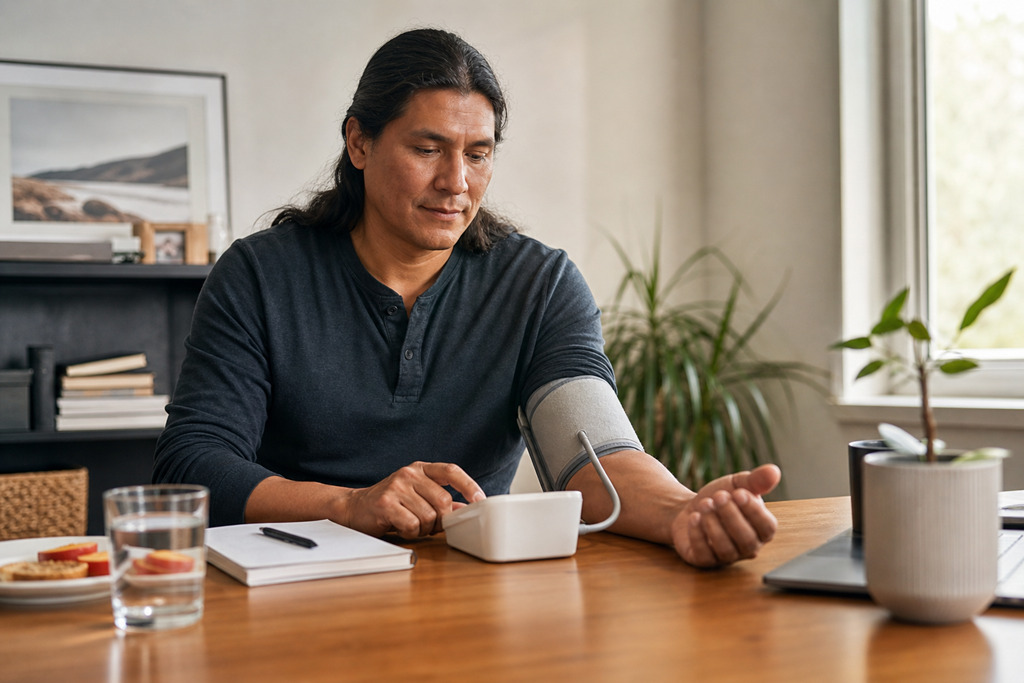
Checking your blood pressure at home can be useful because it gives you and your health care team more information. The CDC says measuring blood pressure is an important step toward controlling high blood pressure.
But home tracking can also become stressful if every reading feels like a verdict.
Blood pressure can change throughout the day. It may be affected by stress, caffeine, exercise, sleep, pain, medication timing, recent meals, and whether you were sitting calmly before taking the reading.
Instead of reacting to one number, it is usually more useful to look for patterns and share those patterns with your clinician. If your readings are frequently high, suddenly much higher than usual, or accompanied by concerning symptoms, get medical guidance promptly.
Tracking should help you feel more informed, not trapped in constant worry.
The Biggest Mistake Is Trying to Change Everything at Once
When people search for natural ways to lower blood pressure, they are often hoping for something clear and doable. But the advice they find can quickly become overwhelming: eat differently, exercise more, sleep better, reduce stress, lose weight, stop smoking, drink less, track numbers, cook at home, read labels, and call the doctor.
All of those may matter, but trying to fix everything at once often leads to burnout.
A better approach is to choose one or two habits that are both meaningful and realistic.
For example:
- Walk for 10 minutes after lunch or dinner.
- Add one serving of vegetables to your usual dinner.
- Buy a lower-sodium version of one food you eat often.
- Set a regular bedtime three nights this week.
- Measure blood pressure at a consistent time instead of randomly checking when anxious.
- Replace one alcoholic drink with water or a nonalcoholic option.
- Plan one simple home-cooked meal that makes leftovers.
These changes may look modest, but they are the kind of changes that can become part of real life.
Natural Does Not Mean Doing It Alone
One of the most important parts of lowering blood pressure naturally is knowing when lifestyle support is not enough by itself.
Some people need medication. Some people need closer monitoring. Some people have other conditions, such as diabetes, kidney disease, heart disease, pregnancy-related concerns, or medication interactions, that make personalized care especially important. The CDC emphasizes working with a health care team to manage high blood pressure and related conditions.
That does not make lifestyle changes pointless. It means lifestyle and medical care can work together.
A calm, realistic plan might sound like this:
“I’m going to improve the habits I can control, track my patterns, and work with my doctor instead of trying to guess my way through this.”
That is often the most grounded approach.
A Real-Life Way to Think About Blood Pressure Support
Lowering blood pressure naturally is not about becoming a different person overnight. It is about making your normal days a little more supportive of your heart, blood vessels, energy, and long-term health.
You do not need a perfect diet. You need a better pattern.
You do not need extreme workouts. You need repeatable movement.
You do not need a stress-free life. You need more recovery built into the life you actually have.
You do not need to chase every supplement or trend. You need steady habits, good information, and medical guidance when needed.
The most useful natural changes are the ones that fit your real life well enough to keep doing them.
Download Our Free E-book!