Sustainable weight loss usually has less to do with doing one thing perfectly and more to do with doing a few small things consistently enough that they start to shape your normal life.
That can feel underwhelming at first, especially if you have been exposed to dramatic before-and-after stories, strict plans, or all-or-nothing thinking. But in real life, lasting change is often built through habits that are small enough to repeat when you are busy, tired, stressed, or not especially motivated.
Small habits are not “less serious” than bigger efforts. In many cases, they are what make bigger goals possible. They reduce friction, give you something to return to, and help you stay connected to your progress without needing to overhaul your entire life at once.
If weight loss has felt hard to sustain, the issue may not be that you need more pressure. You may need a steadier foundation.
Why small habits matter more than short bursts of motivation
Motivation can help you get started, but it is rarely reliable enough to carry you all the way through a long-term goal. Life changes from week to week. Work gets busy. Sleep gets off track. Stress builds. Meals become less planned. Exercise becomes less convenient.
When your approach depends on feeling highly motivated all the time, normal life disruptions can make it fall apart quickly.
Small habits work differently. They ask less from you in the moment, which makes them easier to repeat. Repetition matters because it helps turn healthy choices into something more automatic and less emotionally loaded.
This is one of the most useful reframes in sustainable weight loss: the goal is not to prove how disciplined you can be for two weeks. The goal is to build a way of eating, moving, and paying attention that you can stay connected to over time.
That does not mean progress will be perfectly linear. It means your habits are realistic enough to survive real life.
The problem with “starting over” every Monday
Many people approach weight loss in cycles. They eat “well” for a few days, get off track, feel frustrated, and then decide to restart later with a stricter plan.
That pattern can create the feeling that success is always just out of reach, when the real issue is often inconsistency caused by overcorrection.
Small habits help interrupt that cycle because they are less fragile. If your habit is to include a protein source at breakfast, take a 10-minute walk after dinner, or write down your daily progress, you do not have to wait for a perfect Monday to begin again. You can return to that habit the next meal, the next hour, or the next day.
That matters more than people sometimes realize. Sustainable weight loss is often supported by how quickly you return to helpful routines, not by how flawlessly you follow them.
The habits that tend to make the biggest difference over time
Not every small habit needs to be dramatic to be effective. In fact, the most supportive habits are often the ones that quietly improve awareness, reduce impulsive decisions, and make consistency more manageable.
Eating on purpose instead of reacting all day
One helpful habit is creating a little more intention around meals. That does not require rigid meal plans or tracking every bite. It may simply mean asking yourself a few grounding questions before you eat:
Am I actually hungry?
Did I wait so long that now I am overeating out of urgency?
Does this meal have enough staying power to keep me satisfied?
That pause can help you make choices that feel more supportive without turning eating into a stressful project.
Building meals that keep you full longer
Another useful habit is focusing on satisfaction rather than restriction. Meals that include protein, fiber, and enough substance to keep you full can reduce the constant grazing or rebound hunger that often comes with overly light meals.
This habit supports weight loss indirectly but powerfully. When your meals are more balanced, you often spend less mental energy fighting cravings and less time swinging between “too hungry” and “too full.”
Moving in ways that feel repeatable
Exercise matters, but sustainable weight loss is not only supported by intense workouts. It is also supported by regular movement that fits your current life.
That might look like walking more often, doing short strength sessions at home, stretching in the morning, or choosing activity you can realistically repeat several times a week.
The habit to build is not “go hard every day.” It is “keep moving in ways I can return to consistently.”
Getting more honest about patterns
One of the most overlooked habits in weight loss is noticing what actually affects your choices.
For example, you may find that you snack more when you skip lunch, eat quickly when you are distracted, or feel discouraged after a few days without visible change. These patterns are easy to miss when everything stays in your head.
Awareness is not the same as judgment. Its job is not to make you feel bad. Its job is to show you what is happening clearly enough that you can respond more intentionally.
Where people often get stuck even with good intentions
A lot of people already know the basic advice around weight loss. Eat more whole foods. Move more. Stay consistent. Get enough sleep. The difficulty is usually not a lack of information. It is follow-through.
That is where small habits often break down. Not because they are ineffective, but because they are easy to forget, easy to dismiss, and easy to lose track of when life gets noisy.
You may tell yourself you will start paying more attention, but without any structure, that intention can stay vague. A vague goal like “be healthier” or “do better this week” is hard to act on consistently because it gives you nothing concrete to return to.
This is another useful reframe: structure is not punishment. Structure is support.
A little bit of structure can make healthy habits easier to see, easier to repeat, and easier to stick with when motivation drops.
Why writing things down can make a habit easier to keep
There is something grounding about taking progress out of your head and putting it somewhere visible.
When you write things down, you create a simple record of what is happening over time. That can help in several ways. First, it makes progress more tangible. Second, it helps you spot patterns you might otherwise miss. Third, it gives you a small moment of accountability without requiring constant screen time or complicated apps.
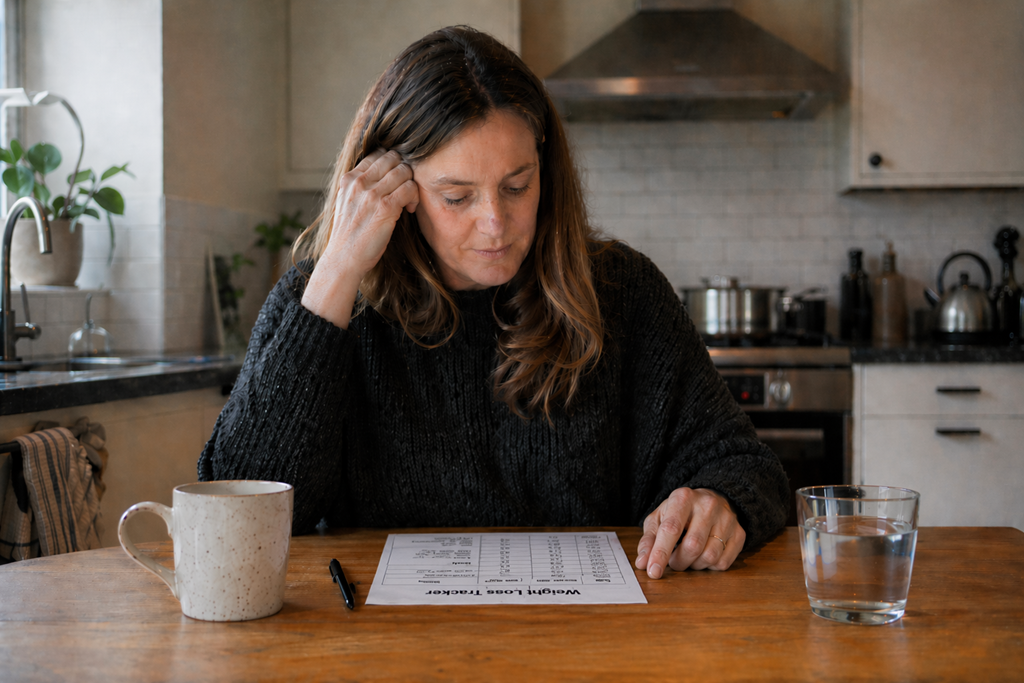
For some people, a simple offline tracker feels especially helpful because it removes noise. There are no notifications, comparisons, or extra features competing for your attention. It is just a clear place to stay connected to your own effort.
If your biggest challenge is not knowing whether you are actually being consistent, a simple tool like a Weight Loss Tracker can help you keep your progress visible and organized without making the process feel heavier.
What sustainable progress usually looks like in real life
Sustainable weight loss often looks quieter than people expect.
It can look like fewer impulsive choices because you stopped waiting until you were starving.
It can look like walking more days than not, even if the walks are short.
It can look like recognizing that one difficult weekend does not erase a solid month.
It can look like noticing that your routines are becoming easier to return to.
It can also look like progress that is not perfectly linear. Some weeks may feel steady. Some may feel messy. That does not mean your habits are failing. It may simply mean you are learning how to keep going without requiring ideal conditions.
That is a real skill, and it matters.
A grounded way to approach your next phase
If you want weight loss to feel more sustainable, it may help to stop asking, “What is the most aggressive plan I can follow?” and start asking, “What are the few habits I can realistically carry with me for a long time?”
That question tends to lead to better answers.
Choose habits that reduce friction. Choose routines that still make sense when you are busy. Choose forms of accountability that help you stay aware without making the process feel obsessive.
And give yourself credit for consistency that looks ordinary. Ordinary habits are often the ones that stay.
If staying aware of your progress feels easier with something visual and simple, the Weight Loss Tracker can help you keep your routine visible, organized, and motivating on paper.
Download Our Free E-book!