A more relaxing dive trip usually starts before you ever enter the water. It comes from giving yourself enough time, reducing unnecessary decisions, keeping your gear and plans simple, and treating the trip as an experience to settle into rather than something to perform perfectly.
Many divers imagine a relaxing dive trip as something that happens automatically once they reach a beautiful location. But in real life, the quietest underwater moments can be affected by very ordinary things: rushed packing, unclear plans, poor sleep, too many expectations, unfamiliar gear, or feeling like everyone else knows exactly what they are doing.
The scuba diver lifestyle is often associated with adventure, travel, and discovery, but relaxation is a major part of what draws many people to it. A calmer dive trip gives you more room to enjoy the ocean, notice small details, connect with your buddy, and return home feeling restored instead of drained.
Relaxed Dive Trips Are Built Around Fewer Friction Points
A dive trip does not need to be complicated to be meaningful. In fact, many of the most enjoyable dive days are the ones where fewer things compete for your attention.
That does not mean every detail has to be perfect. Weather changes. Boats run on their own rhythm. Visibility may not be what you hoped for. Gear may need a small adjustment. A relaxing diver lifestyle is not about controlling every condition. It is about reducing the avoidable stress so you have more capacity for the parts you cannot control.
This might mean packing earlier than usual, choosing familiar gear when possible, confirming the basic schedule ahead of time, or leaving extra space between travel and diving. These small choices may not feel exciting, but they help your nervous system arrive at the dive site with more steadiness.
When a trip feels rushed from the beginning, even a beautiful dive can feel mentally crowded.
The Feeling Many Divers Are Really Looking For
For many people, the appeal of diving is not only the fish, reefs, wrecks, or travel. It is the feeling of being removed from normal noise.
Underwater, there are fewer interruptions. You are not answering messages. You are not multitasking. You are paying attention to your breathing, your buddy, your buoyancy, and the world around you.
That peaceful feeling can be easy to lose when the rest of the trip becomes too packed. A diver may try to squeeze in too many dives, too many activities, too many restaurants, too many photos, or too many expectations. The trip may look impressive from the outside, but internally it can feel like another schedule to keep up with.
A more relaxing dive trip respects the reason many people started diving in the first place: to feel present, aware, and connected to a quieter environment.
Simple Planning Can Make The Whole Trip Feel Lighter
Good planning does not have to turn a dive trip into a rigid itinerary. The goal is not to script every hour. The goal is to remove unnecessary uncertainty.
Before a dive trip, it helps to know the basics: where you need to be, when you need to be there, what gear is included, what you need to bring, how physically demanding the dives may be, and what the surface intervals or boat routine might look like.
This kind of planning is especially helpful for newer divers, returning divers, or anyone visiting an unfamiliar destination. The more mental energy you spend trying to figure things out at the last minute, the harder it is to feel relaxed once the diving begins.
A calmer approach might look like choosing one or two main priorities for the trip instead of trying to maximize everything. Maybe the priority is easy reef diving. Maybe it is getting comfortable again after time away. Maybe it is simply enjoying a few unrushed mornings near the water.
A trip becomes easier to enjoy when it has a clear shape, not when every possible moment is filled.
Familiar Gear Often Feels More Relaxing Than Perfect Gear
It is easy to assume that a better dive trip requires newer, more advanced, or more expensive gear. But relaxation often comes from familiarity more than novelty.
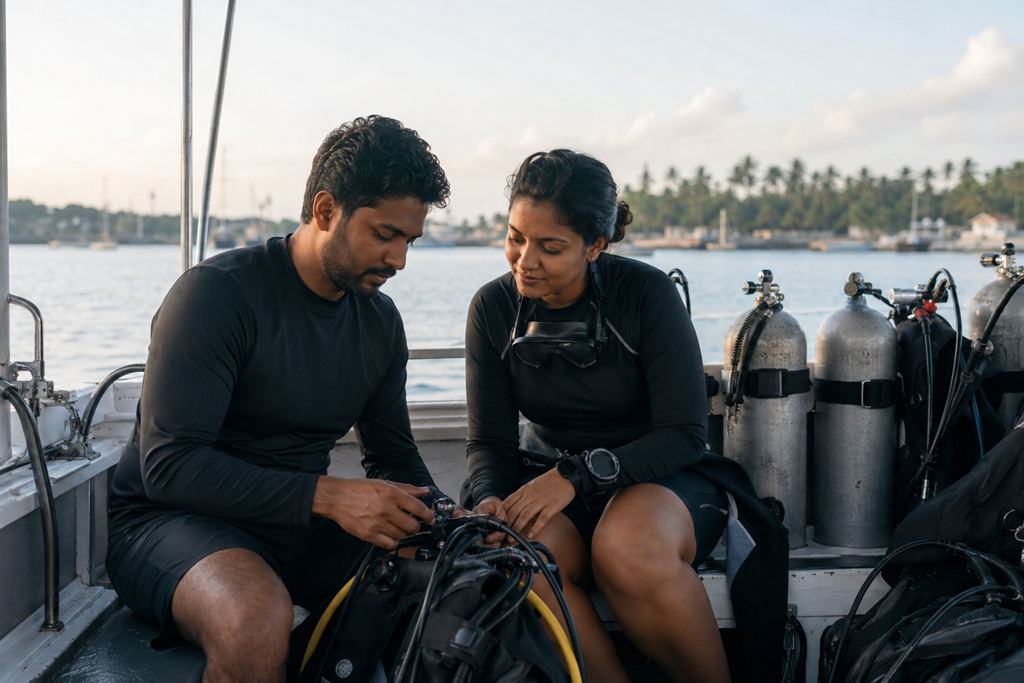
A mask that fits well, fins you know how to use, a wetsuit that feels comfortable, and a dive computer you understand can reduce small points of stress. When your equipment feels familiar, you do not have to spend as much attention wondering how everything works.
This does not mean divers should avoid learning new gear. It simply means a big trip may not be the best time to change everything at once. New equipment can be exciting, but too many new variables can make an otherwise pleasant dive feel mentally busy.
For a relaxing trip, comfort and confidence matter. Gear should support the experience, not dominate it.
More Dives Do Not Always Mean A Better Trip
One common misunderstanding in scuba travel is the idea that the best trip is the one with the most dives.
For some divers, a full dive schedule is exactly what they enjoy. But for others, too many dives can make the trip feel physically and mentally tiring. Early mornings, boat rides, sun exposure, hydration needs, gear handling, and social energy all add up.
A relaxing dive trip gives you permission to leave room around the diving. Rest, meals, quiet evenings, slow walks, and open time can make the underwater moments feel richer.
This is especially true if diving is part of a broader lifestyle rather than a one-time achievement. You do not have to prove your love of diving by exhausting yourself. A sustainable scuba lifestyle allows room for both adventure and recovery.
Your Dive Buddy Can Affect The Mood Of The Trip
A relaxing dive trip is not only about location and conditions. It is also shaped by the people around you.
A good buddy or dive group can make the experience feel safer, easier, and more enjoyable. A rushed, competitive, careless, or overly intense group can make even a beautiful dive site feel stressful.
This does not mean everyone has to be silent, serious, or perfectly matched. It simply means the social rhythm matters. Clear communication, patience, and mutual respect can help the whole trip feel calmer.
If you are diving with someone new, it can be helpful to talk about simple expectations before getting in the water. Not in a formal or dramatic way, but in a grounded way: comfort level, pace, air awareness, photo habits, and how closely you prefer to stay together.
Many dive trip tensions come from assumptions that were never spoken.
A Relaxing Trip Still Requires Respect For Safety
Relaxed does not mean casual about safety. In scuba diving, true relaxation comes from knowing that the basics are being respected.
A diver who skips preparation, ignores limits, or treats safety checks as unnecessary may appear laid-back on the surface, but that is not the same as being calm. Real ease comes from competence, awareness, and honest decision-making.
This includes paying attention to your training level, your physical condition, your comfort with the dive site, your air supply, your buddy, and the guidance of qualified dive professionals.
A relaxing scuba lifestyle is not careless. It is steady.
The more secure the foundation, the easier it is to enjoy the quiet.
Let The Trip Be Good Without Needing It To Be Perfect
Dive trips can carry a lot of expectation. People may spend money, travel long distances, take time off work, or look forward to the trip for months. Because of that, it is easy to feel disappointed if the conditions are not ideal.
But diving always involves nature, and nature does not perform on demand.
Visibility may be lower than expected. Marine life may not appear on schedule. The water may be cooler, the boat may be crowded, or one dive may be less memorable than another. None of that means the trip failed.
A calmer scuba diver lifestyle makes room for imperfect days. Sometimes the most relaxing part of a dive trip is learning to receive the experience as it comes instead of constantly comparing it to the version you imagined.
That mindset can change the whole feeling of the trip.
The Best Dive Trips Often Feel Spacious
A relaxing dive trip usually has a sense of space around it.
Space to wake up without rushing. Space to check your gear carefully. Space to talk with your buddy. Space to rest after diving. Space to enjoy the place above the water, not only below it.
This kind of trip may not look the most dramatic from the outside. It may not produce the biggest story or the busiest itinerary. But it often leaves a deeper impression because you were actually present for it.
For many divers, that is the real reward: not just seeing the underwater world, but feeling calm enough to notice it.
A more relaxing dive trip is not about doing less for the sake of doing less. It is about creating enough ease that the diving can become what you hoped it would be: quiet, steady, memorable, and genuinely enjoyable.
Download Our Free E-book!