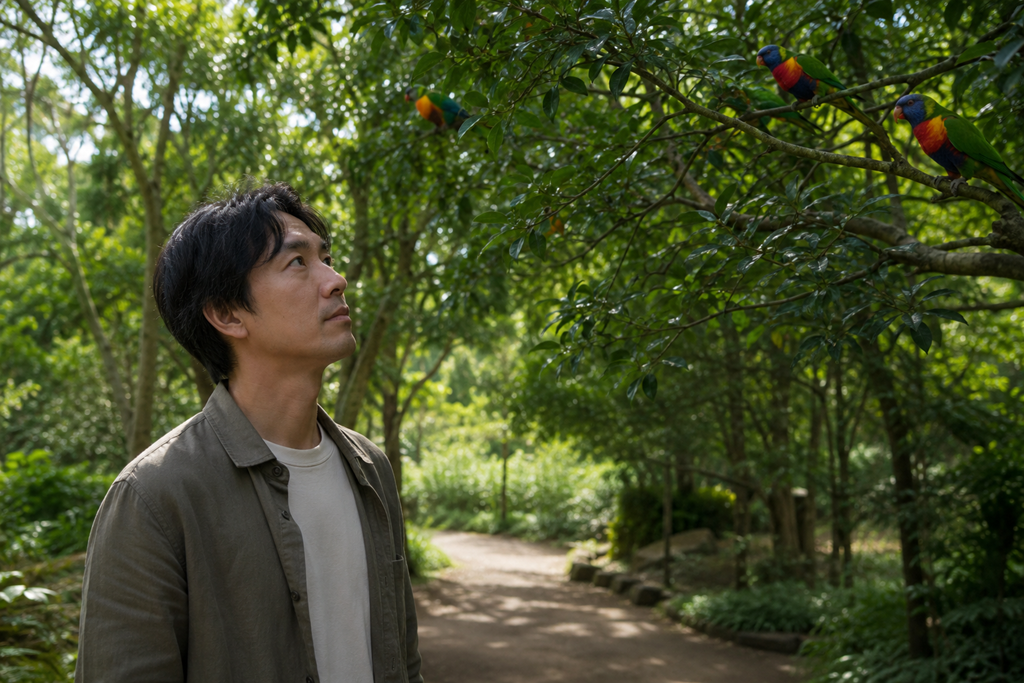
Bird-watching can make outdoor time feel more peaceful when it is treated as a quiet noticing practice rather than a performance. You do not need expert knowledge, expensive gear, or a long hike to benefit from it. The most helpful habit is simply slowing down enough to observe what is already happening around you.
For many people, peaceful outdoor time feels harder than it sounds. You may step outside hoping to relax, but your mind keeps moving quickly. You may check your phone, scan your surroundings without really seeing them, or feel like you should be “doing” something more productive.
Bird-watching gives your attention a gentle place to land. It turns a walk, a park visit, a backyard break, or a quiet morning by a window into something more intentional without making it complicated.
Bird-Watching Works Best When It Stays Simple
A peaceful bird-watching routine does not need to start with identifying every bird you see. In fact, trying to name every species too soon can make the experience feel more like a test than a break.
A simpler approach is to notice movement, sound, shape, and behavior. Watch how a bird hops along a fence, pauses on a branch, searches the grass, or calls from somewhere you cannot see. These small observations help you become more present without requiring you to master anything first.
This is why bird-watching can feel calming even for beginners. The goal is not to become an expert immediately. The goal is to give your mind something steady, natural, and low-pressure to follow.
A Peaceful Habit Can Begin In Ordinary Places
Many people assume bird-watching requires a nature preserve, binoculars, or a full afternoon outdoors. Those things can be enjoyable, but they are not required.
Bird-watching can begin on a neighborhood sidewalk, near a small pond, beside a parking lot tree, from an apartment balcony, or at a kitchen window. Birds are often woven into everyday environments more than people realize.
This matters because peaceful outdoor time becomes easier when it does not depend on a perfect setting. If you only allow yourself to relax when the location is beautiful, quiet, and uninterrupted, you may rarely feel like the moment is good enough. Bird-watching helps you work with the environment you already have.
Slowing Down Is Part Of The Practice
One of the most useful bird-watching habits is pausing before trying to look for anything specific. Stand or sit still for a moment. Let the area settle around you. Notice what you hear before deciding where to look.
Birds often become easier to notice when you stop moving quickly. A small sound in a bush, a flutter near a roofline, or a shadow crossing the path may become visible only after your attention slows down.
This is also where the peacefulness comes from. Bird-watching gently asks your nervous system to shift from scanning and rushing into observing and receiving. You are still alert, but not tense. You are paying attention, but not forcing anything.
Let The Experience Be Enough Without Turning It Into A Task
A common mistake is turning bird-watching into another productivity project. Some people feel they need a list, a goal, a rare sighting, a perfect photo, or a detailed log before the activity “counts.”
Those tools can be enjoyable, but they should support the experience rather than take it over.
If you see one bird and spend a few minutes watching it move through a tree, that can be enough. If you only hear birdsong while sitting outside with coffee, that can be enough too. The benefit often comes from the quality of attention, not the number of birds observed.
A Few Small Habits Make The Time Feel More Grounded
Peaceful bird-watching usually grows from repeatable, low-pressure habits. You might choose one familiar outdoor place and return to it regularly. You might spend the first few minutes listening before walking. You might keep your phone in your pocket unless you are using it to quietly identify a bird afterward.
You may also find it helpful to notice patterns instead of chasing novelty. Which birds appear in the morning? Which ones gather near water? Which sounds seem familiar after a few visits? What changes when the season shifts?
These kinds of observations help the experience feel connected to real life. Bird-watching becomes less about escaping your routine and more about bringing a calmer kind of attention into it.
It Is Normal Not To Know What You Are Seeing
Beginners often feel self-conscious because they do not know bird names, calls, or behaviors. But not knowing is not a problem. It may actually help you stay curious.
You can notice a bird before you can name it. You can enjoy its movement before understanding its habits. You can feel more peaceful without turning the moment into a lesson.
Identification can come later if you want it to. A field guide, birding app, or local bird list can add interest over time. But the heart of peaceful bird-watching is observation first.
The Best Bird-Watching Habit Is Returning Gently
The most meaningful habit is not seeing something impressive once. It is returning gently to the practice.
When bird-watching becomes part of ordinary outdoor time, you begin to notice more without trying so hard. A familiar call may catch your attention. A common bird may become interesting because you have watched it before. A short walk may feel more restorative because your mind has something natural to follow.
This kind of peace is quiet and practical. It does not require a dramatic lifestyle change. It simply gives you a reason to slow down, look around, and reconnect with the living world already nearby.
Bird-watching can be peaceful because it asks for presence instead of perfection. You do not have to identify everything, go far away, or turn the experience into a project. You only need a little time, a little patience, and a willingness to notice what is already there.
Download Our Free E-book!