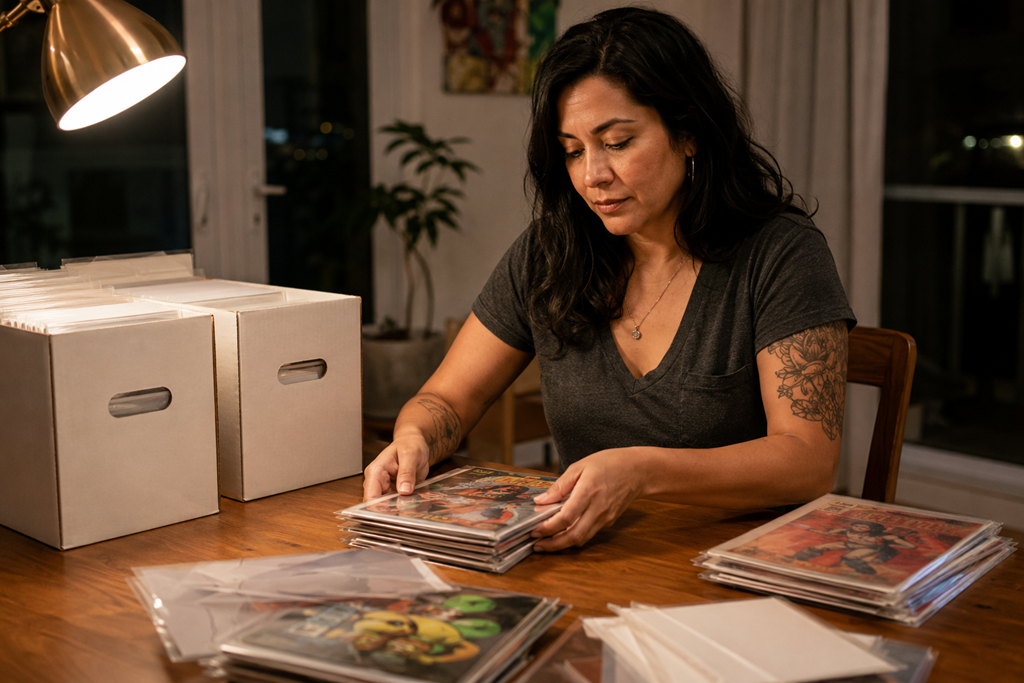
A comic collection becomes easier to enjoy when it has a simple place, a simple order, and a simple way to keep track of what you own. You do not need a complicated cataloging system, a museum-style storage setup, or a perfect collecting strategy. Most collectors just need a few calm habits that make the collection easier to find, protect, and appreciate.
For many comic book collectors, disorganization does not happen all at once. It usually starts with a few new issues left on a desk, a small stack beside the bed, or a shortbox that slowly becomes a mystery box. Over time, it gets harder to remember what you bought, where a certain issue went, or whether a series is complete.
The goal is not perfection. The goal is to make your collection feel less scattered and more enjoyable.
An Organized Collection Starts With Fewer Decisions
The easiest comic collecting habits are the ones that reduce repeated decisions.
When every new comic requires you to ask, “Where should this go?” the collection becomes harder to maintain. A simple system removes that friction. For example, you might decide that new comics always go into one temporary spot before being sorted later. That one habit alone can prevent random piles from spreading across your home.
Comic collecting often becomes messy because the collection grows faster than the system around it. You buy a few single issues, pick up a trade paperback, grab something at a convention, or find a back issue you were not expecting. Each item makes sense in the moment, but without a holding pattern, the collection slowly loses shape.
A calm collection does not need to be perfectly arranged every day. It just needs a reliable place for things to land.
The “Temporary Stack” Is Usually The Problem
Many collectors have a temporary stack that quietly becomes permanent.
This stack might include comics you have not read yet, comics you plan to bag and board, issues waiting to be filed, or books you want to look up later. At first, it feels harmless. Eventually, it becomes the place where everything unclear goes.
The issue is not that temporary stacks are bad. The issue is that they need limits.
A small, intentional “incoming comics” area can be useful. It gives you one place for new purchases before they enter the main collection. But if that area keeps growing without being cleared, it becomes a second collection with no order.
A better habit is to treat the temporary area as a short-term landing zone, not a storage system. Even if you only sort it once every week or two, that rhythm keeps the collection from becoming overwhelming.
Keep Your Main Order Easy To Understand
The best sorting system is the one you can actually maintain.
Some collectors organize alphabetically by title. Others group by publisher, character, creator, format, era, or personal priority. There is no single correct way to organize comics, because collections are personal. A reader who collects Batman back issues may need a different system than someone who mostly buys indie trades or complete runs.
The important thing is that your system should make sense when you are tired, busy, or adding books quickly.
If you have to rethink the system every time you file something, it may be too complicated. A useful organizing habit should answer basic questions quickly:
Where does this series belong?
Where do oversized books go?
Where do unread comics live?
Where do valuable or fragile books stay?
You do not need to answer every possible collecting scenario. You only need enough structure to avoid confusion most of the time.
Protect The Comics You Care About Most
Organization is not only about finding comics. It is also about caring for them.
For many collectors, the most important habit is separating the comics that need more protection from the ones that are simply part of regular reading life. Not every comic needs the same level of attention. A sentimental issue, a signed book, an older key issue, or a complete run may deserve better storage than casual reading copies.
This does not mean treating your home like a comic shop archive. It means noticing which parts of your collection matter most to you and giving them a little more care.
Simple habits can help: keeping comics away from damp areas, avoiding direct sunlight, storing books upright when possible, and not letting heavy piles sit unevenly for long periods. These quiet choices protect the collection without turning the hobby into a chore.
A comic collection should feel cared for, not stressful.
Track Enough To Avoid Buying The Same Issue Twice
One of the most common frustrations in comic collecting is accidentally buying something you already own.
This usually happens when a collection is partly organized but not easy to reference. You might remember that you collect a certain title, but not whether you have issue #7, volume two, or the trade paperback version. The confusion is even easier when publishers restart numbering, release variant covers, or use similar titles across different series.
A simple tracking habit can prevent a lot of this.
You do not need an elaborate database unless you enjoy that kind of detail. A basic note on your phone, a spreadsheet, a comic tracking app, or a short list of missing issues can be enough. The point is to have one place to check before buying.
The most useful tracking system is not always the most detailed one. It is the one you will actually update.
Let Your Collection Reflect How You Really Read
Some disorganization comes from trying to organize for an ideal version of yourself instead of your real collecting habits.
Maybe you tell yourself you are building complete runs, but you mostly buy stories that catch your interest. Maybe you think everything should be alphabetical, but you always look for comics by character. Maybe you plan to sell certain books someday, but emotionally, they are part of your personal history.
A collection becomes easier to organize when the system reflects your actual relationship with the hobby.
If you read trade paperbacks more often than single issues, keep them accessible. If your favorite comics are sentimental rather than valuable, give them a place of honor. If you are actively hunting missing issues, keep that information easy to reach.
Organization is not about making your collection look impressive to someone else. It is about making the collection easier for you to use, enjoy, and continue.
Avoid Turning Organization Into Another Collecting Project
Comic collectors often enjoy details. That can be part of the fun. But it can also make organizing feel bigger than it needs to be.
It is easy to believe you need perfect labels, matching boxes, detailed condition notes, custom shelves, a full digital inventory, and a complete re-sort before your collection can feel organized. That kind of thinking can keep people stuck because the project becomes too large to begin.
A more helpful reframe is this: better organization is still useful even when it is incomplete.
One sorted box is better than six mystery boxes. One updated missing-issues list is better than guessing at the shop. One reliable incoming area is better than comics scattered across several rooms.
Small improvements count because they reduce future confusion.
Make Room For The Collection To Grow Slowly
A comic collection needs breathing room.
When every box, shelf, or drawer is already full, even a few new comics can create disorder. Collectors often underestimate how quickly a collection expands, especially when they are following multiple series, buying trades, or collecting back issues.
Leaving some extra space is a simple but powerful habit. It gives the collection room to absorb new books without breaking the system. A box that is packed too tightly is harder to browse, harder to file, and more likely to become frustrating.
This is also a good emotional reminder: collecting should not feel like you are constantly fighting your own stuff. A little open space helps the hobby feel calmer.
The Collection Should Be Easy To Return To
The real test of an organized comic collection is not whether it looks perfect. It is whether you can return to it without feeling lost.
Can you find the next issue you want to read?
Can you tell what you already own before buying more?
Can you put new comics somewhere sensible when you get home?
Can you enjoy browsing your collection without feeling like you need to fix everything first?
Those are better signs of organization than a flawless system.
Comic collecting is meant to hold stories, memories, artwork, characters, and personal interest. When the collection is easier to manage, the hobby becomes easier to enjoy. A few simple habits can turn scattered piles into something calmer, clearer, and more personal without making the hobby feel overly serious.
The best organized collection is not the one with the most complicated system. It is the one that helps you keep enjoying the comics you already cared enough to collect.
Download Our Free E-book!