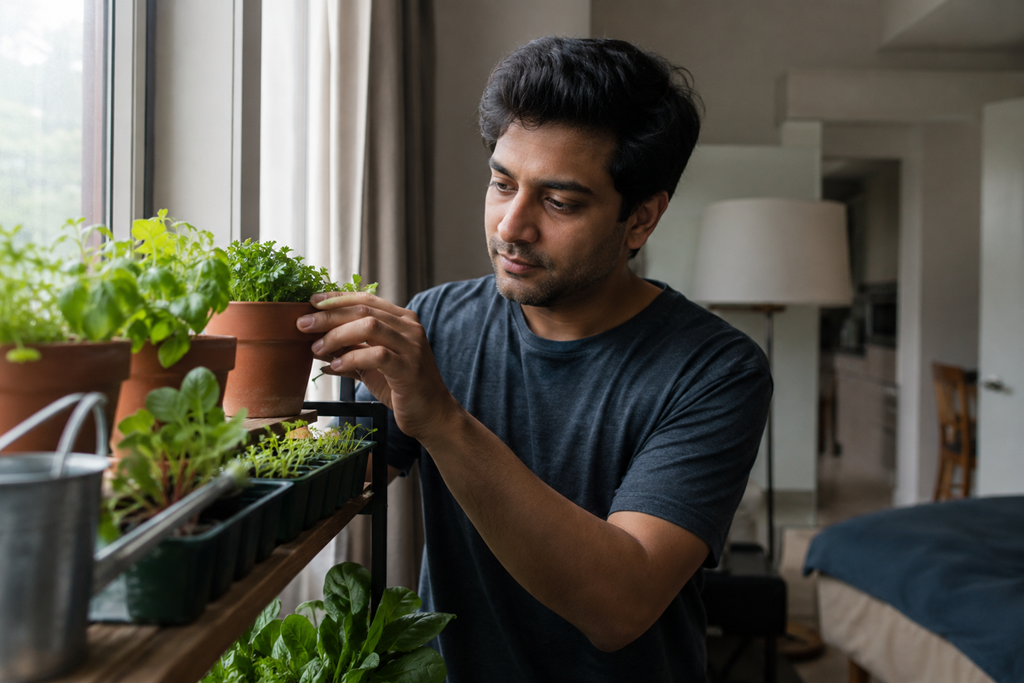
Urban farming in a small home does not have to mean turning your apartment, patio, balcony, or windowsill into a full garden. For many people, it simply means finding small, realistic ways to grow a little food, care for a few useful plants, and feel more connected to everyday self-reliance.
If you live in a small home or have limited outdoor space, the best urban farming ideas are usually the ones that fit naturally into your existing routines. A few herbs near a sunny window, leafy greens on a balcony, microgreens on a kitchen counter, or a small container garden near the door can still give you the feeling of growing something useful without overwhelming your home.
The goal is not to copy what someone with a backyard, raised beds, or extra storage space is doing. The goal is to create a small growing setup that makes sense for your actual life.
Small-Space Urban Farming Is More About Fit Than Size
One of the easiest misunderstandings about urban farming is assuming it requires a lot of room. That belief can make people delay starting because they think they need a yard, a large patio, a greenhouse, or a perfectly organized system.
In reality, limited-space urban farming is usually about matching the plant to the place.
A sunny kitchen window may be enough for basil, mint, parsley, or green onions. A small balcony may support pots of lettuce, spinach, cherry tomatoes, peppers, or strawberries. A shelf with decent light can hold microgreens or starter trays. Even a small corner near a window can become a simple place to grow something edible.
This matters because people often imagine urban farming as a big lifestyle change. But in a small home, it usually works better as a quiet addition to daily life. You water a few plants while making coffee. You cut a few herbs while cooking. You notice new leaves while opening a window. The value comes from repetition, not scale.
What This Usually Feels Like In Real Life
Trying to grow food in a small home can feel exciting at first, but also slightly confusing. You may wonder where to put plants, what will actually survive indoors, whether your balcony gets enough sun, or how to avoid making your space feel cluttered.
There can also be a quiet pressure to make it look beautiful right away. Online images often show perfectly arranged pots, lush balconies, and spotless kitchens filled with thriving plants. Real life is more uneven. Some plants grow well. Some struggle. Some containers look practical rather than stylish. Sometimes the best spot for sunlight is not the prettiest spot in the room.
That is normal.
Small-space urban farming becomes easier when you stop expecting every plant to become part of a picture-perfect lifestyle. A modest container of herbs that you actually use is more valuable than an ambitious setup that becomes hard to maintain.
Start With Plants That Earn Their Place
In a small home, every item has to justify the space it takes. That includes plants.
Good small-space urban farming usually starts with plants that are useful, forgiving, and easy to access. Herbs are often a strong starting point because they do not require much room and can make everyday meals feel fresher. Green onions can regrow in water or soil. Lettuce and spinach can grow in shallow containers. Microgreens can be grown indoors in small trays and harvested quickly.
The point is not to grow everything you eat. That expectation can make the effort feel disappointing. A small home garden may only provide a handful of ingredients, but those ingredients can still change how connected you feel to your food.
A few fresh basil leaves, a small harvest of lettuce, or cherry tomatoes from a balcony plant can make the practice feel real. That small success often matters more than the amount of food produced.
Containers Make Urban Farming More Flexible
For people with limited space, containers are often the most practical foundation. Pots, grow bags, window boxes, and shallow trays allow you to move plants as light changes, adjust the setup over time, and avoid committing to a permanent garden layout.
This flexibility is especially helpful in apartments, rentals, condos, and small homes where outdoor space may be shared or restricted. A container garden can live on a balcony, stair landing, patio corner, windowsill, or indoor shelf. It can expand slowly or stay small for years.
Containers also help reduce the feeling that you need a full system. You can begin with one pot of herbs or one planter of greens. If it works, you can add another. If it does not, you can adjust without feeling like the whole idea failed.
In small spaces, urban farming works best when it remains easy to change.
Light Is Usually The Real Limitation
Many beginners focus first on containers, soil, seeds, or plant varieties. Those things matter, but light is often the deciding factor.
A small space with strong sunlight may support more edible plants than a larger space with poor light. Most fruiting plants, such as tomatoes and peppers, need several hours of strong light to do well. Leafy greens and herbs can sometimes tolerate less, depending on the plant and the growing conditions.
This does not mean a low-light home cannot support any urban farming. It simply means expectations need to be adjusted. In lower-light spaces, herbs, microgreens, sprouts, or supplemental grow lights may make more sense than trying to grow sun-hungry vegetables.
Understanding light early prevents frustration. A struggling plant is not always a sign that you are bad at gardening. Sometimes the plant is simply in a place that cannot support what it needs.
A Small Balcony Can Become A Practical Growing Zone
A balcony does not need to be large to support a useful urban farming routine. The key is to keep the setup simple enough that the space still feels livable.
A narrow railing planter can hold herbs or small greens. A corner pot can support a tomato plant if the balcony gets enough sun. A small outdoor table can hold tools, gloves, or a watering can. Vertical shelves can help organize plants without covering the floor.
The most important thing is to avoid overcrowding. A balcony that becomes difficult to walk through, sit on, or water can quickly feel like a burden. Leaving open space is part of making the garden sustainable.
Small-space urban farming should support your home, not take it over.
Indoor Growing Works Best When It Stays Simple
Indoor urban farming can be especially appealing for people without balconies or yards. But it can also become complicated if you try to manage too much at once.
A simple indoor setup might include herbs near a window, microgreens on a counter, or a few regrowing kitchen scraps in jars before transferring them to soil. These small choices can help you build confidence without requiring much equipment.
It also helps to think about water, mess, and access. Plants that are hard to reach are easier to neglect. Containers without drainage can create problems. Soil bags, tools, and extra pots can become clutter if there is no place for them.
The best indoor growing ideas are usually the ones that blend into your normal movement through the home. If you pass the plants every day, you are more likely to care for them.
The Biggest Mistake Is Trying To Do Too Much Too Soon
A common pattern in small-space urban farming is starting with too many plants at once. This usually comes from enthusiasm, not lack of discipline. You see possibilities everywhere: the balcony, the window, the counter, the wall, the shelf.
But a small home has limits. So does your attention.
When the setup grows faster than your routine, the plants can start to feel like another household chore. Watering becomes inconsistent. Leaves wilt. Containers crowd the space. Instead of feeling grounded, the project begins to feel frustrating.
A better approach is to let the garden prove itself in your life before expanding. One successful container teaches you more than ten neglected ones. Once you understand your light, watering rhythm, and available space, it becomes easier to add more without creating stress.
Urban Farming Can Be Practical Without Being Perfect
There is a quiet emotional benefit to growing something in a small home. It can make a rented apartment, compact kitchen, or city balcony feel more personal and alive. It can also create a small sense of agency in a world where many people feel disconnected from how their food is grown.
But the practice does not have to be perfect to matter.
A few herbs count. A single tomato plant counts. A tray of microgreens counts. Learning which plants do not work in your space also counts. Urban farming is not only about production. It is also about attention, care, and slowly learning what your home can support.
For small homes and limited spaces, that mindset is often the difference between a project that fades and a habit that lasts.
A Grounded Way To Think About Your First Setup
Instead of asking, “How can I grow as much food as possible?” it may be more helpful to ask, “What small growing habit would actually fit my home?”
That question changes the pressure. It moves the focus away from performance and toward usefulness.
Maybe your first setup is a pot of mint and basil by the window. Maybe it is a balcony planter with lettuce. Maybe it is a small tray of microgreens near the kitchen sink. Maybe it is one tomato plant that gives you a few small harvests during the season.
The best urban farming idea for a small space is the one you can maintain without resenting it. When the setup fits your light, your routines, and your available room, it becomes less about having a garden and more about living with a little more connection to what you use every day.
Small Homes Can Still Support A Meaningful Growing Habit
Urban farming in a small home is not about proving how much you can produce. It is about making room for a small, steady relationship with food, plants, and everyday care.
Limited space may shape what you can grow, but it does not make the effort meaningless. In many ways, it can make the practice more intentional. You choose what earns space. You notice what works. You build slowly. You learn from the actual conditions of your home instead of forcing someone else’s version of gardening into your life.
A small urban farm can begin with one container, one windowsill, one balcony corner, or one simple plant you use often. That is enough to start feeling the difference.
Download Our Free E-book!