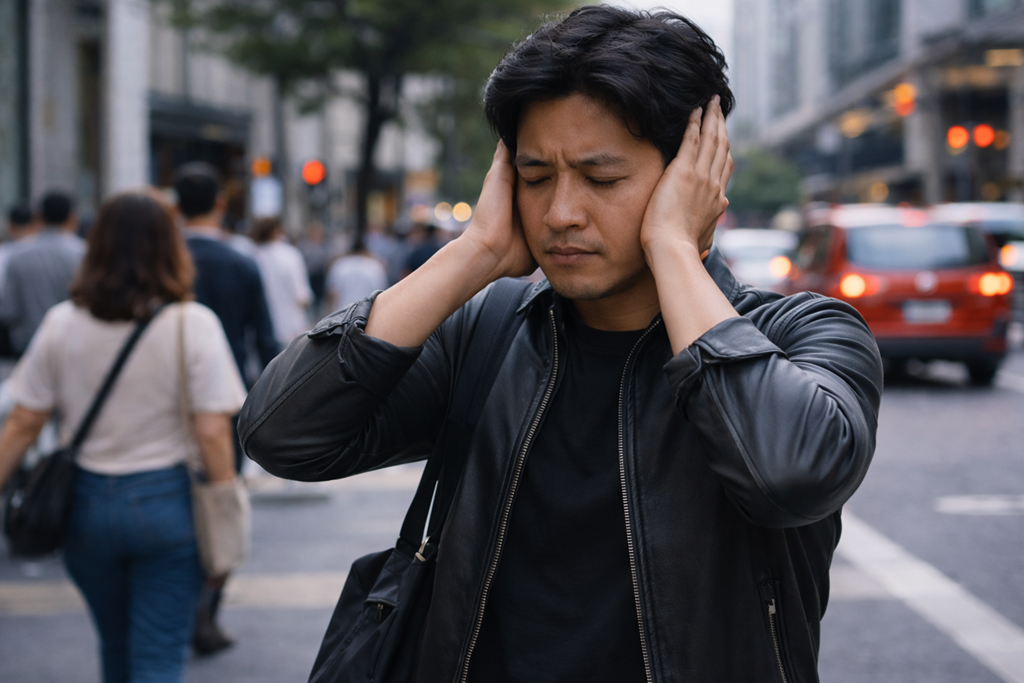
Emotional regulation is not about suppression because suppression tries to eliminate or push down emotions, while regulation focuses on experiencing emotions without being controlled by them.
In everyday terms, suppression sounds like:
“I shouldn’t feel this way.”
“Just ignore it.”
“Stay calm no matter what.”
Regulation sounds different:
“I notice I’m feeling frustrated.”
“This reaction makes sense.”
“I can respond thoughtfully even if I feel strongly.”
Many people confuse the two because both can look calm from the outside. But internally, they are very different experiences.
Suppression tightens.
Regulation stabilizes.
If you’ve ever stayed quiet in a conversation but felt tense, resentful, or emotionally charged inside, you’ve likely experienced suppression — not regulation.
What happens when you try to push your emotions down instead of working with them
When emotional regulation is misunderstood as suppression, people often become harder on themselves.
They may believe that healthy adults:
Don’t feel anger.
Don’t feel hurt easily.
Don’t get overwhelmed.
So they try to push feelings away.
The problem is that suppressed emotions don’t disappear. They tend to resurface later — often stronger, less controlled, and more confusing.
Over time, chronic suppression can lead to:
Emotional numbness
Unexpected outbursts
Internal tension
Difficulty identifying what you’re actually feeling
Regulation, by contrast, allows emotion to move through without taking over. It preserves clarity instead of compressing it.
Clarifying Insight:
Calm behavior does not automatically mean healthy regulation. The internal experience matters.
When you feel steady inside — even if the emotion is present — that’s regulation. When you feel tight, restricted, or disconnected, that’s often suppression.
How to work with your emotions without letting them take over
Shifting from suppression to regulation involves small but meaningful mindset changes.
Allow emotions to exist without immediate correction.
Not every feeling needs to be fixed or minimized.
Separate feeling from action.
You can feel anger without acting aggressively. You can feel sadness without withdrawing completely.
Get curious instead of critical.
Instead of “Why am I like this?” try “What is this emotion pointing to?”
Focus on recovery, not perfection.
Even if you react imperfectly, reflection and repair are part of regulation.
This approach reduces internal pressure. And when pressure decreases, reactions often become more manageable naturally.
Where people often confuse control with regulation
Mistake 1: Believing strong emotion equals weakness
Strong emotion is not a failure. It is a signal. The skill lies in how you navigate it, not whether you feel it.
Mistake 2: Valuing external calm over internal steadiness
It’s possible to appear composed while internally overwhelmed. Long-term regulation requires internal alignment, not just external control.
Mistake 3: Avoiding difficult conversations entirely
Some people mistake avoidance for regulation. Avoidance may reduce immediate discomfort but can increase long-term tension.
These misunderstandings are common because many environments reward emotional restraint without teaching emotional processing.
A steadier way to relate to your emotions over time
Emotional regulation isn’t about suppression. It’s about allowing emotion to exist while maintaining choice in how you respond.
Suppression pushes feelings down. Regulation creates space around them.
When you shift from control to steadiness, emotional experiences become less threatening and more manageable. This is a skill that develops gradually — not perfectly, but steadily.
If you’d like the bigger picture on why emotional reactions feel hard to control under stress — and how capacity and overload fit into this pattern — the hub article explores that broader framework in a calm, structured way.
Download Our Free E-book!