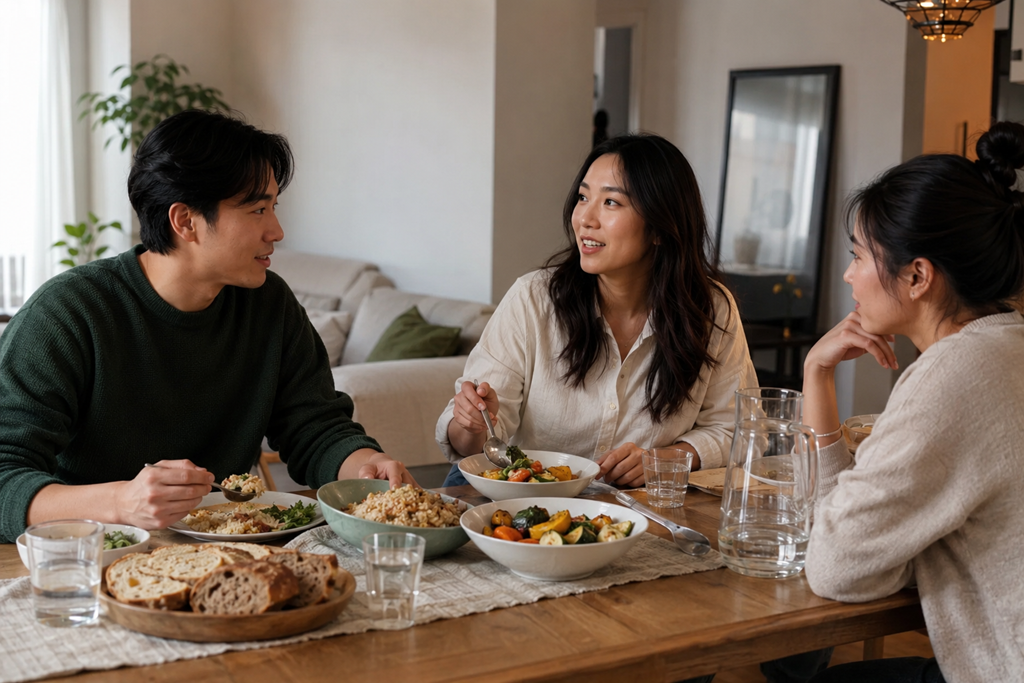
Many people enjoy home dining more than constant restaurant experiences because it gives them something restaurants cannot always provide: comfort, control, ease, and a quieter sense of connection. Eating at home can feel less performative, less expensive, less rushed, and more personal.
That does not mean restaurants are bad or that people should stop enjoying them. A great restaurant meal can be memorable, inspiring, and worth looking forward to. But when eating out becomes the default rather than an occasional pleasure, some people start to miss the calm rhythm of a meal at home.
Home dining often feels better because it fits real life more naturally.
Home Dining Can Feel More Personal Than Impressive
Restaurant meals often come with a sense of occasion. There may be a reservation, a dress code, a wait time, a menu to navigate, background noise, service interactions, and the quiet pressure to make the outing feel “worth it.”
Home dining works differently.
At home, the meal does not have to impress anyone. It can be simple, familiar, and still satisfying. A bowl of pasta, soup, roasted vegetables, tacos, rice and beans, or a shared salad can feel deeply enjoyable when the setting feels relaxed.
For many people, the appeal is not only the food itself. It is the freedom to eat slowly, talk naturally, pause between bites, sit in comfortable clothes, choose the music, adjust the lighting, and let the meal match the mood of the day.
That kind of comfort is difficult to outsource.
The Restaurant Experience Can Become Tiring When It Happens Too Often
Restaurants can be enjoyable, but they also require energy. Even casual dining asks people to make decisions, spend money, manage timing, interact socially, and accept whatever environment the restaurant provides.
That may be perfectly fine once in a while. But when restaurant meals become constant, the experience can start to feel less special.
A person may still love good food but feel tired of parking, waiting, noise, crowded spaces, rising prices, tipping decisions, menu fatigue, or the feeling of being rushed through a meal. Someone may also notice that frequent restaurant outings leave them feeling socially drained instead of restored.
This is one reason home dining can become more appealing over time. It gives people a way to enjoy food without turning every meal into an event.
Eating at Home Makes Everyday Meals Feel More Grounded
Home dining often supports a quieter kind of pleasure. The table does not need to be styled perfectly. The recipe does not need to be complicated. The meal does not need to look like something from a restaurant.
The value comes from the feeling of being settled.
A home meal can mark the end of a long day. It can create a small pause between work, errands, parenting, chores, and sleep. It can give couples, families, roommates, or even solo diners a familiar place to reconnect with themselves and their surroundings.
This is especially true for people who spend much of the day reacting to outside demands. A meal at home can feel like one of the few moments where the pace slows down.
Control Can Make Food More Enjoyable
One overlooked reason people enjoy home dining is control.
At home, people can decide how much salt, oil, spice, sauce, sweetness, or richness they want. They can adjust portions without awkwardness. They can cook around allergies, preferences, budgets, health goals, cultural habits, or simple cravings.
They can also combine foods in ways that would never appear on a restaurant menu.
That freedom matters. It makes food feel less like a transaction and more like part of daily living. Someone can make a meal lighter, heartier, simpler, more nostalgic, or more experimental depending on what they need that day.
The pleasure comes from being able to say, “This works for me.”
Home Dining Does Not Have to Mean Fancy Cooking
A common misunderstanding is that enjoying home dining requires being an excellent cook. It does not.
Many people who prefer eating at home are not trying to create restaurant-level meals. They may simply enjoy the feeling of making something warm, fresh, and familiar. They may like assembling simple ingredients, reheating leftovers thoughtfully, adding herbs to a basic dish, or setting the table in a way that makes the meal feel calmer.
Home dining is not always about culinary skill. Often, it is about atmosphere.
A simple meal can feel special when it is eaten without rushing. A leftover dish can feel comforting when it is served in a real bowl. Toast, eggs, soup, pasta, salad, or rice can feel satisfying when the environment supports the meal instead of distracting from it.
This is part of what makes home dining so accessible. It does not require perfection to feel meaningful.
Restaurants Can Feel Less Special When They Become Routine
Restaurants are often most enjoyable when they feel chosen, not automatic.
When eating out becomes too frequent, the novelty can fade. What once felt like a treat may begin to feel ordinary, expensive, or even slightly disappointing. People may start comparing every meal to the cost, the reviews, the photos, or the expectation they had before arriving.
Home dining can restore the contrast.
When most meals happen at home, a restaurant visit can feel more intentional again. Instead of being the default solution to hunger, it becomes something selected for a reason: a birthday, a date night, a new cuisine, a favorite neighborhood spot, or a break from cooking.
In that way, enjoying home dining can actually make restaurant experiences feel better, not worse.
The Real Appeal Is Often Emotional, Not Just Practical
People often explain home dining in practical terms: it saves money, supports healthier choices, avoids crowds, or makes weeknights easier. Those reasons are real.
But the deeper appeal is often emotional.
Home dining can feel safe, familiar, and unpressured. It can create a sense of ownership over daily life. It can help people feel less scattered. It can make food feel connected to care, rhythm, memory, and personal preference.
For some people, eating at home brings back a sense of stability they do not always find in busy public spaces. For others, it gives them a way to enjoy food without comparison, performance, or overstimulation.
That emotional ease is one of the biggest reasons home meals can feel more satisfying than constant restaurant experiences.
A Quiet Meal Can Still Feel Like a Good Meal
The enjoyment of home dining is not about rejecting restaurants or pretending every meal at home is magical. Some home meals are ordinary. Some are rushed. Some are imperfect. That is part of their honesty.
But many people find that the best everyday meals are not always the most impressive ones. They are the meals that fit the moment.
A quiet dinner at home can offer comfort after a long day. A simple breakfast can feel grounding before a busy morning. A homemade lunch can feel like a small act of care. A shared meal at the kitchen table can feel more memorable than a crowded restaurant where everyone leaves tired.
Home dining reminds people that food does not always need a big setting to feel enjoyable.
Sometimes, the best dining experience is simply the one that lets you feel most at ease.
Download Our Free E-book!