Many people prefer glamping over traditional camping because it lets them enjoy nature without giving up as much comfort, convenience, or personal ease. For some people, the appeal of being outdoors is real, but the stress of setting up a tent, sleeping on the ground, dealing with limited bathroom access, or managing every small detail of camp life can make the trip feel less relaxing than expected.
Glamping offers a softer way into the outdoor experience.
It is not always about avoiding nature. Often, it is about enjoying nature in a way that feels more restful, accessible, and realistic for a person’s current life, body, schedule, or comfort level.
Glamping Meets People Where They Actually Are
Traditional camping can be meaningful, simple, and memorable. But it also asks a lot from the person doing it.
You may need to pack carefully, set up shelter, cook with limited tools, sleep in a more rugged environment, manage weather changes, and stay comfortable without many of the conveniences you use every day. For people who love that kind of challenge, those details can be part of the reward.
For others, those same details can become the reason the trip feels tense.
Glamping appeals to people who want fresh air, quiet mornings, campfires, trees, stars, and a slower pace, but do not necessarily want the physical discomfort or logistical pressure that often comes with traditional camping. A real bed, a private bathroom, a prepared shelter, or a small kitchen can make the difference between feeling overwhelmed and feeling restored.
That is one reason glamping has become more popular with people who like the idea of being outdoors but do not identify as rugged campers.
Comfort Can Make Nature Easier To Enjoy
One of the biggest misunderstandings about glamping is that comfort somehow makes the experience less real.
For many people, the opposite is true.
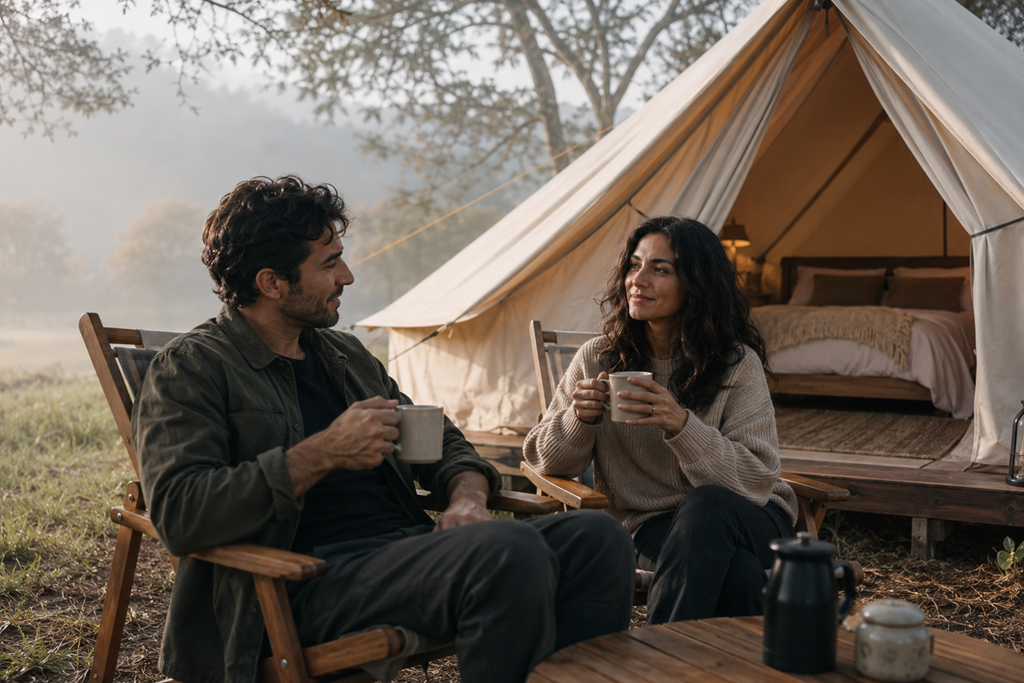
When basic comfort is handled, they can actually pay more attention to the setting around them. Instead of worrying about a leaking tent, a sore back, missing supplies, or how to cook in the dark, they can notice the trees, the quiet, the morning light, the smell of coffee outside, or the feeling of being away from regular routines.
Comfort does not always remove the outdoor experience. Sometimes it removes the distractions that keep people from enjoying it.
This matters because not everyone relaxes through discomfort. Some people feel renewed by roughing it. Others feel more open, present, and connected when they are not physically tense the whole time.
Glamping gives those people permission to experience nature without pretending they enjoy every rugged part of camping.
Traditional Camping Can Feel Like A Lot Of Work
For someone who has not camped often, a traditional camping trip can feel surprisingly complicated.
There is the packing list, the gear, the food planning, the sleeping setup, the weather concerns, the bathroom situation, the bugs, the cleanup, and the question of whether anything important was forgotten. Even a short weekend trip can feel like a small project.
That does not mean traditional camping is bad. It simply means it has a learning curve.
Glamping reduces some of that friction. The shelter is often already prepared. The sleeping setup is usually more comfortable. Some sites offer electricity, climate control, bathrooms, cookware, or nearby dining options. The experience can still feel outdoorsy, but the amount of planning and problem-solving may be lower.
For busy adults, parents, beginners, or people who already feel stretched thin, that simplicity can be deeply appealing.
They may not be looking for the most rugged version of the outdoors. They may simply want a break that does not create a second layer of stress.
Glamping Can Feel More Accessible For Different Bodies And Needs
Another reason people choose glamping is that traditional camping is not equally comfortable or realistic for everyone.
Sleeping on the ground may be difficult for someone with back pain, joint discomfort, limited mobility, or sleep issues. Walking to shared bathrooms at night may feel inconvenient or unsafe for some people. Extreme temperatures, limited privacy, or a lack of basic amenities can make the experience harder than it sounds on paper.
Glamping can make outdoor travel more accessible without requiring someone to explain or defend their needs.
A raised bed, better lighting, easier bathroom access, a stable shelter, or a more controlled environment can help people participate in the outdoor experience in a way that feels good for them.
This is an important distinction. Choosing glamping does not always mean someone is being picky or unwilling to try something new. Sometimes it means they are being honest about what allows them to relax, sleep, and enjoy the trip.
It Offers A Gentler Entry Point For Beginners
Many people are curious about camping but feel intimidated by the idea of doing it “the right way.”
They may not own gear. They may not know how to set up a tent. They may worry about cooking outdoors, handling weather, staying warm at night, or figuring out what to bring. Traditional camping can feel like a culture with its own rules, tools, and expectations.
Glamping gives beginners a lower-pressure entry point.
They can experience parts of outdoor living without needing to master everything at once. They can learn what they enjoy about being outside, what kind of setting they prefer, how they sleep away from home, and whether they want to try more rustic camping later.
For some people, glamping becomes a bridge to traditional camping. For others, it becomes the version of outdoor travel that suits them best.
Both outcomes are valid.
Some People Want Rest More Than Adventure
Traditional camping is often associated with adventure, self-reliance, and simplicity. Glamping is often associated with rest, beauty, and ease.
That difference matters.
Many people are not looking for a trip that tests them. They are looking for a trip that softens the pace of their normal life. They want a weekend where they can sit outside, sleep well, share a meal, read, talk, walk, and breathe without feeling like every small task takes extra effort.
Glamping fits that emotional need.
It can provide a sense of escape without requiring a person to give up the conditions that help them feel grounded. For couples, families, friend groups, or solo travelers, that balance can make the trip feel more nourishing.
A person may still love nature while also wanting clean sheets, a comfortable chair, a hot shower, or a prepared place to sleep.
That is not a contradiction. It is a preference.
The Social Side Can Be Easier Too
Glamping can also make outdoor trips easier when people in the same group have different comfort levels.
One person may love traditional camping. Another may feel anxious about it. One person may enjoy primitive conditions. Another may need better sleep, more privacy, or easier access to amenities. When a group tries to force everyone into the same rugged experience, the trip can become tense before it even begins.
Glamping often creates a middle ground.
It allows people to share the outdoor setting without requiring everyone to have the same tolerance for discomfort. That can be especially helpful for family trips, romantic getaways, birthday weekends, or friend gatherings where the main goal is connection rather than proving outdoor skill.
The best version of a trip is not always the most difficult one. Sometimes it is the one more people can genuinely enjoy.
The Appeal Is Not Always Luxury
The word “glamping” can make the experience sound flashy, expensive, or overly polished. Some versions are. But many people are not drawn to glamping because they want extravagance.
They are drawn to it because they want the outdoors to feel less intimidating.
A canvas tent with a real bed, a small cabin near a lake, a yurt with heat, or a simple A-frame with a fire pit can feel special without being excessive. The appeal is often less about luxury and more about reducing discomfort enough for the experience to feel calm.
This is where glamping can be easy to misunderstand.
People are not always choosing it because they dislike nature. They may be choosing it because they want a version of nature that fits their season of life.
Traditional Camping Still Has Its Place
Glamping does not replace traditional camping. It simply serves a different kind of traveler.
Traditional camping can be rewarding for people who enjoy independence, minimalism, hands-on outdoor skills, and the satisfaction of making a temporary home with basic tools. It can also be less expensive and more flexible, depending on the location and gear someone already owns.
But not everyone wants the same kind of reward from a trip.
Some people want simplicity through fewer comforts. Others want simplicity through fewer hassles. Traditional camping often offers the first version. Glamping often offers the second.
Seeing that difference clearly can remove a lot of unnecessary judgment.
The question is not which one is more authentic. The better question is which one helps a person feel more present, relaxed, and connected to the experience they actually want.
Why This Choice Feels So Personal
Outdoor travel often carries unspoken expectations.
People may feel like they should enjoy roughing it. They may think camping only “counts” if it involves tents, sleeping bags, camp stoves, and a certain amount of inconvenience. That pressure can make someone feel embarrassed for wanting more comfort.
But travel preferences are personal.
A restful outdoor trip for one person may feel boring to another. A rugged campsite may feel freeing to one traveler and stressful to someone else. A beautiful glamping tent may feel like the perfect balance for one person and unnecessary to another.
There is no single right way to enjoy being outside.
The better measure is whether the trip supports the kind of experience someone is hoping to have. If glamping helps a person slow down, sleep better, spend more time outdoors, and return home feeling restored, then it has done its job.
A Clearer Way To Think About Glamping
Glamping is not simply “camping with nicer things.” It is a more comfortable outdoor stay designed for people who want nature without as many rough edges.
That is why many people prefer it.
It lowers the barrier to entry. It makes the outdoors feel more accessible. It reduces some of the work. It supports better rest. It allows people with different comfort levels to enjoy time together. And for many travelers, it creates enough ease for nature to feel calming instead of stressful.
Traditional camping can still be wonderful. But glamping gives people another option.
For anyone who likes the idea of fresh air, quiet scenery, and slower living but feels hesitant about the discomfort of camping, glamping can be a practical and honest middle ground. It lets the experience feel less like a test and more like a true pause from everyday life.
Download Our Free E-book!