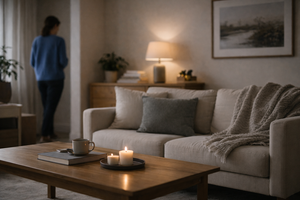
Many people turn to minimalism because life can start to feel crowded in more ways than one. Too many possessions, choices, commitments, tabs, notifications, and unfinished tasks can quietly create the feeling that there is always something else to manage.
Minimalism appeals to people because it offers a sense of relief. Not because it magically solves every problem, but because it gives them permission to reduce what is unnecessary, focus on what matters, and create more breathing room in everyday life.
At its core, minimalism is not about owning as little as possible. It is about carrying less of what constantly drains your attention.
Overwhelm Often Builds Quietly
Feeling overwhelmed does not always look dramatic. Sometimes it looks like standing in the middle of your home and not knowing where to start. Sometimes it looks like opening a closet and feeling tired before you even touch anything. Sometimes it looks like having enough, but still feeling unsettled.
For many people, the problem is not one single object, task, or responsibility. It is the accumulation.
A counter covered with mail. A phone full of alerts. A calendar with no open space. A bedroom filled with things that no longer fit the life you are actually living. Each item may seem small on its own, but together they create mental noise.
That is why minimalism can feel so appealing. It gives people a way to name what they have been feeling: “I am not lazy. I am carrying too much input.”
Minimalism Creates Breathing Room
One reason people are drawn to minimalism is that it makes daily life feel easier to move through.
When your space is less cluttered, there are fewer things competing for your attention. When your schedule has fewer unnecessary obligations, your mind has more room to settle. When your buying habits become more intentional, you spend less time sorting, storing, cleaning, returning, and regretting.
Minimalism helps because it reduces friction.
A calmer home does not have to be empty. A simpler routine does not have to be rigid. A minimalist lifestyle does not require giving up personality, comfort, or joy. The point is to remove enough excess that your life feels more usable.
That sense of usability matters. People often feel overwhelmed not because they lack discipline, but because their environment keeps asking too much of them.
The Relief Comes From Fewer Decisions
One of the most overlooked reasons minimalism feels calming is that it reduces decision fatigue.
Every extra thing in your life can come with a question attached to it.
Should I keep this? Where should it go? Do I need to clean it? Should I fix it? Why did I buy it? What if I need it later? Should I feel guilty about getting rid of it?
Over time, these small questions become exhausting.
Minimalism helps people reduce the number of decisions they have to make repeatedly. A simplified wardrobe can make mornings easier. A clearer kitchen counter can make cooking feel less stressful. A smaller set of meaningful commitments can make the week feel less scattered.
The emotional benefit is not just having less. It is having fewer open loops in your mind.
It Gives People Permission To Stop Keeping Everything
Many people feel overwhelmed because they are trying to preserve every version of themselves at once.
They keep items from old hobbies, old jobs, old goals, old relationships, old routines, and old expectations. Some of those things may still matter. But others quietly become emotional weight.
Minimalism gives people a gentler question to ask:
Does this still support the life I am actually living?
That question can feel surprisingly clarifying. It does not shame the past. It simply recognizes that a home, schedule, or lifestyle can become crowded with things that once made sense but no longer fit.
For people who feel stretched thin, this can be a major relief. They are not rejecting who they used to be. They are making room for who they are now.
Minimalism Is Often Misunderstood
A common misunderstanding is that minimalism means bare rooms, strict rules, neutral wardrobes, or owning a certain number of items.
That version of minimalism can feel intimidating, and for many people, it is not realistic or appealing.
In real life, minimalism is much more flexible. A parent can practice minimalism. A person with hobbies can practice minimalism. Someone who loves books, cooking, art, music, travel, or cozy home details can still live more minimally.
The question is not, “How little can I own?”
The better question is, “What is making my life feel heavier than it needs to be?”
That shift matters because it makes minimalism less about appearance and more about relief.
Clutter Is Not Always Just Physical
People often start with physical clutter because it is visible. A messy closet, crowded garage, or overflowing drawer is easier to identify than mental clutter.
But minimalism often becomes attractive because the physical clutter reflects something deeper.
Too many obligations. Too many purchases made out of stress. Too many unfinished projects. Too much digital noise. Too many expectations from other people. Too much pressure to keep up.
When people begin simplifying their surroundings, they sometimes realize they are also craving a simpler relationship with time, money, attention, and energy.
This does not mean every problem can be solved by decluttering. But it does mean that simplifying what you can control may help you feel less trapped by everything else.
The Goal Is Not Perfection
Minimalism can become stressful when people turn it into another standard to meet.
If someone starts believing their home has to look perfectly clean, their belongings have to be perfectly curated, or their life has to look visually minimalist at all times, the whole purpose gets lost.
Minimalism should reduce pressure, not create a new kind of pressure.
A lived-in home can still be simple. A busy season can still include minimalist choices. A person can own practical extras, sentimental items, and comforting things without failing at minimalism.
The goal is not to prove anything. The goal is to make daily life feel more manageable.
Why It Feels So Grounding
Minimalism feels grounding because it brings attention back to what is actually useful, meaningful, and supportive.
When life feels overwhelming, everything can feel equally urgent. Minimalism gently challenges that. It helps separate what matters from what is simply present. It creates enough space to notice what is helping and what is adding weight.
That is why many people are drawn to minimalism during stressful seasons. They are not always chasing a trend. They may be looking for quiet, order, and a sense of control in a world that often feels overstimulating.
Minimalism gives them a practical way to begin.
Not by changing everything overnight. Not by getting rid of everything they own. But by slowly asking what can be lighter, clearer, and more intentional.
For many people, that is the real appeal: minimalism helps life feel less crowded, so they can feel more present inside it.
Download Our Free E-book!