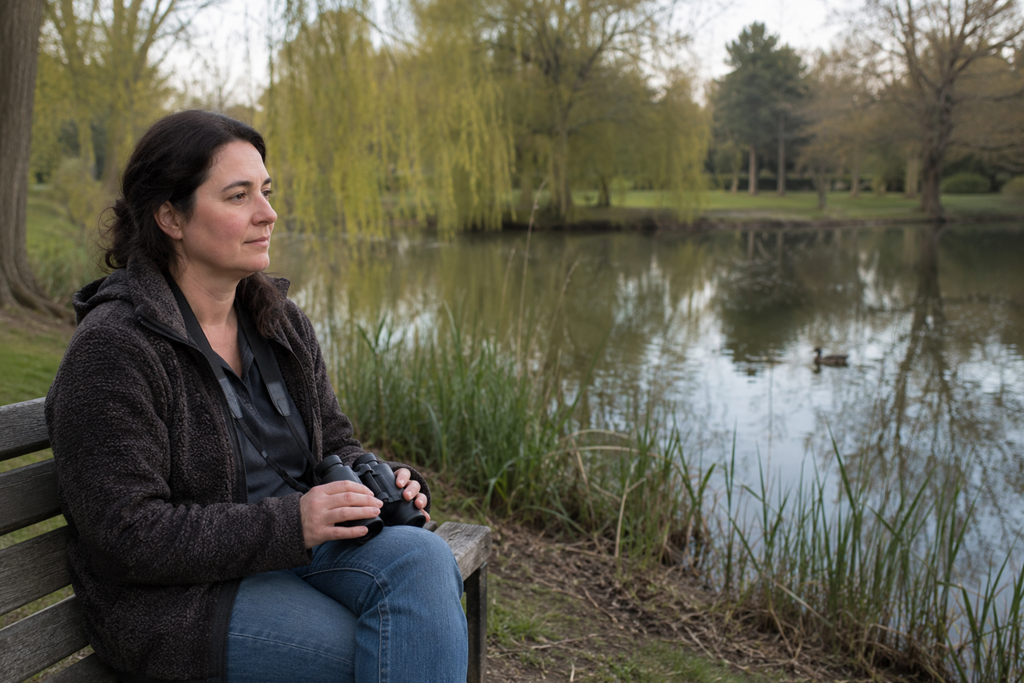
Many people use bird-watching to relax because it gives the mind something gentle, natural, and focused to notice without demanding much in return. Instead of forcing the brain to “calm down,” bird-watching quietly redirects attention toward movement, sound, color, and small details in the present moment.
That is part of what makes it appealing. You do not have to be an expert, own expensive gear, or travel somewhere dramatic to benefit from it. A bird on a fence, a robin moving through grass, a hawk circling overhead, or sparrows gathering near a shrub can be enough to interrupt mental noise and bring your attention back to what is happening right in front of you.
For people who feel mentally busy, emotionally stretched, or simply tired of constant screens and responsibilities, bird-watching can become a peaceful way to pause without feeling like they are doing “nothing.”
Bird-Watching Gives The Mind A Softer Place To Land
A lot of relaxation advice sounds simple until you actually try it. Sitting still with your thoughts can feel uncomfortable. Meditation may feel too structured. Exercise may require more energy than you have. Even leisure activities can become another form of stimulation if they involve scrolling, watching, comparing, or reacting.
Bird-watching is different because it gives your attention a light anchor.
You are not trying to empty your mind. You are noticing. You might listen for a call, watch a bird hop along a branch, observe how it tilts its head, or wait to see where it flies next. This small act of attention can create a quiet break from repetitive thinking.
The mind often relaxes more easily when it has something simple and non-threatening to follow. Birds move unpredictably, but not usually in a way that feels stressful. Their presence invites curiosity without requiring performance.
The Relaxation Often Comes From Paying Attention, Not Escaping
One reason bird-watching can feel mentally clearing is that it does not ask you to escape your life completely. It simply changes the quality of your attention.
When someone is overwhelmed, their thoughts often circle around unfinished tasks, conversations, decisions, worries, or plans. Bird-watching interrupts that loop in a grounded way. The person is still in the real world, but they are no longer only inside their own head.
This matters because many people are not looking for a dramatic reset. They are looking for a small pocket of relief.
Watching birds can offer that. It creates a moment where the mind shifts from problem-solving to observing. That shift can feel surprisingly restorative, especially when daily life is full of urgency, noise, and decision-making.
It Helps Because Birds Ask For Patience Without Pressure
Bird-watching naturally slows people down.
You cannot make a bird appear on command. You cannot force a specific moment to happen. You can only show up, look, listen, and wait. For some people, that waiting becomes part of the benefit.
In everyday life, waiting often feels frustrating because it is tied to delay, inconvenience, or lack of control. In bird-watching, waiting can feel softer. It becomes part of noticing. Even when nothing unusual happens, there may still be leaves moving, distant calls, quiet patterns, and small signs of life.
This kind of patience is not passive in a negative way. It is attentive. It gives the nervous system a chance to move at a different pace.
That may be why people often describe bird-watching as relaxing even when they do not see a rare bird or identify every species. The value is not only in what they find. It is also in how the experience changes their pace.
You Do Not Have To Be A Serious Birder To Benefit From It
A common misunderstanding is that bird-watching only “counts” if you know bird names, keep a life list, carry binoculars, or visit special nature areas. Those things can add enjoyment, but they are not required for the relaxing part of the experience.
For many people, the benefit starts much earlier.
It can begin with noticing birds from a kitchen window. It can happen during a walk around the neighborhood. It can happen while sitting on a porch, resting on a park bench, or pausing near a tree before getting back in the car.
The mind does not need a perfect setting to receive the benefit of gentle attention. It only needs a moment where awareness moves away from pressure and toward something living, ordinary, and present.
This is one reason bird-watching fits naturally into everyday life. It can be as casual or as involved as a person wants it to be.
Bird-Watching Can Make Ordinary Places Feel More Alive
Another reason bird-watching clears the mind is that it changes how familiar places feel.
A yard, sidewalk, parking lot, neighborhood trail, or local park may seem ordinary when you are moving through it quickly. But once you start noticing birds, the same place can feel more layered. There may be movement in the trees, calls from rooftops, patterns near water, or seasonal changes you previously missed.
This can be grounding because it reconnects people with their immediate environment. Instead of needing a major trip or a perfect outdoor setting, they begin to see that small moments of nature are already around them.
That realization can be quietly powerful. It reminds the reader that relaxation does not always require leaving life behind. Sometimes it comes from noticing life more closely.
The Mind Clears When The Experience Stays Simple
Bird-watching can become less relaxing when people turn it into another task to master.
This often happens when someone feels they need to identify every bird, take perfect photos, compare sightings, buy all the right gear, or prove they are doing it correctly. Those goals are not wrong, but they can change the emotional tone of the activity.
If the original desire is to relax and clear the mind, simplicity matters.
It is enough to notice shape, sound, movement, color, and behavior. It is enough to wonder what a bird is doing. It is enough to enjoy a few quiet minutes without documenting or explaining everything.
The clearer benefit often comes when bird-watching remains spacious rather than pressured. The experience works best when it feels like permission to observe, not another assignment.
Why This Feels So Different From Screen-Based Rest
Many people try to relax by looking at their phones, watching videos, or moving through online content. Those activities can be entertaining, but they do not always clear the mind. Sometimes they add more information, more comparison, and more emotional noise.
Bird-watching offers a different kind of rest because it is slower and less demanding.
There are no constant notifications. There is no feed to refresh. There is no need to respond. The moment unfolds at its own pace. The bird either stays, moves, sings, hides, or flies away.
That natural rhythm can help the mind settle because it is not being pulled in many directions at once. Instead of consuming more input, the person is noticing one small part of the world with more care.
It Can Be Especially Helpful During Mentally Crowded Seasons
Bird-watching often appeals to people during seasons when their minds feel full.
That might mean work stress, family responsibilities, decision fatigue, grief, burnout, loneliness, or a general sense of being overstimulated. The activity does not solve all of those problems, and it should not be treated as a cure-all. But it can offer a gentle interruption.
Sometimes a person does not need a complete life overhaul in that moment. They need ten minutes where their attention is not being consumed by pressure.
Bird-watching can provide that kind of pause. It offers a way to be present without having to explain yourself, improve yourself, or make immediate progress. For many people, that is exactly why it feels emotionally refreshing.
The Quiet Benefit Is Learning To Notice Again
At its heart, bird-watching relaxes many people because it helps them notice again.
It brings attention back to small movements, natural sounds, seasonal rhythms, and ordinary beauty. It reminds the mind that not every moment has to be filled, fixed, or rushed. It creates space between thoughts without demanding that the thoughts disappear.
That is why the activity can feel both simple and meaningful.
A person may begin by watching a bird outside a window and realize they feel a little less tense afterward. They may take a short walk and come home feeling more settled. They may start noticing birds in places they used to ignore and feel more connected to their surroundings.
The value is not only in becoming a better bird-watcher. It is in becoming a little more present, a little less hurried, and a little more able to let the mind breathe.
Download Our Free E-book!