Many people use crafting to reduce stress because it gives the mind something simple, steady, and physical to focus on. Instead of trying to “think” their way out of tension, they can place their attention on color, texture, movement, and the small decisions happening right in front of them.
That is why activities like knitting, painting, scrapbooking, embroidery, pottery, paper crafts, journaling, candle making, or simple home decor projects can feel calming even when they are not perfect. Crafting gives the brain a break from constant input. It offers a quieter kind of focus.
For many people, the benefit is not really about becoming artistic. It is about feeling less scattered, more grounded, and more connected to the present moment.
Crafting Gives Your Mind A Softer Place To Land
Stress often makes the mind feel crowded. You may be thinking about work, family, money, responsibilities, appointments, messages, unfinished tasks, or things you wish you had handled differently.
Crafting does not erase those realities. But it can create a small pocket of attention where everything does not have to be solved at once.
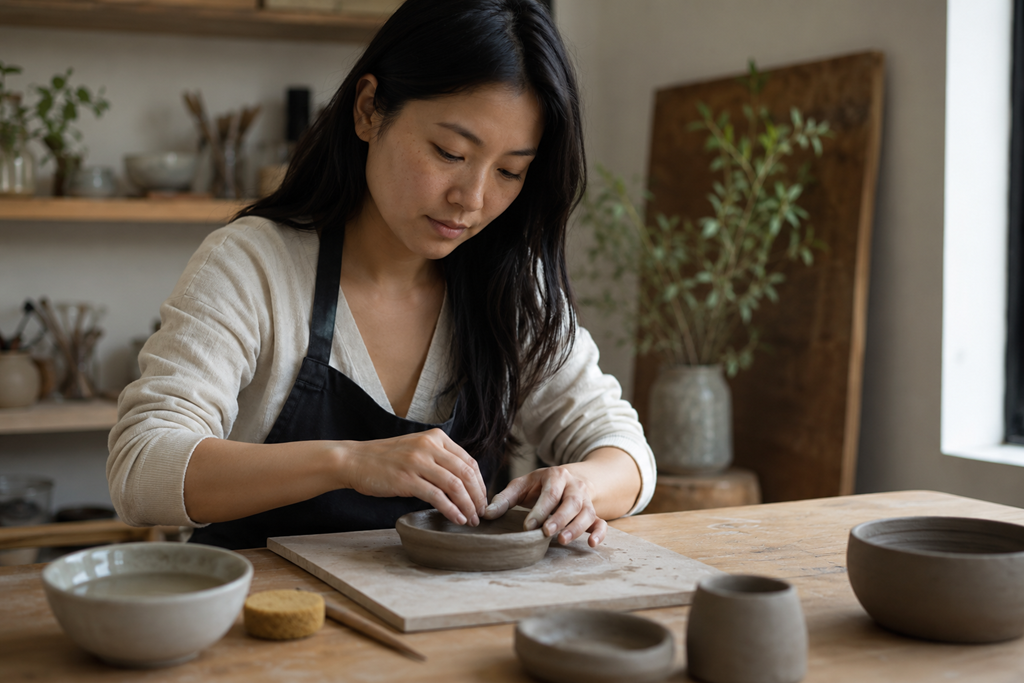
When your hands are busy cutting paper, threading yarn, shaping clay, arranging flowers, painting a small object, or gluing pieces into place, your mind has a gentler place to rest. The activity is focused enough to hold your attention, but often simple enough that it does not feel like another high-pressure task.
That balance is part of what makes crafting comforting. It invites concentration without demanding perfection.
Being Present Feels Different When Your Hands Are Involved
It can be hard to “just be present” when your mind is racing. For many people, stillness does not feel peaceful at first. It can feel uncomfortable, restless, or even frustrating.
Crafting offers a more approachable version of presence.
Instead of sitting quietly and trying not to think, you are doing something small and tangible. You notice the way a brush moves across a surface. You choose between two colors. You feel the weight of fabric, beads, paper, wood, or yarn in your hands. You make small adjustments as you go.
This kind of attention brings you back into the room.
It reminds you that life is not only happening in your thoughts, your phone, your inbox, or your worries. It is also happening in small, ordinary moments that can be seen, touched, shaped, and enjoyed.
The Calm Often Comes From The Rhythm
Many crafts involve repeated motions. Stitching, folding, painting, sanding, weaving, tracing, cutting, and arranging can all create a steady rhythm.
That rhythm matters.
When life feels unpredictable, repetitive creative motion can feel reassuring. You do not have to make a major decision every few seconds. You do not have to respond to anyone. You do not have to absorb more information. You can simply stay with the next stitch, the next brushstroke, the next fold, or the next small piece.
This is one reason crafting can feel soothing even when the project itself is very simple.
The nervous system often responds well to gentle repetition. It can create a sense of order when the day has felt messy or overstimulating. The project becomes a small, contained world where the next action is clear.
Crafting Can Make Progress Feel Visible
Stress can feel especially heavy when your efforts are invisible.
You may spend the day answering messages, managing responsibilities, cleaning up after others, solving problems, or thinking through decisions no one else sees. By the end of the day, you may feel exhausted but still wonder what you actually accomplished.
Crafting can offer a different kind of satisfaction because the progress is visible.
A blank page slowly fills in. A scarf becomes longer. A flowerpot changes color. A scrapbook page comes together. A plain corner of the home gains a handmade detail. A small object becomes more beautiful because you spent time with it.
That visible progress can be emotionally grounding.
It gives you a quiet reminder that effort can become something real, even when the rest of life feels unfinished.
You Do Not Have To Be “Good At Crafts” To Benefit From Crafting
One common misunderstanding is that crafting is only worthwhile if the finished result looks impressive.
That belief can take away the very calm that crafting is meant to offer.
For stress relief, the value is often in the process, not the outcome. The point is not always to create something polished enough to sell, display, post online, or give as a gift. Sometimes the point is simply to sit down, slow your pace, and let your hands make something imperfect but real.
A slightly uneven painted vase can still be calming to create. A simple handmade card can still feel meaningful. A beginner crochet project can still bring comfort, even if the edges are not perfect.
Crafting becomes more restful when it is allowed to be human.
The Best Craft For Stress Is Often The One That Feels Low Pressure
Not every craft feels calming to every person.
Some people feel peaceful with detailed work like embroidery, cross-stitch, model building, beading, or calligraphy. Others relax more with loose, forgiving crafts like watercolor, collage, clay, simple home decor, or painting objects they already own.
The most calming craft is usually the one that feels approachable for your current season of life.
If you are already mentally tired, a complicated project with many supplies, expensive tools, or a steep learning curve may feel like another obligation. A simple craft with a clear starting point may be more supportive.
This does not mean you should never challenge yourself creatively. It simply means that stress-relief crafting works best when the activity gives more than it takes.
Screens Can Entertain You, But Crafting Can Reconnect You
Many people turn to screens when they are stressed because screens are easy, available, and distracting. There is nothing wrong with enjoying a show, scrolling for a little while, or watching videos to unwind.
But screen-based rest can sometimes leave people feeling strangely unsatisfied.
Crafting offers a different kind of decompression. It is not just distraction. It is participation. You are not only consuming images, ideas, or other people’s creativity. You are making choices, using your senses, and creating something with your own hands.
That can feel quietly empowering.
Even a small craft can remind you that you are not only a person who reacts to life. You are also a person who can shape something, choose something, and make something.
Crafting Helps Some People Feel Like Themselves Again
Stress can narrow life down to responsibilities. Over time, a person may begin to feel like they are only working, managing, helping, planning, paying, responding, or catching up.
Crafting can gently interrupt that pattern.
It gives people permission to do something that does not have to be purely productive in the usual sense. It can be useful, decorative, expressive, comforting, or simply enjoyable. It can reconnect someone with curiosity, play, patience, memory, beauty, or personal taste.
This is why crafting can feel more meaningful than it appears from the outside.
To someone else, it may look like painting a flowerpot, arranging fabric, making a wreath, or decorating a journal page. But to the person doing it, it may feel like reclaiming a small part of themselves.
The Pressure To Make It Perfect Can Ruin The Peace
Crafting becomes stressful when it starts to carry the same pressure people are trying to escape.
That can happen when you compare your work to social media, choose projects that are too complicated, buy too many supplies before you know what you enjoy, or turn every hobby into something that must be impressive, efficient, or monetized.
The calm comes back when the project is allowed to be ordinary.
You do not have to document it. You do not have to finish it quickly. You do not have to turn it into a business. You do not have to justify why you are doing it.
Sometimes a craft is allowed to be just a craft.
That simplicity is part of its emotional value.
A Small Creative Ritual Can Change The Tone Of A Day
Crafting does not need to take over your schedule to make a difference.
For many people, even a short creative ritual can help soften the day. Ten minutes of coloring, twenty minutes of knitting, a quiet weekend hour painting a small object, or an evening spent arranging a simple handmade card can create a feeling of pause.
The power is not always in the size of the project. It is in the shift of attention.
You move from rushing to noticing. From consuming to creating. From mental noise to physical presence. From everything needing an answer to one small thing simply needing your care.
That is why crafting can feel so grounding.
It gives stress somewhere softer to go. It gives your hands something steady to do. And it gives your mind a quiet reminder that the present moment can still hold calm, even when life is not perfectly settled.
Download Our Free E-book!