1)) Direct answer / explanation
Monitoring blood pressure too closely can increase stress because frequent checking keeps attention locked on small, normal fluctuations and turns them into something to worry about. When readings become something you watch constantly, each number can feel like a judgment rather than information.
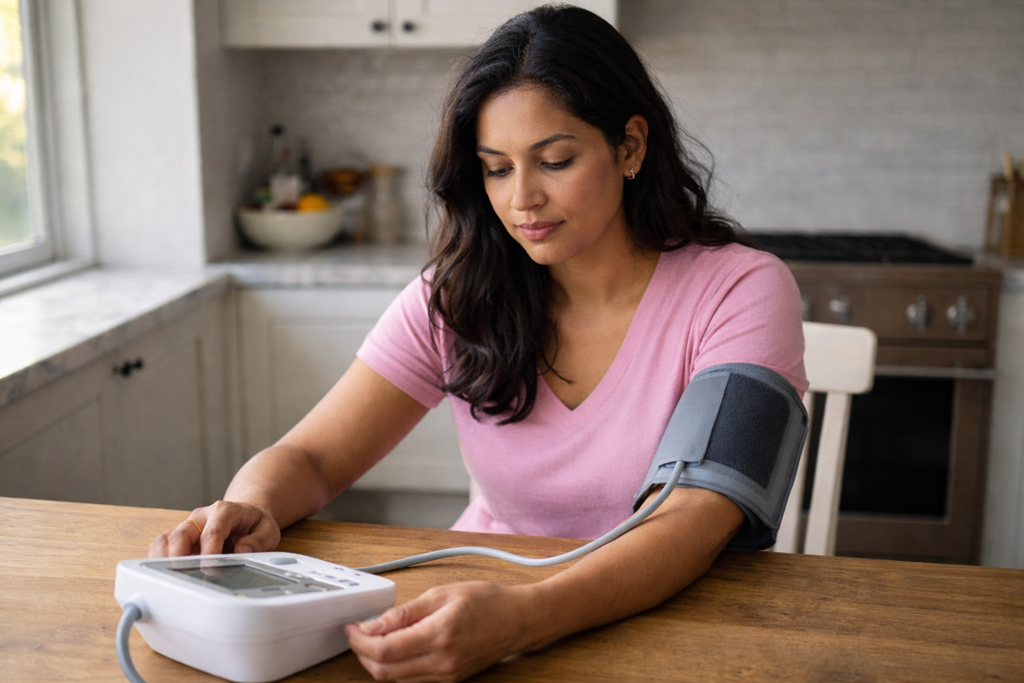
For many people, this shows up as tension around the monitor itself. You feel fine until it’s time to check. Your body tightens, your thoughts focus, and the act of measuring starts to carry emotional weight. Instead of offering reassurance, the habit quietly creates pressure.
2)) Why this matters
When close monitoring goes unchecked, it can shift the relationship with health from supportive to stressful. Rather than feeling guided, people may feel monitored by their own routines.
Over time, this can lead to:
- Increased anxiety around readings
- Heightened sensitivity to normal bodily sensations
- A sense that health requires constant vigilance
Emotionally, this makes it harder to feel at ease, even when overall habits are positive and consistent.
3)) Practical guidance (high-level)
A calmer approach to monitoring often begins with reframing its role:
- Monitoring is meant to inform, not reassure in real time. Expecting instant emotional relief from each reading sets up frustration.
- Patterns matter more than individual results. Day-to-day variation is normal and not a sign of failure.
- Your nervous system responds to attention. The more weight a measurement carries, the more stress it can generate.
These perspectives help restore monitoring to its original purpose—supporting awareness without dominating daily life.
4)) Common mistakes or misunderstandings
A few common patterns tend to increase stress unintentionally:
- Checking to reduce anxiety. This often backfires, reinforcing the habit instead.
- Assuming more data equals better control. More numbers can create more noise, not clarity.
- Treating fluctuations as problems to fix. This turns normal variation into something personal.
These mistakes are easy to make because they come from a desire to be careful and responsible.
Conclusion
Monitoring blood pressure too closely can increase stress because it shifts focus from long-term patterns to moment-by-moment evaluation. What starts as a helpful habit can become emotionally taxing without clear boundaries.
This experience is common and changeable. With a calmer framework, monitoring can return to being supportive rather than stressful.
If you’d like the bigger picture, understanding why blood pressure diagnoses often trigger anxiety can help place monitoring in a steadier, more reassuring context.
Download Our Free E-book!