It is easy to assume that fitness progress comes from big efforts: harder workouts, stricter plans, or sudden bursts of motivation. In real life, though, progress often looks quieter than that. It is built through repeated small actions that are easy to overlook while they are happening.
That can feel frustrating when you are putting in effort and still waiting for visible results. But small daily actions matter because they create momentum, strengthen routines, and make consistency easier to maintain over time. In many cases, they do more for long-term progress than occasional intense effort ever could.
Fitness progress is usually more ordinary than people expect
A lot of people imagine progress as something dramatic. They expect a sudden breakthrough, a major visual change, or a period of perfect discipline that transforms everything quickly. That expectation can make normal progress feel invisible.
But fitness improvement usually happens through ordinary choices repeated often enough to matter. Going for a walk when you do not feel like doing a full workout. Drinking more water because you know your energy dips when you do not. Stretching for ten minutes instead of skipping movement entirely. Doing a shorter workout instead of abandoning the day because you cannot do the “ideal” version.
These actions can seem too small to count, but that is often the point. Small actions are easier to repeat, and repeated actions shape results.
The real advantage of small actions is that they lower resistance
One reason people struggle with fitness is not that they do not care. It is that daily life creates friction. Work gets busy. Energy changes. Schedules shift. Motivation comes and goes. When fitness only “counts” if you do a full workout, eat perfectly, and feel highly motivated, it becomes much easier to fall off track.
Small daily actions reduce that pressure.
Instead of needing perfect conditions, you start looking for what is realistic today. That shift matters. It helps fitness become part of your normal life rather than something you only do when everything lines up.
A short workout may not feel impressive in the moment, but it protects the routine. A simple meal choice may not feel dramatic, but it supports the larger pattern. A few minutes of movement may not feel like enough, but it keeps you connected to the identity of someone who shows up for their health.
That is often where better progress begins.
Consistency does more than intensity when life is unpredictable
There is a place for challenge, effort, and pushing yourself. But for most people, daily life is not stable enough to rely on intensity alone. What carries progress forward is the ability to keep returning to the basics.
Consistency is not about doing the same thing every day at the same level. It is about staying engaged often enough that your habits do not disappear every time life gets messy.
This is where small actions become powerful. They make consistency more flexible. A twenty-minute workout may replace a full gym session. A walk may replace a run. A quick check-in with your food or hydration may help you stay aware even during a stressful day.
None of that is glamorous, but it is sustainable. And sustainable effort tends to win over time.
Why people often miss the value of what they are already doing
A common problem is that people discount progress that does not feel dramatic enough. If the scale has not changed much, if muscle gain feels slow, or if endurance is improving gradually, it is easy to assume nothing is working.
But progress often shows up in subtler ways first. You recover faster. You feel less stiff. You miss fewer workouts. You are more aware of your patterns. You make better decisions without as much internal debate. You build trust with yourself because you keep following through in small ways.
These shifts matter because they create the conditions for larger results later. They are not separate from progress. They are progress.
One useful reframe is this: small daily actions are not “lesser” forms of effort. They are often the foundation that makes bigger results possible.
Tracking small actions helps you see what your memory misses
Another reason small actions get overlooked is that memory is unreliable. When you are tired, discouraged, or impatient, it is easy to focus on what you missed instead of what you actually did.
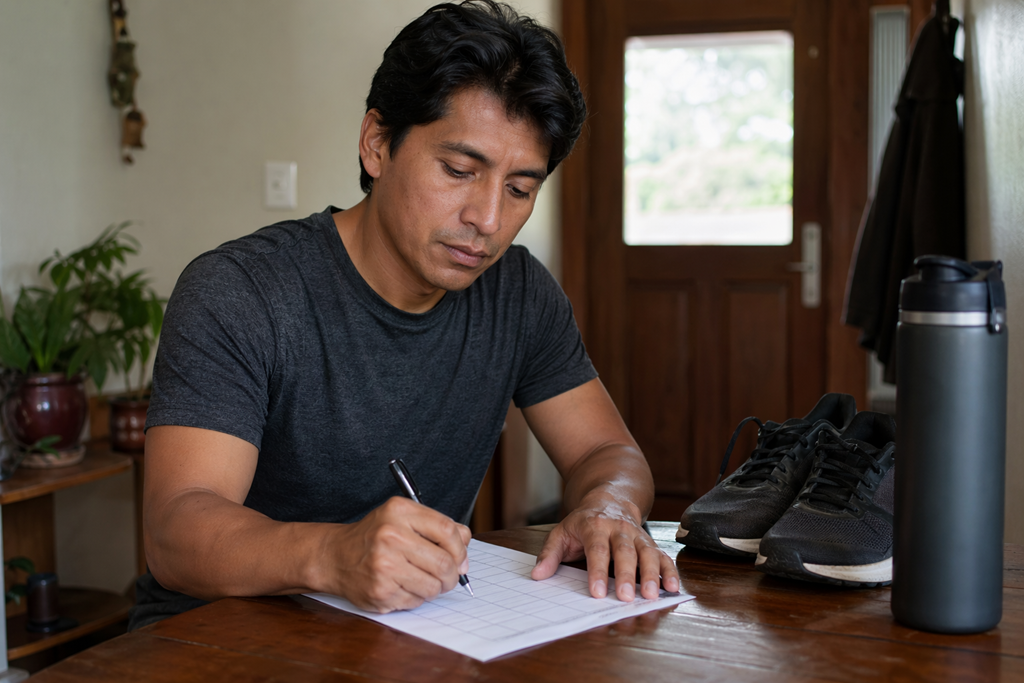
That is one reason writing things down can be so helpful. A simple record gives you something more stable than mood or memory. It lets you see whether you are moving more often, staying more consistent, and building stronger routines even when progress feels slow.
Tracking does not need to be complicated to be useful. In fact, simpler is usually better. The goal is not to create another stressful task. The goal is to make your effort visible enough that you can notice patterns, stay honest with yourself, and adjust when needed.
A printable tool like a Daily Fitness Tracker can help with that by giving you one place to log workouts, daily habits, and small wins that are easy to forget by the end of the week.
Structure makes follow-through easier than relying on motivation
Motivation can help you start, but it is not always dependable enough to carry you through normal life. That is why structure matters.
Structure creates a lower-friction path back into action. Instead of deciding from scratch every day what counts, what matters, or whether you are doing enough, you have a simple way to stay connected to your routine.
This matters especially for people who are already trying to improve and want more awareness, not more pressure. At that stage, the challenge is often less about learning that fitness matters and more about staying steady enough to keep building on what is already working.
A little structure can help you notice which actions support your energy, which routines are realistic, and where you tend to lose momentum. That kind of awareness is practical. It helps you make better decisions without turning fitness into an all-or-nothing project.
Better progress often comes from doing less than you think, more often
Many people would benefit from aiming for a more repeatable version of effort instead of a more extreme one.
That does not mean lowering your standards in an unhelpful way. It means choosing actions you can carry with you into regular life. It means respecting the fact that stress, time, and attention are real limits. It means understanding that a plan only works if you can keep returning to it.
Small daily actions support that kind of progress because they are easier to repeat, easier to recover from, and easier to build upon. Over time, those repetitions strengthen habits, increase awareness, and make bigger goals feel more manageable.
Fitness rarely improves through one perfect week. It improves through enough ordinary days handled with some consistency and care.
If the hard part is staying consistent once life gets busy, the Daily Fitness Tracker can help you keep small actions visible and organized so they are easier to follow through on from day to day.
In the end, small daily actions matter because they keep you in motion. They help fitness stay connected to real life instead of drifting into something you only do under ideal conditions. And when progress is built in a way that fits your actual life, it is usually much easier to maintain.
Download Our Free E-book!