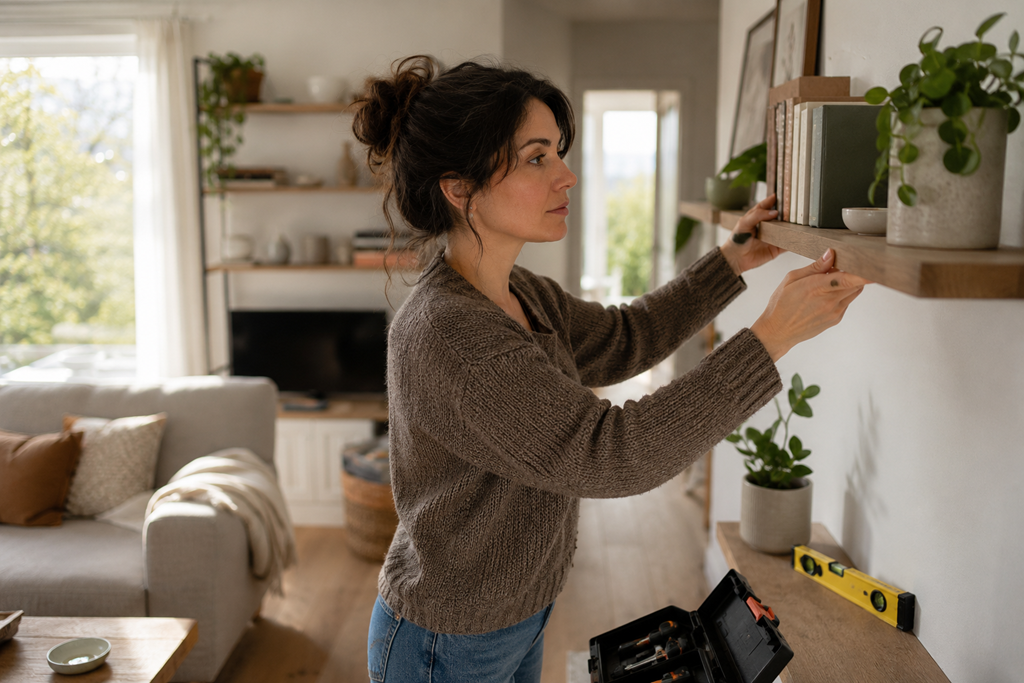
Small DIY projects often make the biggest difference over time because they improve the daily spaces you touch, use, notice, and move through again and again. A repaired cabinet hinge, better lighting in a hallway, a calmer entryway, or a freshly sealed gap around a window may not feel dramatic at first. But these small improvements quietly reduce friction in everyday life.
That is why minor home projects can feel more meaningful than their size suggests.
Most people think of DIY home improvement as something big: remodeling a kitchen, replacing flooring, building a deck, or transforming an entire room. But much of the comfort of a home comes from smaller details that affect ordinary routines. The drawer that opens smoothly. The shelf that finally holds what it needs to hold. The bathroom corner that no longer feels cluttered. The light switch that makes the room easier to use.
Small DIY projects matter because they solve the little problems you keep working around.
The Small Annoyances You Stop Noticing Still Affect Your Day
One reason small DIY projects are easy to underestimate is that many home frustrations become familiar. You may stop consciously noticing the loose doorknob, the crowded closet shelf, the dim workspace, or the messy utility area. But your body and attention still respond to them.
A small home inconvenience can become part of the background noise of your day.
You adjust your routine around it. You avoid using certain spaces. You waste extra minutes looking for things. You tolerate clutter because fixing it feels too minor to prioritize. Over time, the home may still function, but it does not support you as well as it could.
Small DIY projects help because they interrupt that pattern. They take something that has been quietly irritating and make it easier, cleaner, safer, or more pleasant.
Everyday Comfort Usually Comes From Repetition
The biggest difference is not always created by the biggest project. It is often created by how often the improvement touches your life.
A better-organized entryway matters because you use it every day. A small repair to a sticky drawer matters because you open it often. Improved lighting over a work area matters because it changes how that task feels each time you do it.
This is the quiet power of small DIY work: the benefit repeats.
A project that takes an afternoon may continue improving your routine for months or years. You do not need to think about it every time. It simply becomes part of how the home works better.
That kind of improvement can be easy to miss because it does not always create a dramatic before-and-after moment. Instead, it creates a calmer pattern.
Small Projects Make A Home Feel More Responsive
A home feels better when it responds to the way you actually live.
That does not always require a major renovation. Sometimes it means adding hooks where bags naturally land, adjusting a shelf so supplies are easier to reach, replacing a worn weatherstrip, touching up chipped paint, or creating a simple storage spot for tools you use often.
These projects are small, but they send an important message: the home is being shaped around real life instead of idealized life.
That matters because many people delay home improvement until they can do something large, beautiful, or “worth it.” But daily comfort is often built through practical adjustments. The home becomes easier to live in because it is slowly corrected, not perfectly transformed all at once.
Progress Feels Less Overwhelming When It Starts Small
Large home projects can create pressure. They may require bigger budgets, more planning, more tools, more decisions, and more disruption. Small DIY projects lower the barrier to action.
They allow you to build confidence without turning your home into a construction zone.
This is especially helpful for people who like the idea of improving their space but feel unsure where to begin. A small project gives you a manageable win. It teaches you something about your home. It helps you notice what works, what does not, and what might be worth improving next.
That does not mean every small project is effortless. Some still take patience and care. But they usually feel more approachable than trying to solve an entire room at once.
The Difference Is Often Emotional As Much As Practical
Small DIY projects are not only about function. They also affect how you feel in your home.
A repaired item can remove a small sense of neglect. A cleaner storage area can reduce visual stress. A fresh coat of paint on a scuffed surface can make a space feel cared for again. A more useful corner can make the whole room feel less frustrating.
These emotional effects are subtle but real.
When your home has too many unfinished, broken, awkward, or ignored details, it can create a quiet sense that things are always slightly behind. Small projects help restore a sense of care and control. They remind you that improvement does not have to be extreme to be meaningful.
Why People Often Dismiss Small DIY Wins
One common misunderstanding is that a project has to be impressive to count.
This can make people overlook practical improvements that would genuinely make daily life easier. A garage shelf may not be exciting, but it can make tools easier to find. A repaired screen door may not transform the house visually, but it can make the home more comfortable. A cleaner laundry area may not look like a design magazine, but it can make a recurring chore feel less irritating.
Another pattern that gets in the way is waiting for the “real” project.
Someone may postpone a small fix because they imagine doing a larger renovation someday. But someday may be far away, and the daily frustration keeps repeating in the meantime. In many cases, a small improvement now is not wasted effort. It is a way to make the present version of the home easier to live in.
Small projects do not need to replace bigger goals. They can simply support life while those bigger goals wait.
A Small Project Can Change How You See The Whole Space
Small DIY improvements often have a ripple effect. Once one area works better, you may notice other simple changes that could help. This does not have to become a never-ending project list. It can simply make the home feel more approachable.
Instead of seeing the house as one overwhelming thing to fix, you begin seeing it as a collection of small, solvable details.
That shift matters. It can turn home improvement from a stressful idea into a steady habit of care. You start to understand that making a home better is not always about dramatic transformation. Sometimes it is about paying attention to what is already asking for a little help.
The Best Small Projects Respect Real Life
The most useful small DIY projects are usually connected to actual daily patterns.
They are not chosen because they look impressive online. They are chosen because they solve something you genuinely notice, use, avoid, or repeat. That might mean improving storage in a busy hallway, fixing something that slows down your morning, replacing a worn item, making a task easier, or creating a calmer spot in a room you use often.
The point is not to constantly improve everything.
The point is to make the home a little more supportive, one realistic project at a time.
Small Improvements Add Up Because Life Happens In Details
Small DIY projects make the biggest difference over time because home life is made of repeated details. The little things you touch, see, open, close, clean, organize, and walk past shape how your home feels.
A small fix may not change everything overnight. But it can remove one daily irritation, make one routine smoother, or help one space feel more cared for.
That is enough to matter.
Over time, those small changes build a home that feels less neglected, less frustrating, and more aligned with the way you actually live. The progress may be quiet, but it is still progress.
Download Our Free E-book!