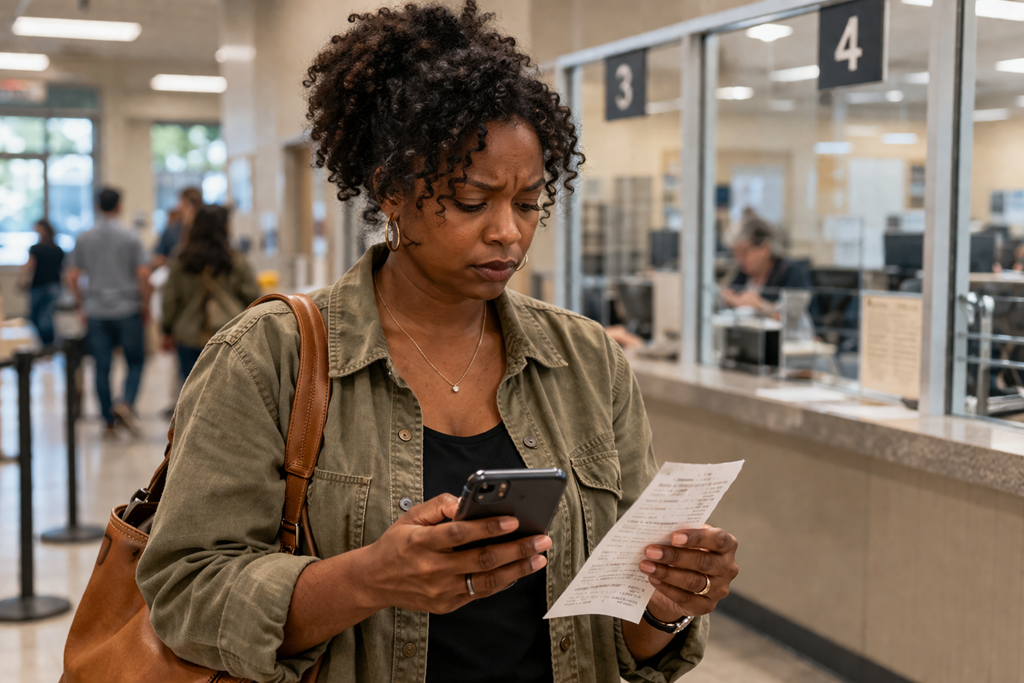
Checking your bank account can feel stressful even when nothing dramatic is happening. For many people, the anxiety is not only about what the number says. It is about what that number seems to mean about safety, control, future stability, and whether life is quietly getting harder than it should be.
That is why a quick glance at your balance can trigger a real emotional reaction. Your bank account stops feeling like a simple financial tool and starts feeling like a running verdict on how okay you are.
It often feels bigger than the money in front of you
For some people, checking their account creates an instant drop in their stomach. For others, it shows up as avoidance. They put it off, tell themselves they will look later, and then feel worse the longer they wait.
Sometimes the anxiety comes even when the bills are covered. There may be money in the account, no immediate emergency, and no obvious crisis. But the act of looking still creates tension.
That experience can be confusing. It makes people wonder whether they are being dramatic, irresponsible, or overly sensitive. In reality, this reaction usually makes sense once you look at what the moment represents.
Checking your balance is rarely just about checking your balance.
A bank balance can feel like a measure of safety
Money is practical, but it is also emotional. It affects housing, food, transportation, health decisions, family stress, and the amount of breathing room you feel in daily life.
Because of that, your brain may treat your account balance like a safety signal. If the number feels too low, uncertain, or unpredictable, your body may react before your rational mind has even caught up.
This is especially common if you have lived through periods of financial stress before. Even if things are more stable now, your nervous system may still treat money as something that can turn quickly. A balance check becomes less like gathering information and more like bracing for bad news.
That does not mean you are weak with money. It often means money has become emotionally loaded.
The anxiety is often about what might happen next
A lot of bank-account anxiety is future-based.
The balance you see today may be technically fine, but your mind immediately starts moving forward. Rent is coming. A card payment is pending. Groceries are needed. Something in the car might break. A child needs something for school. An annual bill is around the corner. A slow month at work could change everything.
So even if the current number is not disastrous, it may not feel comforting. Your brain is already subtracting the next five responsibilities.
This is one reason people can feel anxious while looking at money that should, on paper, feel reassuring. The stress is not only about the present amount. It is about how fragile that amount feels once real life starts touching it.
Sometimes the hardest part is the mental math
One exhausting part of financial anxiety is the constant invisible calculation.
You are not just checking a number. You are trying to remember what has cleared, what has not cleared, what auto-payment is due, what got forgotten, and whether the amount you see is actually the amount you can trust.
That uncertainty creates strain. Even small uncertainty can make money feel harder to face because it removes the sense of solid ground. If you have to decode your own account every time you open it, the process starts to feel tense before you even begin.
This is part of why people often say they are anxious about checking their bank account when what they really mean is something slightly different: they are anxious about not feeling fully sure what the numbers mean.
That distinction matters. It helps explain why the stress can show up even without overspending or obvious financial chaos.
Feeling anxious does not automatically mean you are bad with money
This is a common misunderstanding, and it tends to make the experience worse.
People often assume that if checking their account makes them nervous, it must mean they have done something wrong. They tell themselves that financially capable people would feel calm, organized, and unfazed.
But anxiety is not always a sign of poor money habits. Sometimes it is a sign that money has become emotionally tied to pressure, scarcity, responsibility, or self-worth.
A person can be careful, responsible, and still feel dread when looking at their balance. In some cases, the more responsible they are, the more alert they become to every possible problem.
That can create a painful loop. You check because you want to be responsible. The check makes you anxious. Then you feel ashamed for being anxious. Then the whole topic becomes heavier the next time.
Why avoidance usually makes the feeling stronger
When checking your balance feels emotionally charged, avoidance can seem like relief. For a little while, it is. Not looking means not getting triggered.
But avoidance usually turns the account into a bigger source of fear. The less often you look, the more loaded the moment becomes. Then each check carries more tension, not less.
This does not happen because you are careless. It happens because the mind tends to inflate whatever feels uncertain and emotionally unfinished.
A bank account can become that kind of unfinished space very quickly. The numbers are real, but the dread grows in the silence around them.
The number is often carrying emotional meaning it was never meant to carry
One clarifying insight is this: many people are not reacting to the balance alone. They are reacting to the story attached to it.
A lower-than-hoped-for number can quietly trigger thoughts like:
- I should be doing better by now.
- I am always behind.
- I cannot relax.
- One mistake could throw everything off.
- I work hard and still do not feel secure.
When that happens, the account balance becomes fused with identity, effort, and fear about the future. A simple check turns into a moment of self-judgment.
This is one reason the reaction can feel intense out of proportion with the actual number on the screen. The emotion is not only about dollars. It is about what those dollars seem to say.
Why this affects everyday life more than people realize
Bank-account anxiety does not stay neatly inside money decisions. It often spills into mood, concentration, relationships, and the ability to enjoy ordinary life.
It can make a normal purchase feel morally loaded. It can create guilt around rest. It can make small financial tasks feel bigger than they are. It can also create tension between partners when one person is trying to avoid stress and the other wants more visibility.
Over time, this kind of anxiety can narrow a person’s sense of freedom. Even when they are technically functioning, they may feel like they are always monitoring, adjusting, and bracing.
That is why it helps to understand this reaction clearly instead of dismissing it as overthinking. The feeling has a pattern. Once you see the pattern, it becomes easier to stop blaming yourself for having it.
What tends to make this pattern worse
A few things commonly intensify bank-account anxiety.
One is unpredictability. Irregular income, fluctuating bills, or frequent surprise expenses make it harder for the brain to settle.
Another is using your account balance as your only source of financial clarity. When everything depends on one number, that number starts carrying too much emotional weight.
Another is shame. The more embarrassed someone feels about money, the more emotionally charged even small financial interactions become.
And sometimes the issue is not current hardship alone, but accumulated strain. Long periods of managing too much with too little can teach the body to stay alert around money even when circumstances improve somewhat.
All of this can make a five-second balance check feel like a much bigger event than it looks from the outside.
You may not be overreacting — you may be responding to a pattern
For many people, the most relieving part of understanding this issue is realizing the reaction is not random.
You are not necessarily anxious every time you check your bank account because you are irresponsible or incapable. You may be anxious because the moment has become linked to uncertainty, self-protection, mental overload, or an old sense that money problems can appear without much warning.
That is a very different explanation, and it is often a more accurate one.
When people understand that, they usually feel a little less confused by their own reaction. The anxiety may still be there, but it starts to make sense.
If this feels familiar, Why You Feel Financially Anxious Even When Your Bills Are Paid explains the bigger pattern underneath it and why money stress can linger even when things look stable on the surface.
Download Our Free E-book!