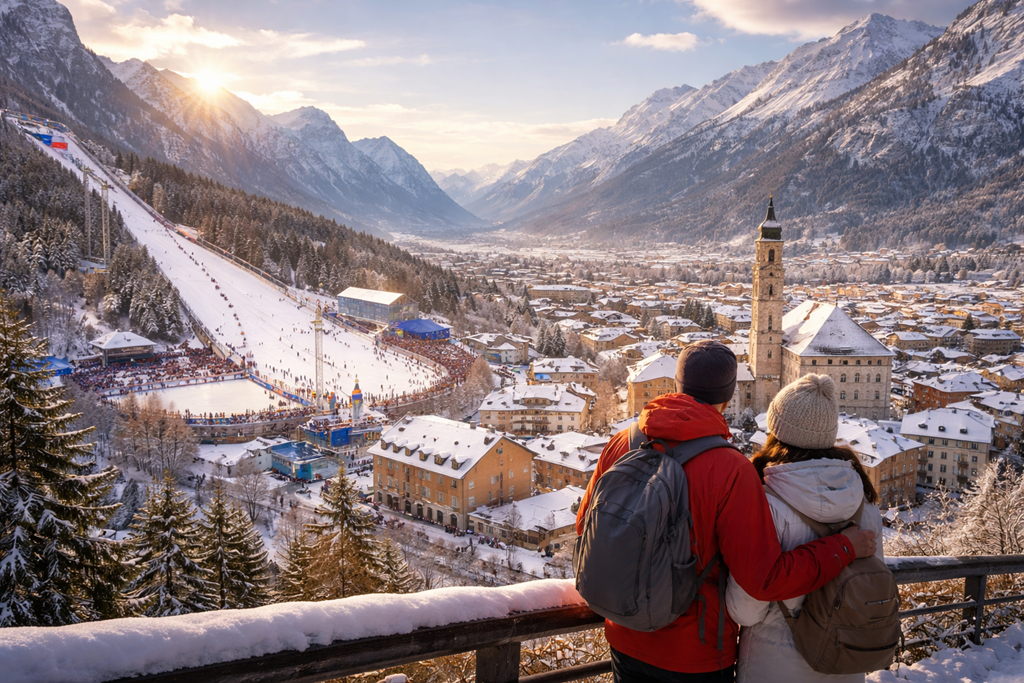
Attending the Winter Olympic Games is one of those rare travel experiences that blends sport, culture, and destination travel into a single unforgettable trip. But it also comes with a real challenge: how do you enjoy world-class Olympic events and explore the host region without feeling rushed, exhausted, or disappointed?
Most first-time Olympic spectators quickly realize that trying to do everything is the fastest way to enjoy very little. Venues are spread out, winter weather slows everything down, and the excitement of the Games can make it tempting to overschedule every hour. The key is balance — not perfection.
Below are ten experience-tested, realistic ways to balance sightseeing and Olympic events so you can enjoy the Games and the destination at a pace that feels rewarding, not overwhelming.
1)) Decide What the Olympics Mean To You
Before you look at tickets, maps, or itineraries, get clear on one thing: what kind of Olympic experience do you want?
Some travelers are there primarily for the sport — finals, medal ceremonies, and iconic events. Others care more about the atmosphere, the host city, and being part of something global. Most people fall somewhere in between.
Ask yourself:
- Are there “must-see” events you’d regret missing?
- Are you more excited about exploring the region than attending multiple competitions?
- Would you rather attend fewer events and enjoy them fully?
There’s no correct answer. Balance starts by permitting yourself to prioritize what matters most to you, not what looks impressive on a packed schedule.
2)) Limit Yourself to One or Two Events Per Day
This is one of the most important — and most ignored — pieces of Olympic travel advice.
On paper, attending three events in a single day might look doable. In reality, security checks, transport delays, long walks, cold weather, and crowds add up quickly. Most experienced spectators find that one major event per day (or two lighter ones) is the sweet spot.
Why fewer events work better:
- You arrive relaxed instead of rushed
- You actually enjoy the event instead of watching the clock
- You preserve energy for sightseeing or evening experiences
- You avoid turning the trip into a logistical stress test
Seeing fewer events doesn’t mean missing out. It means remembering them.
3)) Separate “Event Days” From “Sightseeing Days”
Trying to squeeze sightseeing between Olympic events is one of the fastest ways to feel scattered.
A better approach is intentional separation:
- Event-focused days: Center the day around the competition. Add only light, nearby activities.
- Sightseeing-focused days: No tickets. Explore neighborhoods, museums, markets, cafés, or scenic areas at a relaxed pace.
This structure:
- Reduces decision fatigue
- Makes travel days feel purposeful
- Allows for weather flexibility
- Helps your body recover from long, cold event days
Even one full sightseeing day during the Games can dramatically improve the overall experience.
4)) Use Morning and Evening Energy Strategically
Winter Olympic days can be surprisingly long. Cold temperatures, early starts, and standing for extended periods take a toll. Energy management matters.
A practical rhythm many travelers find works well:
- Morning sightseeing + evening events
Great for indoor attractions, slow exploration, and high-energy nighttime competitions. - Morning events + relaxed afternoons
Follow early competitions with cafés, scenic walks, or indoor experiences.
Avoid planning physically demanding sightseeing immediately after a late-night event. Rest is part of the experience, not a failure of planning.
5)) Stay in One Base Whenever Possible
Changing hotels mid-trip can seem like a smart way to reduce travel time — but during the Olympics, it often adds stress.
Whenever possible:
- Choose one main base
- Accept that you won’t be central to everything
- Learn the transport routes well
Familiarity saves time. Knowing where you’re staying, how to get back, and where to eat nearby reduces daily friction and leaves more mental space for enjoyment.
If you must choose, stay closer to either:
- The events you care most about
or - The area you most want to explore
Trying to split the difference often leads to long commutes both ways.
6)) Treat Transit Time as Part of the Experience
Olympic travel involves buses, trains, shuttles, walking paths, and waiting. Fighting this reality only creates frustration.
Instead:
- Build generous buffers between activities
- Expect delays and weather slowdowns
- Use transit time to rest, warm up, or observe the Olympic atmosphere
Some of the most memorable moments happen on crowded shuttles, at shared train platforms, or during walks between venues filled with fans from around the world. When transit is expected, it stops feeling like wasted time.
7)) Embrace Fan Zones and Cultural Spaces
Not all Olympic experiences require a ticket.
Fan zones, live screenings, cultural showcases, and public celebration areas offer:
- Olympic atmosphere without tight schedules
- Opportunities to mingle with international visitors
- Food, music, and local traditions
- Flexible entry and exit
These spaces are ideal on sightseeing days or lighter event days. They deliver the emotional energy of the Games while allowing you to move at your own pace.
For many travelers, these moments end up being just as memorable as the competitions themselves.
8)) Plan for Weather — Then Plan Again
Winter weather affects everything: transit times, energy levels, and how long you want to be outside.
A balanced plan always includes:
- Indoor sightseeing options
- Cafés or warm spaces built into the day
- Backup plans if the weather turns severe
Layering activities — rather than stacking them — gives you flexibility. If conditions are great, explore longer. If not, shift indoors without feeling like the day is lost.
The goal isn’t to outsmart winter. It’s to work with it.
9)) Accept That You Can’t See Everything — and That’s Okay
This is the hardest mindset shift for many Olympic travelers.
You will miss events.
You will skip attractions.
You will choose rest over activity at least once.
That doesn’t mean the trip failed. It means it was human.
The Winter Olympics aren’t meant to be consumed completely. They’re meant to be experienced.
The memories that stay with people tend to be:
- One incredible competition
- A shared moment with strangers
- A quiet meal after a long day
- A snowy walk through a host city
Balance comes from letting go of the idea that more equals better.
10)) Build Empty Space Into Your Schedule
The most underrated planning tool is unscheduled time.
Empty space allows for:
- Spontaneous discoveries
- Extra rest
- Adjustments when plans change
- Enjoying moments without rushing to the next thing
Try leaving at least one open block each day — even if it’s just a few hours. These gaps often become the highlights of the trip.
A balanced Olympic itinerary isn’t packed. It breathes.
Pro Tip: When you’re balancing sightseeing with live events at the Winter Olympics, having a printable PDF Daily Travel Itinerary can be a game-changer. Instead of juggling tickets, transit times, weather shifts, and sightseeing plans in your head, a written itinerary helps you map out each day with intention — including buffer time for travel delays, rest breaks, and spontaneous moments. This makes it easier to enjoy Olympic events without rushing and still leave room to explore the host city at a comfortable pace. A printable format is especially helpful during busy travel days when phone batteries run low or connectivity is limited, giving you clarity and confidence wherever the day takes you.
Conclusion
The Winter Olympics are intense by nature — exciting, crowded, emotional, and physically demanding. Trying to experience them at full speed every day often leads to burnout. Slowing down, choosing intentionally, and permitting yourself to enjoy fewer things more deeply is what turns an Olympic trip into a lasting memory.
Balancing sightseeing and events isn’t about optimization. It’s about sustainability, enjoyment, and being present. When you strike that balance, the Games become more than a schedule — they become a story you’ll be glad you lived through, not rushed through.
If you’d like help creating a realistic daily flow, choosing which days to sightsee versus attend events, or tailoring a balanced plan for first-time spectators, that kind of thoughtful planning can make all the difference.
Download Our Free E-book!