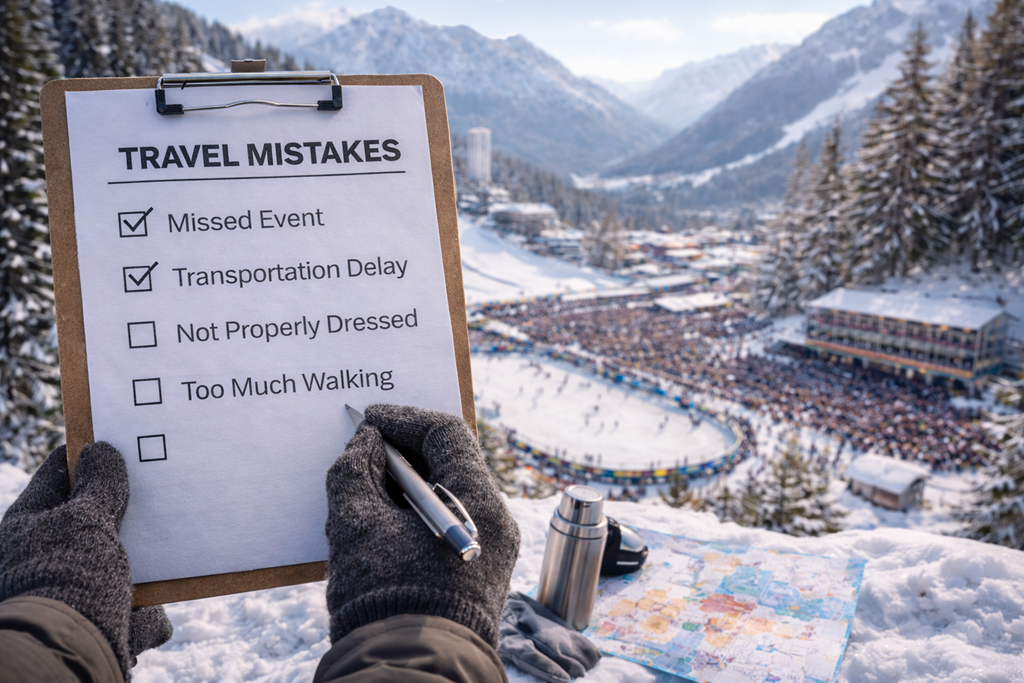
Traveling to the Winter Olympic Games is a bucket-list experience. The energy, the atmosphere, the global crowds, and the once-in-a-generation feeling make it unforgettable. At the same time, the scale of the Games, winter weather, unfamiliar transportation systems, and high demand create real challenges that catch many travelers off guard.
Most Winter Olympic travel mistakes are not caused by poor intentions. They come from underestimating logistics, overpacking itineraries, or assuming a normal winter vacation mindset applies to an event of this magnitude. With the right preparation, these mistakes are entirely avoidable.
Below are twelve practical, experience-driven tips designed to help travelers stay calm, flexible, and confident while getting the most value from their Olympic trip. These winter Olympic games travel tips focus on what actually goes wrong—and how to prevent it before it happens.
1)) Underestimating Distances Between Venues
One of the most common and costly mistakes is assuming Olympic venues are close together. Winter Games are often spread across mountain regions, resort towns, and city centers, sometimes hours apart.
Travelers often schedule events too tightly or plan sightseeing between competitions without accounting for travel time, weather delays, or security checks.
How to avoid it:
- Study venue maps early and group events by location.
- Limit yourself to one venue per day when possible.
- Build generous buffer time between activities.
- Choose sightseeing options close to your event locations.
Realistic expectations around distance reduce stress and prevent missed events.
2)) Overbooking Events and Sightseeing on the Same Day
The excitement of the Olympics makes it tempting to do everything. Many travelers book multiple events in one day while squeezing in sightseeing, meals, and shopping.
This approach almost always leads to exhaustion.
Winter conditions amplify fatigue—cold temperatures, heavy clothing, long walks, and extended waits take a toll faster than expected.
How to avoid it:
- Treat event days as your main focus.
- Plan sightseeing on lighter days or rest days.
- Choose quality experiences over quantity.
- Schedule at least one slower-paced day every few days.
Balanced pacing leads to better memories and a more enjoyable trip.
3)) Ignoring the Impact of Winter Weather
Winter weather affects everything at the Games: transportation schedules, walking time, comfort levels, and even event timing.
Some travelers plan as if conditions will be mild and predictable, only to be delayed by snowstorms, icy roads, or extreme cold.
How to avoid it:
- Check historical weather patterns for the host region.
- Add extra time to all travel plans.
- Keep indoor activities as backup options.
- Dress for long periods outdoors, not short transfers.
Flexibility is one of the most valuable winter Olympic Games travel tips.
4)) Booking Accommodation in the Wrong Location
Choosing accommodation based solely on price or availability often backfires. Staying far from venues or transport hubs can turn every day into a logistical challenge.
Travelers sometimes underestimate how difficult it can be to move around during the Games, especially in mountainous regions.
How to avoid it:
- Prioritize proximity to venues or major transport routes.
- Consider splitting your stay between regions if attending events in different areas.
- Research Olympic shuttle routes before booking.
- Avoid accommodations that require multiple transfers.
Location convenience often outweighs cost savings during the Olympics.
5)) Relying Too Heavily on a Single Transportation Option
During the Winter Olympics, transportation systems operate at peak capacity. Trains, buses, and roads are heavily used by spectators, staff, and athletes.
Relying on one mode of transport without a backup plan increases the risk of delays or missed events.
How to avoid it:
- Learn multiple routes to each venue.
- Understand shuttle schedules and cutoff times.
- Allow extra travel time during peak hours.
- Stay informed about daily transport updates.
Transportation flexibility keeps small disruptions from becoming major problems.
6)) Skipping Advance Planning for Sightseeing
Some travelers assume sightseeing can be done spontaneously around event schedules. During the Olympics, popular attractions may have limited availability, altered hours, or higher demand.
Without planning, sightseeing often gets skipped entirely.
How to avoid it:
- Identify priority attractions early.
- Book timed-entry tickets when available.
- Schedule sightseeing during mornings or off-peak hours.
- Focus on attractions near your accommodation or venues.
Thoughtful planning ensures sightseeing complements your Olympic experience instead of competing with it.
7)) Underestimating Security and Entry Procedures
Olympic venues have airport-level security, and entry lines can be long—especially for high-profile events.
Arriving late is a common mistake that leads to missed portions of competitions.
How to avoid it:
- Arrive earlier than you think you need to.
- Review prohibited items before leaving your accommodation.
- Keep tickets and identification easily accessible.
- Plan food and restroom breaks before entering venues.
Smooth entry procedures reduce stress and maximize viewing time.
8)) Dressing for Style Instead of Function
Cold temperatures, wind exposure, and long outdoor waits make clothing choices critical. Many travelers focus on style rather than comfort and warmth.
Inadequate layering leads to discomfort that can ruin even the most exciting events.
How to avoid it:
- Dress in moisture-wicking layers.
- Invest in insulated, waterproof footwear.
- Bring accessories like gloves, hats, and thermal socks.
- Prepare for standing or sitting outdoors for extended periods.
Comfort enables you to stay present and enjoy the experience fully.
9)) Not Accounting for Physical Fatigue
The Winter Olympics are physically demanding even for spectators. Walking long distances, climbing stairs, standing in cold conditions, and navigating crowds add up quickly.
Ignoring fatigue leads to burnout halfway through the trip.
How to avoid it:
- Build rest breaks into daily plans.
- Use public transportation instead of walking when possible.
- Stay hydrated and eat regular meals.
- Avoid back-to-back late nights and early mornings.
Energy management is just as important as scheduling.
10)) Overlooking Food and Dining Logistics
Restaurants near venues fill up quickly, and food options inside venues can be limited or expensive. Travelers who don’t plan meals often end up rushed or under-fueled.
How to avoid it:
- Identify dining options near venues in advance.
- Make reservations when possible.
- Carry snacks for long event days.
- Plan meals around event schedules rather than after.
Consistent nourishment keeps energy levels stable throughout the day.
11)) Expecting Everything to Go Exactly as Planned
The Olympics are dynamic. Weather changes, event schedules shift, transportation delays happen, and spontaneous opportunities arise.
Rigid expectations create unnecessary frustration.
How to avoid it:
- Build flexibility into your itinerary.
- Treat plans as guidelines, not rules.
- Be open to adjusting sightseeing or event attendance.
- Embrace unexpected experiences as part of the journey.
Some of the best Olympic memories are unplanned.
12)) Trying to Do Too Much Instead of Enjoying the Moment
Perhaps the most common mistake is focusing so much on logistics and schedules that the experience itself gets lost.
Travelers sometimes leave feeling rushed rather than fulfilled.
How to avoid it:
- Choose experiences that matter most to you.
- Leave space for rest, reflection, and spontaneity.
- Spend time in fan zones and public celebration areas.
- Allow yourself to simply watch, listen, and absorb the atmosphere.
The Olympics are about more than checking items off a list.
Conclusion
Avoiding common Winter Olympic travel mistakes comes down to one core principle: realistic planning with built-in flexibility. The Games operate on a scale unlike any other event, especially in winter environments where conditions can change quickly.
By pacing your schedule, preparing for weather and logistics, and prioritizing comfort and enjoyment, you create space for meaningful experiences rather than constant stress. These winter Olympic Games travel tips are designed to help travelers feel prepared without feeling overwhelmed.
A well-balanced Olympic trip isn’t about seeing everything. It’s about experiencing the Games in a way that feels memorable, manageable, and genuinely enjoyable—long after the final medal ceremony ends.
Download Our Free E-book!