Maui is the kind of island where the best days often come from a simple mix: time by the water, a scenic drive, a good meal, and a little space to take in the landscape. You do not need to pack every hour to have a memorable trip here. In fact, Maui is easier to enjoy when you choose a few strong experiences and leave room for weather, traffic, ocean conditions, and slower island pacing.
This guide focuses on classic Maui experiences that are likely to stay useful over time: beaches, scenic viewpoints, cultural sites, hikes, food traditions, and first-time visitor favorites. Some places may require reservations, permits, or adjusted access, especially state parks and sensitive natural areas, so check current details before you go. Official Maui visitor resources highlight the island’s mix of beaches, land activities, water activities, farm tours, hiking, and cultural experiences as core parts of planning a trip.
Beaches And Coastal Experiences
1)) Spend a beach day at Kāʻanapali Beach
Kāʻanapali Beach is one of Maui’s classic resort-area beaches, known for its long stretch of white sand, clear water, and easy access from West Maui hotels. It works especially well for first-time visitors because you can combine swimming, beach walking, snorkeling near Puʻu Kekaʻa, and a meal or coffee nearby without needing a complicated plan.
This is a good choice if you want a polished beach day with amenities close by. It is not the quietest beach on Maui, but it is one of the easiest places to settle in for a few hours and enjoy the island’s west coast scenery. GoHawaii describes Kāʻanapali as West Maui’s signature beach, with three miles of white sand and snorkeling near Puʻu Kekaʻa, also known as Black Rock.
2)) Walk the Wailea Beach Path
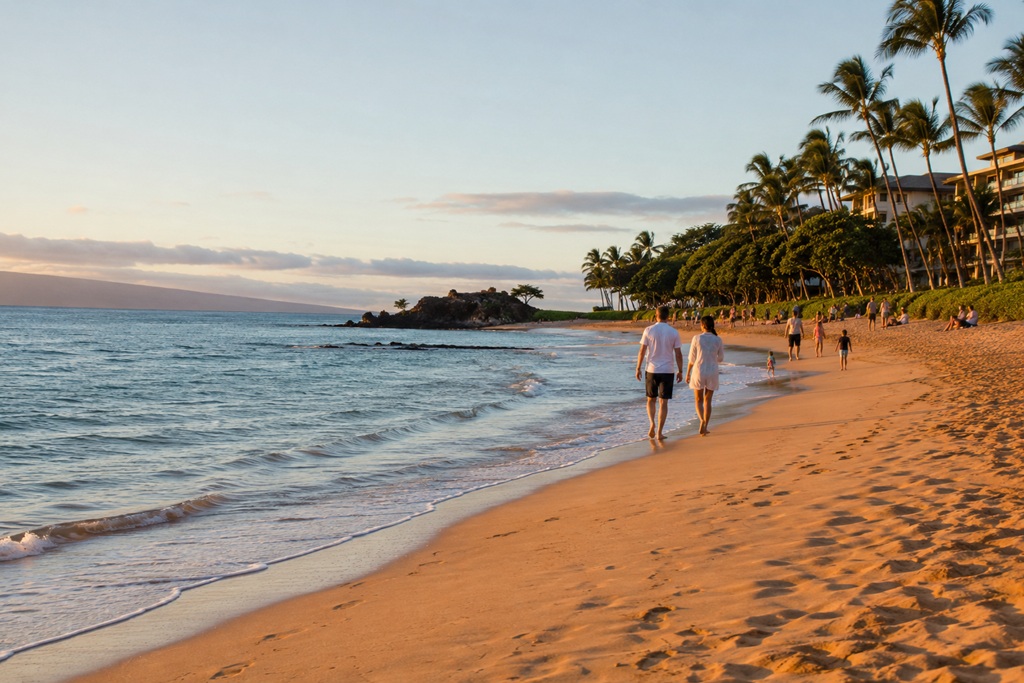
The Wailea Beach Path is one of the most enjoyable low-effort ways to experience South Maui. The path connects beaches, resorts, ocean views, lava rock edges, and landscaped coastal areas, making it ideal for a morning or late-afternoon walk.
You do not have to stay in Wailea to enjoy it. Park near one of the public beach access points, walk a comfortable distance, and stop whenever the views or the heat tell you to slow down. This is best for travelers who want scenery without committing to a hike.
3)) Visit Mākena State Park and Big Beach
Mākena State Park, often associated with Big Beach, gives you a more open, dramatic beach experience than many resort-area beaches. The sand is wide, the water can be beautiful, and the setting feels less built-up than Wailea or Kāʻanapali.
This beach is best for confident beachgoers who understand that Maui’s ocean can change quickly. Shore break can be powerful, so do not assume it is safe just because the water looks inviting. The Hawaiʻi Division of State Parks describes Mākena State Park as a scenic wildland beach park with a large white sand beach and notes ocean activities such as swimming during calm seas, bodysurfing, and board surfing.
4)) Snorkel at a beginner-friendly beach
Maui has many snorkeling areas, but the best choice depends on the day’s ocean conditions. Instead of chasing a single “best” spot, build your plan around safety, visibility, and your comfort level. Popular areas often include parts of West Maui and South Maui, but conditions can vary by season, swell, wind, and time of day.
For first-time snorkelers, choose protected areas, go earlier in the day when winds are often lighter, and avoid entering the water if the surf looks rough. A guided snorkeling trip can be a better choice if you want local knowledge, gear help, and a more structured experience.
5)) Watch surfers and windsurfers at Hoʻokipa Beach Park
Hoʻokipa Beach Park on Maui’s North Shore is one of the best places to watch experienced ocean athletes. It is more of a viewing and photography stop for many visitors than a casual swimming beach, especially when the waves are strong.
Bring patience, stay well back from the ocean when conditions are rough, and enjoy it as a scenic North Shore stop. Maui County describes Hoʻokipa as a top spot for ocean sports and recreation, with notable waves along the Maui coastline. GoHawaii also notes that Hoʻokipa is favored by advanced surfers and windsurfers, with winter waves that can become very large.
Scenic Drives And Viewpoints
6)) Drive part or all of the Road to Hāna
The Road to Hāna is one of Maui’s most famous drives, but it is best approached as a full travel experience rather than a checklist. The drive includes rainforest scenery, bridges, waterfalls, coastal views, roadside stops, and access to East Maui’s quieter landscapes.
The key is pacing. Many travelers enjoy the Road to Hāna more when they choose fewer stops, start early, respect local communities, and avoid parking illegally or blocking narrow roads. If long, winding drives are not your style, consider a guided tour so everyone in your group can look out the window instead of managing the road.
7)) Visit Waiʻānapanapa State Park
Waiʻānapanapa State Park is one of the most memorable stops near Hāna, known for black sand, coastal scenery, lava rock, and a landscape that feels very different from Maui’s resort beaches. It is a strong choice if you want a dramatic coastal experience and are already planning time in East Maui.
This is not a place to treat as a spontaneous roadside stop. Reservations may be required, especially for non-residents, so check the official state park guidance before building it into your day. The Hawaiʻi Division of State Parks lists Waiʻānapanapa State Park as requiring reservations for parking and entry.
8)) See sunrise or sunset at Haleakalā National Park
Haleakalā is one of Maui’s defining landscapes. The summit area feels completely different from the beaches: high elevation, wide sky, volcanic terrain, and sweeping views when conditions are clear. Sunrise is famous, but sunset can also be beautiful and may feel easier for travelers who do not want a very early wake-up.
Dress warmer than you think you need to, because the summit can be cold and windy. If you plan to visit for sunrise, check reservation requirements well ahead of time. The National Park Service describes Haleakalā as a rare and sacred landscape that protects volcanic areas, Hawaiian cultural stories, and endangered species found nowhere else.
9)) Explore the Kula and Upcountry Maui area
Upcountry Maui gives you a different perspective on the island. Instead of beaches and resort corridors, you get cooler air, rolling slopes, farms, gardens, small communities, and wide views across the island. It pairs well with a Haleakalā day because you can visit the summit and then slow down with food, coffee, farm stands, or scenic pullouts.
This is best for travelers who want variety and a break from the coast. Keep your plan flexible, because weather and visibility can change quickly at higher elevations.
10)) Take in the view from ʻĪao Valley State Monument
ʻĪao Valley is one of Maui’s most important and visually striking inland landscapes. The green valley, steep ridges, and ʻĪao Needle lookout make it a worthwhile stop, especially if you are staying in or passing through Central Maui.
It does not need to take all day. For many visitors, it works well as a shorter outing combined with Wailuku, Kahului, or another Central Maui stop. The Hawaiʻi Division of State Parks identifies ʻĪao Valley State Monument as home to the ʻĪao Needle Lookout Trail and Ethnobotanical Loop, and notes that reservations are required for out-of-state residents.
Outdoor Adventures And Nature
11)) Hike a trail that matches your ability
Maui has hikes ranging from easy coastal walks to more demanding mountain and rainforest trails. The best hike is not always the hardest one. Choose based on your footwear, weather, parking, elevation, and how much time you realistically have.
For a first trip, it is often better to choose one excellent hike instead of trying to squeeze in several. Bring water, sun protection, and layers if you are heading to higher elevations. Avoid muddy or flash-flood-prone areas when conditions are uncertain.
12)) Go whale watching in season
Whale watching is one of Maui’s most memorable seasonal experiences. It is not a year-round activity, so frame it as a bonus if your trip overlaps with the usual winter whale season. Boat tours can offer a closer experience, but many visitors also enjoy watching from shore when whales are active.
If whale watching is a priority, book with a reputable operator and leave flexibility in your schedule. Ocean conditions can affect tours, and wildlife viewing is never guaranteed.
13)) Take a Molokini or coastal snorkeling boat tour
A snorkeling boat tour can be worth it if you want a structured water day without managing every detail yourself. Tours often include gear, guidance, safety support, and access to areas that are harder to enjoy independently.
Molokini is one of the better-known options, but the right tour depends on your swimming ability, weather, group size, and comfort on boats. If you get seasick, choose carefully and prepare ahead. For families or beginners, a smaller, slower-paced coastal tour may be more enjoyable than the most ambitious itinerary.
14)) Paddle, kayak, or take an outrigger canoe experience
Paddling gives you a different relationship with Maui’s coastline. Instead of just looking at the ocean, you move with it. Kayaking, stand-up paddleboarding, and outrigger canoe experiences can all be worthwhile, especially in calmer morning conditions.
Beginners should go with a guide or choose a protected area with favorable conditions. This is less about covering distance and more about appreciating the water, shoreline, and marine environment safely.
15)) Visit a botanical garden or farm
Maui’s farms and gardens help connect the island’s scenery with its food, plants, and growing regions. Depending on your route, you may find farms, gardens, coffee stops, fruit stands, lavender fields, or tropical plant collections.
This is a good option for travelers who want something slower than a beach or hike. It is also useful for mixed groups where not everyone wants a strenuous activity. Check current hours before going, because smaller farms and gardens may change schedules seasonally.
Culture, Food, And Local Flavor
16)) Try local food beyond resort restaurants
Maui’s food scene is not just about fine dining. Some of the most satisfying meals come from plate lunch spots, food trucks, bakeries, farmers markets, and casual local restaurants. Look for dishes and ingredients connected to Hawaiʻi’s multicultural food traditions, such as poke, saimin, loco moco, malasadas, fresh fish, tropical fruit, and shave ice.
Avoid building your whole trip around “must-eat” lists that may change. Instead, choose a few areas where you will already be exploring and find good food nearby. This keeps your days easier and usually leads to better pacing.
17)) Visit a farmers market or local market
A farmers market is an easy way to experience Maui through fruit, snacks, flowers, coffee, baked goods, and locally made products. It is especially useful if you are staying somewhere with a kitchen or want picnic supplies for a beach day.
Go earlier for the best selection, bring reusable bags, and keep your expectations flexible. Market schedules can change, so confirm the current day and location before making a special trip.
18)) Learn about Hawaiian culture with respect
Maui is not just a vacation setting. It is a place with deep Hawaiian history, living culture, sacred landscapes, and communities balancing tourism with everyday life. Visitors can have a better trip by learning basic cultural context, using place names respectfully, following posted rules, and choosing experiences that are grounded in education rather than performance alone.
Look for cultural centers, guided walks, historical sites, hula or music experiences presented with context, and local organizations that explain the significance of the land and traditions. This helps make the trip more meaningful and less surface-level.
19)) Spend time in Pāʻia
Pāʻia is a small North Shore town that works well as a stop before or after Hoʻokipa, the Road to Hāna, or an Upcountry drive. It has shops, casual food, coffee, and a laid-back coastal-town feel.
Because it is compact and popular, parking can be limited. Treat it as a short walk-and-eat stop rather than a place to rush through. It is best for travelers who enjoy small towns, local browsing, and a break from resort areas.
20)) Approach West Maui and Lahaina with care
West Maui remains an important part of the island, but visitors should approach Lahaina and surrounding areas with sensitivity. The 2023 wildfire deeply affected the community, historic sites, businesses, and residents. Access, rebuilding, and visitor guidance can change, so check official local updates before planning time in Lahaina’s historic core.
A thoughtful West Maui day might focus on open beaches, permitted viewpoints, local businesses that are ready for visitors, and respectful awareness of closures and recovery areas. Do not cross barriers, enter restricted zones, or treat disaster-affected places as sightseeing stops.
How To Choose The Right Maui Activities For Your Trip
If this is your first time on Maui, choose a balanced mix rather than trying to do everything. A strong trip might include one major scenic drive, one Haleakalā or Upcountry day, several beach blocks, one snorkeling or boat experience, and one cultural or food-focused outing.
For families, prioritize beaches with amenities, shorter drives, and flexible meal stops. For couples, consider Wailea walks, sunset viewpoints, Upcountry drives, and a snorkeling or sailing tour. For active travelers, build around hiking, paddling, Haleakalā, and a well-planned Road to Hāna day.
The biggest mistake is overloading the schedule. Maui rewards space. Leave room for weather shifts, traffic, slower meals, and the simple pleasure of staying longer at a beach you like.
Practical Maui Planning Notes
Book ahead for activities with limited access, such as popular tours, state park reservations, or sunrise visits. For places like Waiʻānapanapa and ʻĪao Valley, always verify current reservation rules before you go.
Respect the ocean. Maui beaches can look peaceful while still having strong currents, shore break, reef hazards, or rapidly changing surf. When in doubt, stay out, ask lifeguards when available, and choose a more protected beach.
Plan by region. Group West Maui, South Maui, North Shore, Upcountry, Central Maui, and East Maui activities logically so you spend less time driving back and forth.
Support local businesses thoughtfully. Eat locally, follow community guidance, respect private property, and be patient in places affected by crowding or recovery.
Download Our Free E-book!