Poor circulation can feel unsettling. Cold hands and feet, swelling in the legs, tingling, heaviness, or that constant sense that your body just isn’t flowing the way it should. Many people quietly worry about these symptoms, especially when exercise isn’t realistic right now due to pain, injury, fatigue, age, or lifestyle demands.
The reassuring truth is this: movement is only one piece of the circulation puzzle. Blood flow is also influenced by hydration, posture, temperature, nutrition, breathing, and daily habits that don’t require workouts, gym clothes, or willpower.
We can support circulation gently. No pressure. No extremes. No “push through it” mentality. Just practical, realistic changes that meet your body where it is.
Below are 7 easy, proven ways to improve circulation without exercise, written for real life—especially if you spend a lot of time sitting, standing, resting, or recovering.
Understanding Circulation (In Plain Language)
Circulation is simply how blood moves through the body. Blood carries oxygen, nutrients, hormones, and warmth to tissues, then carries waste products away. When circulation slows, those deliveries don’t happen as efficiently.
Poor circulation doesn’t always mean something is wrong. It’s often linked to:
- Sitting or standing for long periods
- Dehydration
- Tight clothing or posture habits
- Stress and shallow breathing
- Temperature changes
- Aging-related changes in blood vessels
For many people, small daily adjustments can noticeably improve comfort and flow.
1)) Elevate Your Legs Regularly
One of the simplest ways to improve circulation—especially in the legs and feet—is leg elevation.
When we sit or stand for long periods, gravity makes it harder for blood to travel back up to the heart. Elevating your legs helps blood move more easily, reducing pooling and pressure.
How to do it gently
- Lie down and prop your legs on pillows
- Aim to raise them slightly above heart level
- Relax for 15–20 minutes
- Once or twice a day is enough to notice benefits
Why it helps
- Reduces swelling in ankles and feet
- Relieves heaviness or throbbing in the legs
- Supports healthy venous return
This is especially helpful after long workdays, travel, or extended sitting.
2)) Stay Consistently Hydrated
Hydration plays a surprisingly important role in circulation. When the body is dehydrated, blood can become thicker, making it harder to flow smoothly through blood vessels.
This doesn’t mean chugging water all at once. Gentle, steady hydration works best.
Simple hydration tips
- Sip water throughout the day
- Start the morning with a glass of water
- Keep water nearby while working or relaxing
- Add herbal tea or infused water if plain water feels boring
Why hydration supports circulation
- Helps blood move more easily
- Supports healthy blood pressure
- Reduces fatigue related to sluggish blood flow
For many people, improving hydration alone leads to warmer hands, less dizziness, and improved overall comfort.
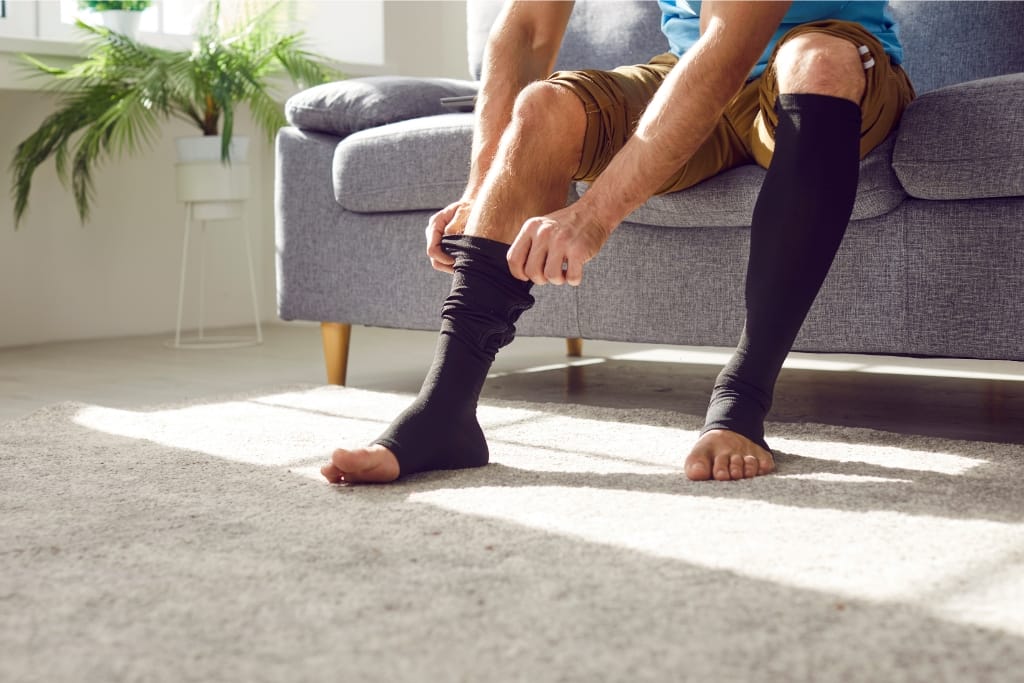
3)) Use Compression Socks or Stockings (If Comfortable)
Compression socks and stockings are often misunderstood. They’re not just for athletes or medical settings. For many people, they’re a practical, low-effort way to support circulation—especially in the lower body.
Compression works by gently squeezing the legs, helping veins push blood upward instead of letting it pool.
When compression can help
- Long hours sitting or standing
- Swelling in the ankles or calves
- Frequent travel or flights
- Desk-based or sedentary workdays
Tips for beginners
- Start with mild compression
- Wear them during the day, not overnight
- Remove them if they feel uncomfortable or tight
Many people notice less leg fatigue and reduced swelling within days of consistent use.
4)) Improve Posture and Sitting Habits
Posture affects circulation more than most people realize. Certain positions can compress blood vessels and slow flow—especially around the hips, knees, and neck.
Small posture shifts that help
- Keep your feet flat on the floor when sitting
- Avoid crossing legs for long periods
- Sit upright with shoulders relaxed
- Adjust chair height so knees aren’t higher than hips
Even subtle changes reduce pressure on blood vessels and encourage better circulation without requiring movement or effort.
A note on stillness
If you sit for long stretches, changing position occasionally—even without standing or exercising—can help blood move more freely.
Pro-Tip: A Simple Way to Support Circulation While Sitting
Sitting for long periods can slow blood flow in the legs, especially when muscles stay completely still. A seated pedal exerciser offers a gentle, low-pressure way to keep blood moving without standing up, breaking a sweat, or committing to a workout. Even slow, steady pedaling helps activate the calf and leg muscles that naturally assist circulation, which can reduce stiffness, heaviness, and that “sluggish” feeling that comes from sitting too long.
This can be especially helpful for desk workers, seniors, or anyone with limited mobility who wants circulation support that fits seamlessly into daily life—while watching TV, working at a desk, or relaxing.
Small, consistent movement—done comfortably—often makes a noticeable difference over time.
5)) Use Heat to Encourage Blood Flow
Warmth naturally causes blood vessels to relax and widen. This allows blood to flow more easily to the hands, feet, and muscles.
Heat therapy is especially helpful for people who experience cold extremities or stiffness.
Gentle heat options
- Warm showers or baths
- Heating pads (on low to medium heat)
- Warm socks or gloves
- Heated blankets during rest
Why heat works
- Encourages vessel dilation
- Relieves tight muscles that restrict flow
- Provides soothing comfort alongside circulation support
Always use heat safely, avoiding prolonged exposure or high temperatures.
6)) Eat Foods That Naturally Support Circulation
Nutrition plays a quiet but powerful role in blood flow. Certain foods support healthy blood vessels, reduce inflammation, and encourage smoother circulation.
Circulation-supportive foods
- Beets
- Leafy greens (spinach, kale)
- Garlic and onions
- Berries
- Ginger and turmeric
- Fatty fish (salmon, sardines)
- Nuts and seeds
These foods contain compounds that support vessel flexibility and blood flow over time.
What to limit
- Excess salt (can contribute to swelling)
- Highly processed foods
- Excess sugar
This doesn’t require a strict diet. Even adding a few circulation-friendly foods each week can make a difference.
7)) Practice Deep, Slow Breathing
Breathing affects circulation more than we often realize. Shallow breathing—common during stress or long periods of sitting—limits oxygen delivery and slows blood flow.
Deep breathing gently stimulates circulation without movement.
A simple breathing practice
- Sit or lie comfortably
- Inhale slowly through the nose for 4 seconds
- Exhale slowly through the mouth for 6 seconds
- Repeat for 3–5 minutes
Why this helps
- Improves oxygen delivery
- Encourages blood flow throughout the body
- Activates the relaxation response
This can be done anywhere—at a desk, on the couch, or before sleep.
Common Questions People Have (Answered Gently)
How fast do these ways to improve circulation work?
Some people feel relief quickly—especially with leg elevation or heat. Others notice gradual improvements over days or weeks. Circulation responds well to consistency, not urgency.
Is poor circulation always serious?
Not always. Lifestyle factors cause many circulation issues. However, persistent or worsening symptoms should always be discussed with a healthcare provider for personalized guidance.
Can sitting too much really affect circulation?
Yes. Prolonged sitting slows blood flow, especially in the legs. Simple adjustments—posture changes, leg elevation, hydration—can help offset this.
Do I need to do all seven things?
Not at all. Even one or two changes can improve comfort. The goal is support, not perfection.
Conclusion
Improving circulation doesn’t have to mean workouts, routines, or pushing through discomfort. For many people, the most effective ways to improve circulation are the quiet, steady habits practiced consistently over time.
Start with what feels easiest:
- Elevate your legs tonight
- Drink one extra glass of water
- Sit a little more comfortably
- Breathe a little more deeply
These small shifts add up.
A Calm Reminder
Circulation issues can feel concerning, but they’re often manageable with gentle care. Supporting your body doesn’t require extremes. It requires listening, consistency, and compassion.
By choosing practical, realistic ways to improve circulation, you’re giving your body what it needs—without forcing it to do what it can’t.
Download Our Free E-book!