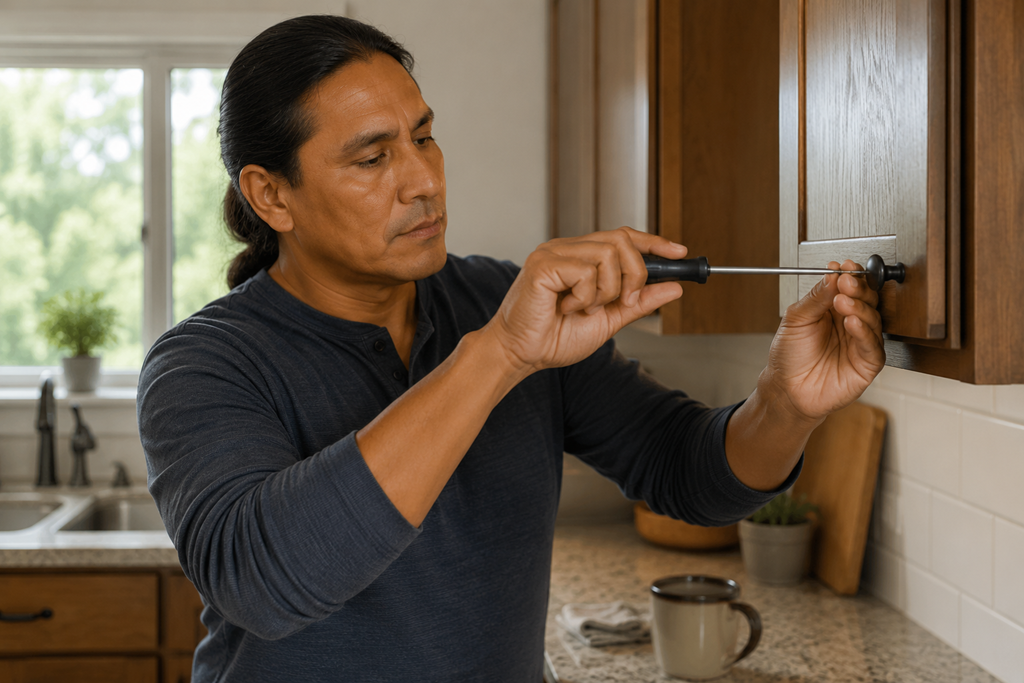
DIY home improvement does not have to mean giving up an entire weekend, buying every tool at once, or turning your home into a half-finished project zone. For busy people with limited time, the most useful DIY approach is to focus on small, visible improvements that make daily life easier without requiring a major schedule reset.
That might mean tightening a loose cabinet handle, touching up scuffed paint near a doorway, organizing one cluttered entryway shelf, replacing worn-out weatherstripping, or improving lighting in a room you use every day. These projects may not feel dramatic, but they can make a home feel calmer, cleaner, and more functional.
The key is not doing more. The key is choosing better-sized projects for the life you actually have.
Small Home Projects Count More Than People Think
One reason busy people put off DIY work is that home improvement can start to feel like an all-or-nothing commitment. If you cannot renovate a room, repaint the whole house, build custom storage, or spend a full Saturday at the hardware store, it may feel easier to do nothing.
But most homes are improved through small corrections, not constant transformation.
A loose hinge that stops squeaking can make a kitchen feel more cared for. A better hook near the door can reduce the daily pileup of bags and jackets. A fresh caulk line around a sink can make a bathroom feel cleaner. A brighter bulb in a dim hallway can make the whole home feel more comfortable.
These are not glamorous upgrades, but they solve real-life friction. For someone with a full schedule, that matters.
The Best DIY Project Is Often the One You Can Actually Finish
When time is limited, the most important question is not, “What would make the biggest difference someday?” It is, “What can I complete without disrupting my week?”
A project that takes twenty minutes and gets finished is often more valuable than a larger project that sits half-done for months. Half-finished DIY work creates visual stress. Tools stay out. Supplies pile up. One small problem turns into a reminder that something is incomplete.
That does not mean you should never take on bigger projects. It simply means your everyday DIY rhythm should be built around finishable tasks.
Good busy-person DIY projects usually have a few things in common. They are easy to start, easy to pause, and easy to clean up. They do not require moving half the room, learning five new skills, or waiting on several rounds of supplies. They improve something you notice often, which makes the effort feel worthwhile.
Look for Daily Irritations Instead of Dream Projects
A useful way to find the right project is to stop looking at your home like a renovation plan and start looking at it like a normal weekday.
Where do you lose time?
Where does clutter collect?
What small thing annoys you every time you use it?
What area feels harder than it needs to be?
Maybe the laundry area needs better shelf spacing. Maybe the bathroom drawer needs a simple divider. Maybe the garage needs one wall-mounted rack instead of another full reorganization attempt. Maybe the front entry needs better lighting so mornings feel less chaotic.
Busy people often benefit most from projects that remove repeated irritation. The payoff is not just how the home looks. It is how the home supports your routine.
Avoid Projects That Create More Decisions Than Progress
Some DIY projects look simple at first but become tiring because they require too many choices. Paint color, finish type, hardware size, tool selection, measuring, matching, patching, sanding, and cleanup can turn a small task into a mental burden.
This is why busy people often stall before they even begin. The issue is not laziness. It is decision overload.
A calmer approach is to choose projects with fewer variables. Replacing a broken switch plate is simpler than redesigning a whole wall. Adding a storage basket where clutter already lands is simpler than reorganizing an entire closet. Touching up one scuffed area is simpler than repainting a room.
Less decision-making makes it easier to act.
Time Limits Can Help You Choose Better
Limited time can actually be useful because it forces you to define the size of the project. Instead of asking, “What should I fix around the house?” ask, “What can I improve in thirty minutes?”
That question naturally narrows the answer.
A thirty-minute window might be enough to tighten hardware, install a few felt pads under furniture, clear and reset one drawer, change air filters, replace a showerhead, adjust a door latch, or clean up one visible trouble spot. A one-hour window might allow for simple shelving, light fixture updates, small paint touch-ups, or organizing one household zone.
The time limit protects you from accidentally turning a small repair into an open-ended project.
The Home Should Feel Easier Afterward, Not More Complicated
A good DIY improvement should reduce friction. It should make something easier to use, easier to clean, easier to find, or easier to maintain.
That is especially important for people with busy schedules. A project that looks nice but adds more upkeep may not be the right fit. A beautiful storage setup that requires constant rearranging can become another chore. A decorative upgrade that makes cleaning harder may create more work than comfort.
The best small improvements usually blend into daily life. They do not demand attention. They quietly make the home function better.
It Helps to Keep Supplies Simple
Many people delay DIY work because they imagine they need a full garage of tools. In reality, a small set of basic supplies can handle many everyday home tasks.
A simple screwdriver set, measuring tape, level, utility knife, painter’s tape, small hammer, wall anchors, microfiber cloths, basic adhesive pads, and a few touch-up supplies can make many small repairs less intimidating. The goal is not to become fully equipped for every possible project. The goal is to make common tasks easier to start.
When supplies are easy to find, projects feel less like events. They become normal household maintenance.
The Biggest Mistake Is Waiting for a Perfect Free Day
Many people wait for a large open block of time before doing anything around the house. But busy schedules rarely produce perfect project days. And when they do, people often need rest more than another obligation.
This is why small, well-chosen DIY projects work better for real life. They fit between responsibilities instead of competing with them.
You do not need to turn every evening into a productivity session. You do not need to spend every weekend improving your home. A better rhythm might be one small task when you notice it, one light project on a slower weekend, or one useful fix each month.
Consistency matters more than intensity.
Choose Improvements That Support the Way You Already Live
A home should not be improved for an imaginary version of your life. It should support the life you actually have.
If your mornings are rushed, focus on entryway flow, lighting, hooks, shelves, and easy-access storage. If evenings feel cluttered, focus on landing spots, cord control, and simple room resets. If weekends are packed, choose low-mess projects that can be completed quickly. If you share your home with family, choose improvements that make routines more obvious and easier for everyone to maintain.
The most useful DIY improvements are not always the most impressive. They are the ones that remove small obstacles from daily life.
A Way to Think About DIY When Life Is Full
DIY home improvement can feel overwhelming when every project seems connected to another project. One loose handle reminds you of old cabinets. A scuffed wall reminds you of repainting. A messy closet reminds you of storage, shelving, labels, and a full weekend of sorting.
But you do not have to solve the whole house at once.
You can improve one corner, one surface, one fixture, one drawer, or one repeated annoyance. You can choose projects that match your actual energy. You can let small progress count.
For busy people with limited time, DIY works best when it is practical, contained, and kind to your schedule. A home does not have to be perfect to become more comfortable. Sometimes one finished fix is enough to make the day feel a little smoother.
Download Our Free E-book!