Reykjavik is one of the easiest capitals in Europe to pair with big natural scenery. In a single trip, you can walk colorful city streets, visit museums, soak in geothermal water, stand between tectonic plates, see waterfalls, and return to a comfortable base by evening.
This 3-day Reykjavik itinerary is designed for first-time visitors who want a practical mix of city culture and Icelandic nature without trying to do too much. It keeps the pace realistic, groups sights logically, and leaves room for weather, daylight, and personal travel style.
Reykjavik works especially well as a short trip because many of Iceland’s classic experiences are close enough to visit from the city. The itinerary below includes Reykjavik’s main landmarks, the Golden Circle, coastal views, geothermal bathing, and flexible adventure options. Visit Reykjavik identifies city highlights such as Hallgrímskirkja, the Sun Voyager, local culture, and outdoor experiences, while Visit Iceland describes the Golden Circle as one of Iceland’s iconic scenic routes with Þingvellir, Geysir, and Gullfoss as core stops.
How To Use This 3-Day Reykjavik Itinerary
This itinerary assumes you are staying in or near central Reykjavik and using the city as your base. You can follow it with a rental car, guided day tours, or a mix of both.
A rental car gives you the most flexibility for nature stops, photo breaks, and timing. Guided tours are easier if you do not want to drive in unfamiliar conditions, especially in winter. Either way, build extra space into your plans. Icelandic weather can shift quickly, and some outdoor experiences are best enjoyed slowly rather than rushed.
For a first visit, this structure works well:
- Day 1: Reykjavik city highlights, waterfront, museums, and geothermal bathing
- Day 2: Golden Circle day trip with Þingvellir, Geysir, and Gullfoss
- Day 3: Coastal scenery, local neighborhoods, optional whale watching, lava landscapes, or a slower Reykjavik day
Check current opening hours, road conditions, and tour schedules before you go, especially outside the main summer travel season.
Day 1: Explore Reykjavik’s Landmarks, Culture, And Geothermal Side
Your first day is best spent getting settled into the city. Reykjavik is compact, walkable, and visually interesting, with colorful buildings, harbor views, public art, cozy cafés, and easy access to geothermal bathing.
Start At Hallgrímskirkja
Begin at Hallgrímskirkja, Reykjavik’s most recognizable church and one of the best orientation points in the city. Its tall, sculptural design is inspired by Icelandic basalt formations, and the area around it gives you an immediate sense of Reykjavik’s scale.
If the tower is open during your visit, consider going up for a broad view over the city’s rooftops, harbor, mountains, and surrounding coastline. It is a useful first stop because it helps you understand how close Reykjavik’s urban center is to the natural landscape.
Afterward, walk down Skólavörðustígur, one of the city’s most photogenic streets. You will find small shops, cafés, galleries, and views back toward the church.
Walk Through The City Center
From Hallgrímskirkja, continue toward Laugavegur, Reykjavik’s main shopping and strolling street. This area is ideal for an unhurried introduction to the city. Rather than treating it like a checklist, give yourself time to browse, stop for coffee, and notice the murals, small storefronts, and local design details.
This is also a good area for lunch. Instead of chasing a specific “must-visit” restaurant, focus on Icelandic flavors and comforting travel meals: seafood soup, lamb, rye bread, fresh fish, pastries, or a simple café lunch.
Visit Harpa And The Old Harbor
After exploring the city center, walk toward Harpa Concert Hall, one of Reykjavik’s modern architectural landmarks. Its glass façade reflects the harbor, sky, and surrounding mountains, making it worth seeing even if you are not attending a performance.
From Harpa, continue along the waterfront. This is one of the most pleasant walks in Reykjavik, especially when the weather is clear. The city feels open here, with the sea on one side and mountain views across the bay.
See The Sun Voyager
A short walk from Harpa brings you to the Sun Voyager, a steel sculpture set along Reykjavik’s waterfront. Visit Reykjavik describes it as a well-known waterfront sculpture symbolizing discovery, freedom, and hope.
It is a simple stop, but a memorable one. The best experience is not necessarily taking the perfect photo; it is standing by the water, looking across Faxaflói Bay, and feeling how close the city is to Iceland’s wider landscape.
Choose A Museum Or Cultural Stop
In the afternoon, choose one museum or cultural experience based on your interests. Reykjavik has several worthwhile options, and choosing just one keeps the day from feeling overloaded.
Good options include:
- A history-focused museum if you want context on Iceland’s settlement and culture
- A maritime or harbor-area museum if you are interested in Reykjavik’s relationship with the sea
- A local art museum if you want a quieter indoor stop
- Perlan if you want an accessible introduction to Icelandic nature, glaciers, volcanoes, and landscapes
Perlan can be especially helpful early in the trip because it gives visitors a broader understanding of Iceland’s natural forces before heading out on day trips.
End With A Geothermal Bath
Finish your first day with a geothermal soak. This is one of the most Icelandic ways to ease into the trip.
You can keep it local by visiting one of Reykjavik’s public swimming pools, which are part of everyday Icelandic life. For a more scenic spa-style experience, consider Sky Lagoon, located near Reykjavik, which highlights geothermal water and ocean views.
If you prefer the famous Blue Lagoon, it can work on arrival or departure day because it is outside Reykjavik and closer to the airport than the city center. Visit Iceland describes the Blue Lagoon as a geothermal seawater experience, while the Blue Lagoon’s official site notes its warm mineral-rich water and day-visit setup.
Day 2: Take A Golden Circle Day Trip
Your second day is the best time to leave the city and see some of Iceland’s classic natural landmarks. The Golden Circle is popular for a reason: it combines history, geology, geothermal activity, and waterfalls in a route that is manageable from Reykjavik.
Visit Iceland identifies the Golden Circle’s main highlights as Þingvellir National Park, the Geysir geothermal area, and Gullfoss waterfall.
You can do this day by rental car or guided tour. A tour removes the stress of driving and timing. A car gives you more flexibility to pause when the landscape catches your attention.
Start At Þingvellir National Park
Begin with Þingvellir National Park, one of Iceland’s most meaningful places. It is important historically and geologically, and it also offers some of the most accessible dramatic scenery near Reykjavik.
This is where you can walk through a rift valley between the North American and Eurasian tectonic plates. It is also connected to Iceland’s early parliamentary history, which gives the landscape cultural depth beyond its natural beauty.
Give yourself enough time here to walk, read the interpretive signs, and take in the wide views. Þingvellir rewards a slower pace.
Continue To The Geysir Geothermal Area
Next, continue to the Geysir geothermal area, where steam rises from the earth and hot water erupts from the ground. The active geyser most visitors see is Strokkur, which erupts regularly enough that you can usually watch it without waiting too long.
Stay on marked paths and follow safety signs. Geothermal areas are beautiful, but the water and ground can be dangerously hot.
This is also a practical point in the day for restrooms, snacks, or a short break depending on your route.
Spend Time At Gullfoss Waterfall
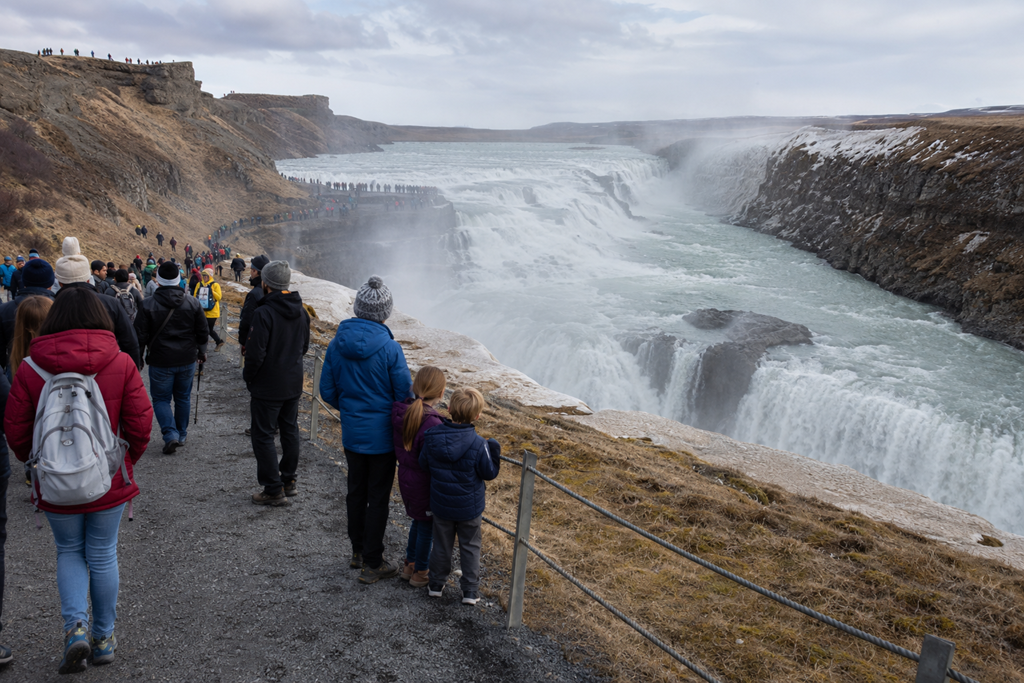
From Geysir, continue to Gullfoss, one of Iceland’s most impressive waterfalls. The water drops in powerful stages into a rugged canyon, and the sound, mist, and scale make it feel different from simply seeing it in photos.
The viewing areas can feel exposed, especially in wind or winter conditions, so dress warmly and wear sturdy shoes. Even in milder seasons, waterproof layers are useful.
This is a place to linger if conditions are comfortable. Walk to more than one viewpoint if available, because the waterfall changes character depending on the angle.
Add One Optional Stop If Time Allows
If you are driving yourself and have enough time, you can add one extra stop without making the day too packed. Popular additions include a volcanic crater, a geothermal bathing stop, or a smaller scenic pullout.
Keep this optional. The Golden Circle already has enough to fill a satisfying day, and Iceland’s landscapes are more enjoyable when you are not constantly rushing to the next stop.
Return To Reykjavik For A Simple Evening
After returning to Reykjavik, keep the evening easy. Choose a casual dinner, take a short walk, or relax at your accommodation. A full Golden Circle day can be visually and physically tiring, especially if you are dealing with wind, cold, or changing weather.
If the skies are dark and clear during northern lights season, you can consider a northern lights tour or a short trip away from city lights. Treat this as a bonus rather than a guaranteed part of the itinerary.
Day 3: Coastal Reykjavik, Nature Options, And A Flexible Final Adventure
Your final day should balance one more memorable Icelandic experience with enough flexibility to adapt to the weather. This is the day to choose the version of Reykjavik that fits your interests best: ocean, lava, wildlife, local neighborhoods, or a slower city day.
Morning Option 1: Go Whale Watching From Reykjavik
If you are interested in wildlife, consider a whale watching tour from Reykjavik’s harbor. This is a convenient way to get out on the water without taking a long day trip.
Whale sightings are never guaranteed, so approach this as a nature experience rather than a fixed outcome. Even when wildlife is limited, the boat ride can offer beautiful views of the coastline, mountains, and city from the bay.
Dress more warmly than you think you need to. The water can feel much colder than the city streets.
Morning Option 2: Explore The Reykjanes Peninsula
If you have a rental car and want a more rugged final adventure, consider exploring part of the Reykjanes Peninsula. This area is known for lava fields, geothermal landscapes, coastal scenery, and a raw volcanic atmosphere.
This can pair well with the Blue Lagoon if you prefer to visit it on your final day. Because volcanic activity and local access conditions can change, check official safety guidance and road conditions before planning a route in this region.
Morning Option 3: Stay In Reykjavik And Go Slower
If you prefer not to add another tour or drive, spend the morning seeing Reykjavik at a more local pace.
Good choices include:
- Walking through the Old Harbor and Grandi area
- Visiting a second museum
- Returning to a favorite café
- Exploring local shops and bookstores
- Taking a longer waterfront walk
- Visiting a neighborhood swimming pool
This option is especially good if your first two days were active or if the weather is not ideal for a long outdoor excursion.
Afternoon Walk To Grótta Or The Waterfront
For a scenic final afternoon, consider heading toward Grótta Lighthouse on the Seltjarnarnes peninsula, west of central Reykjavik. It is a peaceful coastal area with views of the sea, birds, and distant mountains.
Access near the lighthouse can vary with tides and bird protection periods, so respect signs and local guidance. Even if you do not walk all the way out, the surrounding coastline is worthwhile.
If you want to stay closer to the center, repeat part of the waterfront walk near Harpa and the Sun Voyager. Reykjavik’s waterfront feels different depending on the light, weather, and time of day.
End With A Comfortable Final Meal
Use your last evening for a simple, satisfying meal rather than an overplanned finale. Reykjavik is a good place to try Icelandic seafood, lamb, skyr-based desserts, rye bread, or a warming bowl of soup.
For a short trip, the best final evening is often the one that gives you space to reflect on what you have seen: the city streets, the geothermal steam, the waterfalls, the open landscapes, and the feeling of being somewhere shaped by weather, water, and volcanic ground.
Where To Stay In Reykjavik For This Itinerary
For a 3-day trip, staying central is usually worth it. Look for accommodations near the city center, Old Harbor, or the area around Laugavegur if you want to walk to restaurants, shops, museums, and pickup points for tours.
A central base helps most if you are not renting a car. Many guided tours use central pickup locations, and you can spend your evenings on foot instead of navigating buses or taxis.
If you do rent a car, check whether your accommodation offers parking or easy access to parking. Central Reykjavik is still convenient, but parking logistics matter more.
Getting Around Reykjavik And Beyond
Reykjavik’s central areas are easy to explore on foot. For most of Day 1, you can walk between Hallgrímskirkja, Laugavegur, Harpa, the waterfront, and the Old Harbor.
For day trips, you have three main options:
- Guided tours: Easiest for the Golden Circle, northern lights, whale watching, and South Coast-style excursions
- Rental car: Best for flexibility, photography stops, and independent pacing
- Local buses and taxis: Useful within the city, but less practical for major nature routes
In winter, be honest about your comfort with driving in wind, snow, darkness, and icy conditions. A guided tour may be a better choice if you are unsure.
What To Pack For 3 Days In Reykjavik
Packing well makes a big difference in Iceland. Even if you are visiting in a milder month, the weather can change quickly.
Bring:
- Waterproof or water-resistant outer layer
- Warm mid-layer
- Comfortable walking shoes with good grip
- Hat and gloves outside summer
- Swimsuit for pools, lagoons, or hot springs
- Reusable water bottle
- Sunglasses for bright conditions
- Day bag for tours
- Portable charger for long sightseeing days
Avoid packing only for the forecast. Iceland often requires flexible layers more than one heavy outfit.
Best Time To Follow This Reykjavik Itinerary
This itinerary can work year-round, but the experience changes by season.
Summer brings long daylight hours, easier driving conditions, greener landscapes, and more time for exploring. It is also a busier travel period, so book key tours and accommodations ahead.
Winter brings shorter days, colder weather, possible snow and ice, and the chance of northern lights. It can be beautiful, but you need more flexibility and a slower pace.
Spring and fall can be excellent for travelers who want a balance between daylight, atmosphere, and fewer crowds than peak summer. Conditions can still vary, so keep your plans adaptable.
Practical Tips For A Better 3-Day Reykjavik Trip
Do not overpack the itinerary. Iceland’s landscapes deserve time, and weather can slow things down.
Book important tours ahead during busy periods, but avoid locking every hour into a fixed plan. Leave space for rest, weather changes, and spontaneous stops.
Check road conditions before driving outside Reykjavik, especially in winter or shoulder seasons. Follow local warnings and do not ignore closures.
Use Reykjavik as more than a place to sleep. The city has its own character, food culture, public pools, harbor walks, museums, and creative energy.
Be realistic about northern lights. They depend on darkness, cloud cover, and solar activity. Plan your trip around experiences you can count on, and treat aurora sightings as a bonus.
A Simple 3-Day Reykjavik Itinerary At A Glance
Day 1: Reykjavik City And Geothermal Bathing
Start at Hallgrímskirkja, walk through the city center, explore Laugavegur, visit Harpa, see the Sun Voyager, choose one museum, and end with a public pool or geothermal lagoon.
Day 2: Golden Circle
Visit Þingvellir National Park, the Geysir geothermal area, and Gullfoss waterfall. Add one optional stop only if time and weather allow.
Day 3: Final Nature Experience
Choose whale watching, the Reykjanes Peninsula, a slower Reykjavik day, or a coastal walk toward Grótta. End with a relaxed final dinner in the city.
Final Thoughts On Spending 3 Days In Reykjavik
Three days in Reykjavik gives you enough time to experience both sides of Iceland: the welcoming, walkable capital and the dramatic natural landscapes just beyond it.
The key is not to see everything. It is to build a trip that feels clear, balanced, and memorable. With one day in the city, one day on the Golden Circle, and one flexible day for coast, wildlife, lava fields, or slower local exploring, you will leave with a strong first impression of Reykjavik and the nature that surrounds it.
Download Our Free E-book!