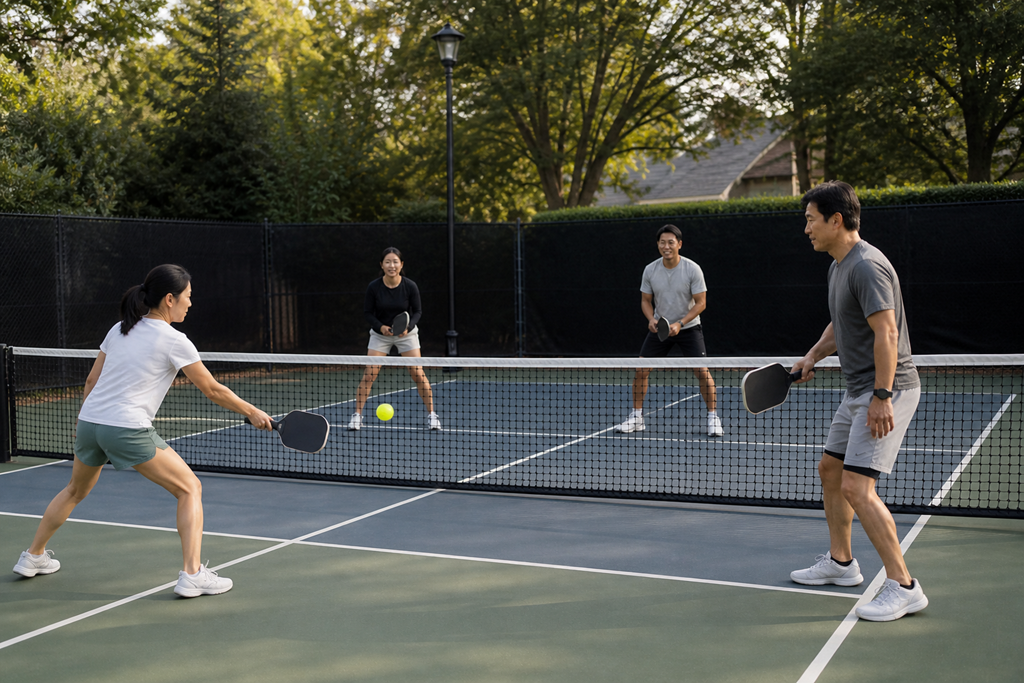
Playing pickleball becomes more fun when you stop treating every game like a performance test and start shaping the experience around enjoyment, connection, and small wins.
That does not mean you should ignore improvement. It simply means the game feels better when you give yourself permission to play, laugh, learn, adjust, and enjoy the rhythm of the match without turning every missed shot into a judgment about your ability.
For many people, pickleball starts out exciting because it feels approachable. The court is smaller than tennis, the rules are fairly simple, and the game has a friendly social feel. But once you start playing more often, it is easy for the fun to get crowded out by frustration. You may compare yourself to better players, worry about making mistakes, feel tense during rallies, or leave the court wondering why something that was supposed to be enjoyable suddenly feels stressful.
The good news is that pickleball does not have to become complicated to stay fun. A few small changes in mindset, pace, and the way you play can make the game feel lighter, more social, and more satisfying.
Fun Usually Disappears When the Game Starts Feeling Like a Test
One reason pickleball can become less enjoyable is that people quietly raise the stakes without realizing it.
At first, you may be happy just to keep the ball in play. Then you start noticing who has a better serve, who wins more points, who understands strategy faster, and who seems more comfortable at the net. Before long, a casual game can start to feel like a public evaluation.
That pressure can make you play tighter. You may swing too carefully, apologize too much, overthink where to stand, or get irritated by mistakes that are normal for your skill level.
A helpful reframe is this:
You are allowed to enjoy pickleball before you are good at it.
That one idea can change the whole experience. You do not need to earn the right to have fun by becoming consistent, competitive, or impressive. Fun is part of what keeps you coming back long enough to improve naturally.
Make the Goal More Enjoyable Than Just Winning
Winning can be fun, but it is not the only reason to play.
If every game is measured only by the final score, then most of the experience depends on the outcome. That makes the match feel narrower than it needs to be. A better approach is to give yourself a few smaller goals that make the game satisfying even when you do not win.
You might focus on longer rallies, cleaner serves, better communication with your partner, staying relaxed after a mistake, or simply enjoying the movement. These goals keep you engaged without making the entire game feel like a pass-or-fail event.
For casual players, this matters because pickleball is often more than a sport. It can be exercise, social time, fresh air, stress relief, or a reason to get out of the house. When the only goal is winning, you may miss the quieter benefits that made the game appealing in the first place.
Play With People Who Match the Kind of Game You Want
The people you play with have a major effect on how much fun pickleball feels.
Some players love competitive games. Some want a relaxed social match. Some are learning and need patience. Some enjoy joking around. Others prefer focused play with fewer interruptions. None of these styles are wrong, but they do not always mix well without clear expectations.
If you want pickleball to feel more enjoyable, pay attention to the group dynamic. A casual player may feel discouraged in a game where every point is treated intensely. A competitive player may feel bored in a group that barely keeps score. A beginner may feel tense if everyone else is trying to play at full speed.
The easiest way to make the game more fun is to choose games that fit the mood you actually want. That could mean a beginner-friendly group, a social doubles night, a family game, or a regular partner who does not make every mistake feel heavy.
Pickleball is more enjoyable when the emotional pace of the group matches the purpose of the game.
Add Small Challenges That Keep the Game Fresh
Sometimes pickleball becomes less fun not because it is too hard, but because it starts to feel repetitive.
You serve, return, rally, miss, reset, and repeat. That rhythm can be enjoyable, but it can also get stale if every game feels exactly the same.
Small challenges can bring back a sense of play. For example, you might try to keep the rally going as long as possible, practice softer shots for one game, aim to communicate better with your partner, or play a relaxed round where the goal is placement instead of power.
The key is to keep the challenge light. You are not building a training system. You are simply adding variety so the game feels more interesting.
A good pickleball challenge should make you more engaged, not more tense. If it makes the game feel like homework, it is probably too rigid for a casual fun-focused match.
Let Mistakes Stay Small
A missed shot can feel bigger than it really is, especially when other people are watching.
But in pickleball, mistakes are constant. Even experienced players hit balls into the net, miss easy returns, misjudge angles, and make awkward choices. The difference is that confident players usually recover faster emotionally.
One of the simplest ways to make pickleball more fun is to let mistakes stay small.
That means you do not need to apologize after every missed shot. You do not need to explain what you meant to do. You do not need to replay the mistake in your mind for the next five points. A quick reset is enough.
A calm phrase like “next one” or “good try” can help you move on without turning one point into a mood shift. This keeps the game lighter for you and for the people playing with you.
Make Room for Social Enjoyment
Pickleball is popular partly because it is social. The smaller court, doubles format, and steady pace make it easier to talk, laugh, and connect.
If the game has started to feel too serious, bring back some of that social energy. Arrive a little early. Stay for a few minutes after. Rotate partners. Compliment a good shot. Laugh at the awkward points. Ask newer players how long they have been playing.
These small social moments can make the game feel warmer and less transactional.
You do not have to turn every game into a hangout, but if your main reason for playing is enjoyment, connection matters. The game becomes more fun when it feels like something you are sharing, not just something you are trying to win.
Adjust the Pace Instead of Forcing Yourself to Keep Up
Pickleball can become frustrating when the pace of play moves faster than your current comfort level.
Maybe the rallies feel too quick. Maybe opponents hit harder than you expected. Maybe you are still learning where to stand. Maybe you feel rushed every time the ball comes your way.
Instead of forcing yourself to keep up with a pace that makes you tense, look for ways to slow the experience down. Play with people closer to your level. Choose casual games instead of highly competitive ones. Take a breath before serving. Focus on getting the ball back rather than hitting the perfect shot.
This does not mean avoiding challenge forever. It means giving yourself enough space to build comfort. Enjoyment often grows when the game is challenging but not overwhelming.
Use Pickleball as a Break, Not Another Obligation
One of the easiest ways to drain the fun out of any hobby is to turn it into another thing you have to optimize.
If you start tracking every weakness, comparing every game, researching endlessly, buying too much gear, or pressuring yourself to improve quickly, pickleball can lose the lightness that made it appealing.
There is nothing wrong with wanting to get better. But improvement should support the enjoyment, not replace it.
For many adults, pickleball works best as a refreshing part of life: a way to move, socialize, get outside, and do something active without needing it to become a major personal project.
You can take the game seriously enough to learn while still keeping it simple enough to enjoy.
The Best Version of Pickleball Is the One You Want to Keep Playing
Making pickleball more fun does not require a complete change in how you play. It usually comes from small adjustments: choosing better-fit games, lowering unnecessary pressure, laughing more easily, setting lighter goals, and letting mistakes pass.
The point is not to avoid improvement. The point is to create the kind of experience that makes improvement feel natural instead of forced.
When pickleball feels fun, you are more likely to keep showing up. You move more, connect more, learn more, and leave the court feeling better than when you arrived.
That is a worthwhile win, even when the scoreboard says otherwise.
Download Our Free E-book!