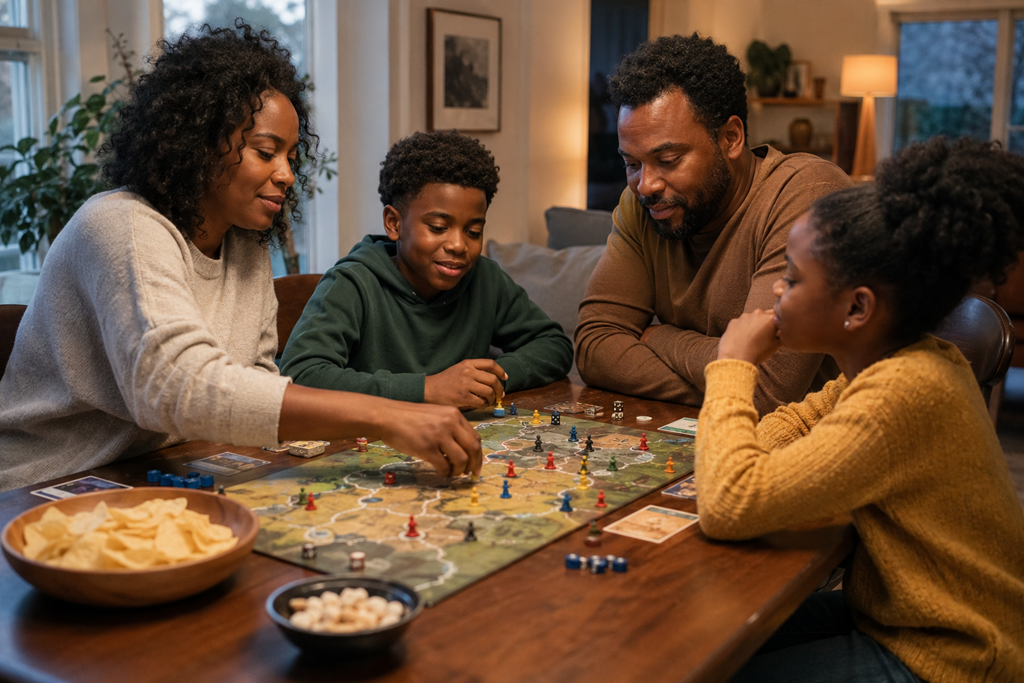
A board game lifestyle encourages more screen-free time by making offline connection feel natural, enjoyable, and easy to return to. Instead of treating screen breaks like a punishment or a strict rule, board games give people something engaging to do with their hands, minds, and attention.
That matters because many people do not actually want every free moment to turn into scrolling, streaming, or checking notifications. They may simply reach for a screen because it is familiar, convenient, and always nearby. Board games offer a different kind of default: one that feels social, tactile, focused, and slower in a good way.
For many households, friend groups, couples, and solo hobbyists, board gaming becomes less about “playing games” and more about creating a rhythm where life is not always mediated through a device.
Screen-Free Time Works Better When It Has Somewhere To Go
One reason people struggle with screen-free time is that “less screen time” is often framed as a blank space.
Put the phone away. Turn off the TV. Stop scrolling.
Those are reasonable goals, but they do not always answer the next question: what now?
Board games help because they replace passive digital habits with a clear, physical activity. There is a box to open, pieces to sort, cards to shuffle, rules to learn, turns to take, and people to talk to. Even simple games create a small world that asks for attention without needing a glowing screen.
This is why board games can feel easier than simply deciding to be offline. They do not just remove a habit. They give the mind and body something else to settle into.
A Board Game Night Changes The Pace Of The Room
Screens often pull attention in separate directions. One person may be watching a video, another may be checking messages, and someone else may be halfway present while scrolling. Even when people are in the same room, their attention can feel scattered.
A board game changes the atmosphere because everyone is oriented around the same shared object.
The board, cards, dice, tiles, or pieces become the center of attention. Conversation happens more naturally because the game gives people a reason to respond, laugh, think, wait, and notice each other. The pace slows down because turns take time. Pauses are normal. Small moments of silence are not awkward.
That slower rhythm is one of the quiet benefits of a board game lifestyle. It gives people a way to be together without needing constant digital stimulation.
The Appeal Is Not Just Nostalgia
It is easy to assume board games encourage screen-free time because they remind people of childhood or simpler days. That can be part of it, but it is not the whole reason.
Board games also meet very current needs.
They offer structure without requiring a screen. They create social connection without relying on social media. They give people a sense of challenge without endless notifications. They allow adults to relax, think, and play without feeling like every leisure activity has to be productive.
For people who spend much of the day working on computers or checking phones, the physical nature of board games can feel especially refreshing. Picking up cards, moving pieces, reading expressions, and sitting across from real people all engage attention in a different way.
The experience feels less like escaping modern life and more like restoring balance inside it.
Screen-Free Does Not Have To Mean Serious Or Strict
One common misunderstanding is that screen-free time has to be disciplined, quiet, or highly intentional. That can make it feel heavier than it needs to be.
Board games work well because they make offline time playful.
A person does not have to announce a major lifestyle change to benefit from one game night. A family does not need a perfect digital detox plan to enjoy an hour around the table. A couple does not need to eliminate TV forever to replace one evening of passive watching with a game that makes them talk and laugh.
This softer approach matters. When screen-free time feels enjoyable instead of restrictive, it becomes easier to repeat.
Board games create a positive reason to step away from screens, not just a negative reason to avoid them.
The Best Screen Breaks Often Feel Social, Not Isolated
Many screen habits are connected to emotional needs. People scroll because they are tired, bored, lonely, overstimulated, or looking for a small reward. Simply telling someone to use screens less does not always address what the screen was providing.
Board games can help because they offer a different kind of reward.
They can provide connection, challenge, humor, anticipation, and shared memory. Even a short game can give people a feeling of being more present with each other. This is especially useful in homes where everyone is physically together but mentally absorbed in separate devices.
A game does not have to be deep or complex to create that shift. Sometimes a familiar card game, a quick strategy game, or a light party game is enough to pull attention back into the room.
Board Games Make Boredom Less Intimidating
Many people reach for screens the moment boredom appears. That is understandable. Screens are designed to offer instant stimulation, and they make boredom disappear quickly.
But a board game lifestyle can gently rebuild tolerance for slower moments.
Setting up a game takes a little patience. Waiting for a turn takes attention. Learning rules takes focus. Losing gracefully takes perspective. Talking between turns creates space for small, ordinary conversation.
These are not dramatic life lessons, but they do matter. They help people become more comfortable with forms of leisure that are not instant, algorithmic, or endlessly refreshed.
Over time, board games can make slower entertainment feel normal again.
It Helps When The Game Matches The Energy Of The Moment
A board game lifestyle does not mean every game night has to be long, competitive, or complicated. In fact, choosing the wrong kind of game can make screen-free time feel harder than it needs to be.
Some evenings call for something light and easy. Other moments are better suited for strategy, cooperation, storytelling, trivia, or quiet solo play. The value is not in proving how serious someone is about the hobby. The value is in choosing a game that fits the people, mood, and amount of energy available.
This is where board games become more sustainable as a lifestyle habit. They can adapt to a relaxed weeknight, a family weekend, a rainy afternoon, a date night, or a small gathering with friends.
When the game fits the moment, screen-free time feels less forced.
What Often Gets In The Way
Board games can encourage screen-free time, but a few patterns can make the experience feel more difficult than it needs to be.
One pattern is choosing games that are too complex too soon. If people feel confused, rushed, or embarrassed while learning, they may be less likely to come back to the table.
Another pattern is treating game night like a performance. The goal does not have to be a perfect setup, a large group, themed snacks, or a carefully curated collection. A simple game at the kitchen table can still create the kind of offline connection people are craving.
A third pattern is expecting board games to eliminate screens completely. They do not need to do that. Their strength is that they create meaningful alternatives. Replacing even one hour of scattered screen use with shared play can change the feeling of an evening.
A More Grounded Way To Think About Offline Time
The real benefit of a board game lifestyle is not just fewer minutes on a device. It is the quality of attention that becomes possible when screens are not the center of the moment.
People talk differently. They notice each other more. They experience challenge, humor, patience, and connection in a shared physical space. The room feels less fragmented. Time feels a little more memorable.
That is why board games can be such a practical support for screen-free living. They do not demand perfection. They simply give people a reason to gather, focus, and enjoy something together without needing everything to pass through a screen.
In a world where digital habits often fill every quiet opening, board games offer a calm, human, and repeatable way to make offline time feel worthwhile again.
Download Our Free E-book!