1)) Direct Answer / Explanation
Eco anxiety often develops from constant exposure to environmental threat information without enough emotional recovery time.
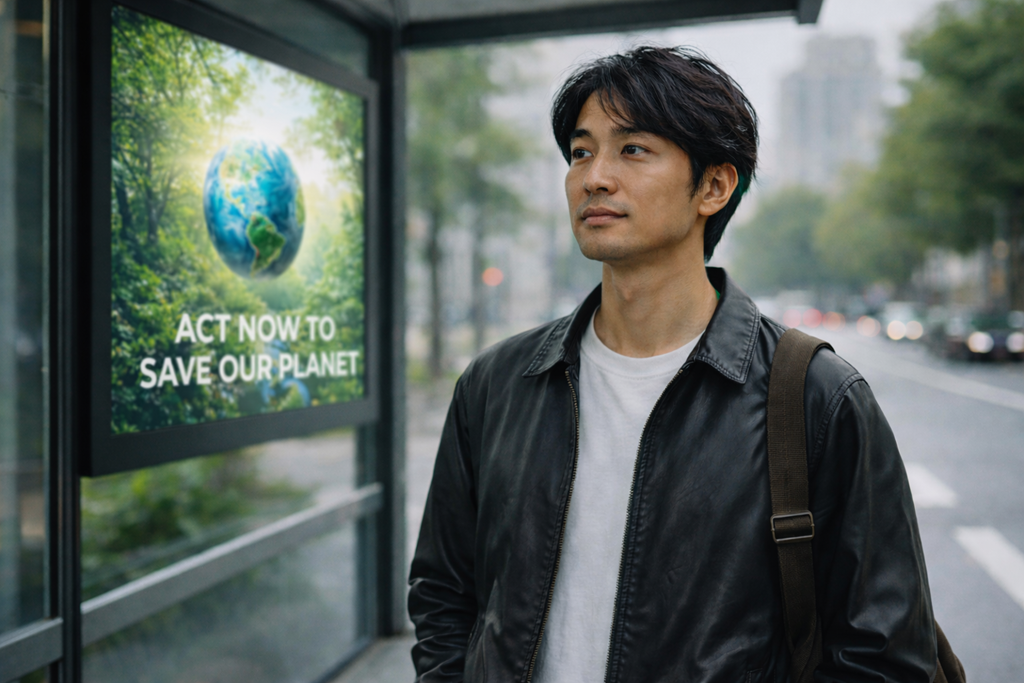
In plain terms: when you repeatedly consume climate headlines, documentaries, social media posts, and urgent environmental messaging, your nervous system begins to interpret the issue as immediate and personal — even when you are physically safe.
This can feel like:
- A background sense of tension after reading environmental news
- Guilt or pressure to “do more” every time you scroll
- Difficulty disengaging from climate-related content
- A low-level fear about what the future might hold
You may not feel panicked.
But you may feel consistently unsettled.
Constant exposure doesn’t just inform you.
It gradually trains your brain to stay on alert.
That is how concern slowly turns into anxiety.
2)) Why This Matters
When this pattern goes unnoticed, it quietly affects your mental and emotional stability.
Your brain is designed to respond to threats with action or resolution. But environmental problems are:
- Large-scale
- Long-term
- Systemic
- Unresolved
So the “threat signal” never fully switches off.
Over time, this can lead to:
- Emotional fatigue
- Irritability or helplessness
- Avoidance of environmental topics altogether
- Difficulty sustaining calm, steady habits
Ironically, the more you care, the more vulnerable you become to overload.
Without understanding what’s happening, you may interpret this anxiety as weakness or irresponsibility.
It isn’t.
It’s your nervous system responding to repeated signals of danger without closure.
3)) Practical Guidance (High-Level)
You don’t need to stop caring or disengage entirely.
But you may need to relate to environmental information differently.
Here are a few supportive principles:
Awareness Needs Boundaries
Staying informed is valuable.
Staying immersed is destabilizing.
Information without limits can overwhelm your processing capacity. Healthy awareness includes space to recover.
Exposure Is Not the Same as Action
Consuming more content does not automatically create more impact.
Often, steady personal habits — repeated quietly — matter more than constant updates.
Reducing exposure does not mean reducing responsibility.
It means protecting sustainability — both environmental and personal.
Your Brain Responds to Repetition
The mind interprets repeated alarming messages as escalation.
Even if each article is thoughtful and accurate, the cumulative effect can amplify perceived immediacy.
A clarifying insight here is this:
Eco anxiety often grows not from one piece of information — but from accumulation without pause.
When you recognize that pattern, the anxiety becomes understandable rather than mysterious.
4)) Common Mistakes or Misunderstandings
Several well-meaning habits can unintentionally intensify eco anxiety.
Mistake 1: Believing “More Information Equals More Control”
It feels responsible to stay fully informed.
But after a certain point, additional information rarely increases personal agency. It often increases mental load.
This mistake is common because learning feels productive.
Yet emotional stability requires limits.
Mistake 2: Replacing Action With Monitoring
Endlessly tracking environmental updates can create the illusion of engagement.
But monitoring is not the same as meaningful participation.
This pattern is easy to fall into because monitoring feels like vigilance — and vigilance feels like care.
Mistake 3: Thinking Exposure Builds Resilience
Some assume that frequent exposure will desensitize them.
In reality, chronic exposure without processing often increases sensitivity, not resilience.
Resilience grows from balance — not saturation.
Conclusion
Eco anxiety often develops from repeated exposure to environmental threat information without emotional recovery time.
The experience can feel like background tension, guilt, or helplessness — even when you are trying to act responsibly.
The key insight is this:
It’s not the single article or documentary that creates anxiety. It’s sustained accumulation without pause.
When you recognize this pattern, you can adjust how you engage with information — without abandoning your values.
If you’d like the bigger picture on why environmental concern can gradually turn into anxiety more broadly, you may find it helpful to read Why Environmental Concern Can Turn Into Anxiety, which explores the structural roots of this experience in greater depth.
Download Our Free E-book!