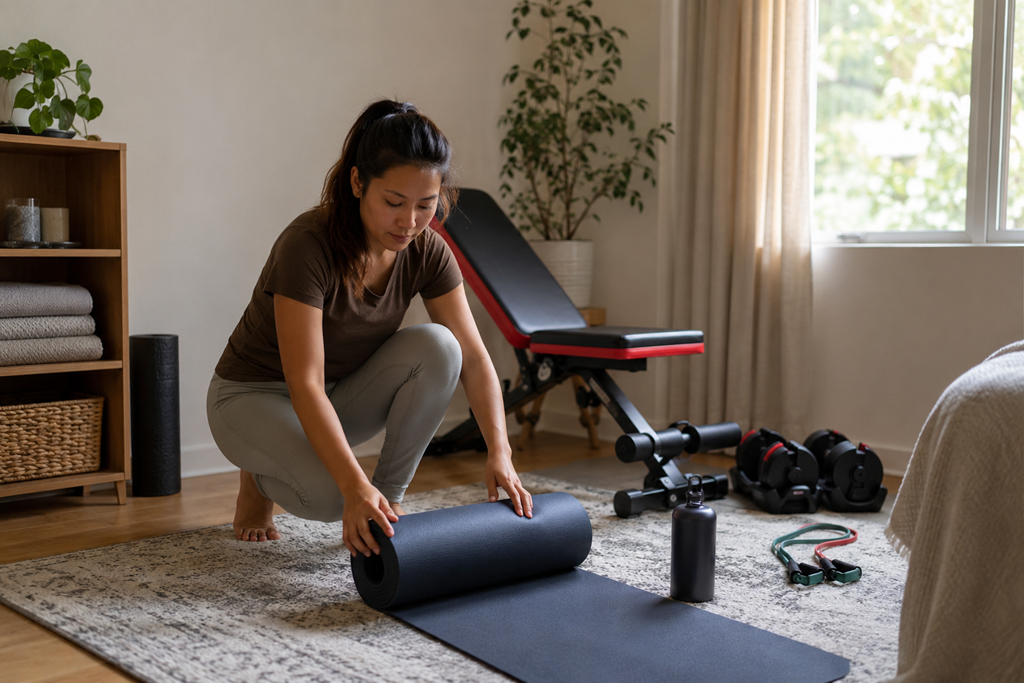
Creating a comfortable home gym without overspending starts with a simple shift: build the space around the workouts you will actually do, not the equipment you feel pressured to buy.
A home gym does not need to look like a commercial fitness studio to be useful. It does not need wall-to-wall machines, expensive flooring, or every accessory you see online. For many people, the most comfortable home gym is a small, reliable space that makes exercise feel easier to start and easier to repeat.
Comfort matters because your workout environment affects how often you use it. If the space feels cramped, cluttered, cold, awkward, or unfinished, it can quietly become one more reason to avoid exercise. But when the room feels simple, accessible, and calm, working out at home becomes less of a production.
A Comfortable Home Gym Starts With Less Friction
The best home gym is not always the most impressive one. It is the one that removes small barriers.
That might mean keeping dumbbells where you can reach them, leaving a yoga mat rolled near the wall, setting up a fan, improving the lighting, or making sure your shoes, towel, and water bottle have a regular place. These details may seem small, but they make the space feel ready.
A common mistake is thinking comfort comes from buying more equipment. Often, comfort comes from making the room easier to use.
A bench that does not wobble, enough floor space to move safely, and a place to store loose items can matter more than another machine. A home gym should feel like a space that welcomes movement, not a storage room with exercise gear squeezed into it.
Spend First On What You Will Use Repeatedly
Overspending usually happens when people build a home gym around an imagined version of themselves.
They buy equipment for complicated routines they are not currently doing. They purchase large machines before they know whether they enjoy using them. They copy someone else’s setup without considering their own space, schedule, body, or preferences.
A more grounded approach is to notice what you already return to.
If you like walking, a treadmill or walking pad may make sense. If strength training feels manageable, adjustable dumbbells, resistance bands, or a sturdy bench may be enough. If mobility, stretching, or low-impact workouts are your foundation, a good mat and open floor space may serve you better than bulky equipment.
The goal is not to build the biggest home gym possible. The goal is to support the habits you are most likely to repeat.
The Room Should Feel Easy To Enter
A comfortable home gym should not feel like a project every time you step into it.
If you have to move boxes, untangle cords, clear laundry, find your headphones, or drag equipment out of a closet before every workout, the space is doing too much emotional work against you.
This does not mean your home gym has to be perfect. A lived-in space is fine. The point is to make it feel usable.
A small spare room, garage corner, bedroom nook, or basement area can work well when it has a clear purpose. Even a modest setup can feel inviting when the basics are handled: enough light, enough airflow, enough room to move, and equipment that has a home.
Comfort is not only about softness or decoration. It is about reducing the number of decisions between “I should work out” and “I’m starting.”
Avoid Buying For Motivation Alone
One of the easiest ways to overspend is to treat equipment as motivation.
It is understandable. Buying something new can make a fitness goal feel fresh and serious. A new machine, rack, bike, or set of weights can create a burst of excitement. But excitement is not the same as a sustainable routine.
If the space does not fit your real life, the equipment can quickly become visual guilt.
A better question is: “Will this make my normal workout easier to do at home?”
That question keeps the focus on use, not fantasy. It also helps you avoid buying items that are impressive but inconvenient, uncomfortable, noisy, difficult to store, or too complicated for your current routine.
The right purchase should solve a real problem in your home workout life. It should not create a new one.
Comfort Can Come From Simple Environmental Upgrades
Some of the most valuable improvements are not traditional fitness purchases.
Lighting can make a home gym feel less gloomy. A fan can make workouts more tolerable. A small shelf can keep accessories from spreading across the floor. A mirror can help with form, but it is not required. A Bluetooth speaker, towel hook, storage bin, or washable mat can make the space feel more intentional without making it expensive.
Even the feeling of the floor matters. If the surface is too slippery, hard, or cold, you may avoid certain movements. You do not necessarily need premium flooring, but you do need a surface that feels safe and practical for the workouts you do.
These details support consistency. They make the room feel like part of your home instead of a temporary fitness experiment.
Bigger Equipment Should Earn Its Place
Large equipment can be useful, but it should earn its space.
A treadmill, stationary bike, rowing machine, weight bench, rack, or multi-station machine may be worth it if it matches your habits, your available room, and your long-term preferences. But bigger items can also make a space feel crowded and harder to use.
Before adding a large piece, consider whether it will improve the room or dominate it.
A comfortable home gym should still leave you enough space to move, stretch, warm up, and change exercises safely. If one piece of equipment takes over the entire room, it may limit the variety and comfort you were hoping to create.
Sometimes the smartest home gym decision is not buying the largest item you can afford. It is keeping the room flexible enough that you actually enjoy being in it.
A Good Setup Can Grow Slowly
You do not have to finish your home gym all at once.
In fact, building slowly often leads to a better space. You learn what you use, what annoys you, what you avoid, and what would actually make workouts smoother. Over time, your setup becomes more personal and less performative.
This also protects your budget.
Instead of trying to predict every future need, you can start with the essentials and let your routine reveal what belongs next. A few months of consistent use will teach you more than a shopping cart full of equipment chosen in one weekend.
A comfortable home gym is not built by rushing. It is built by paying attention.
The Best Home Gym Feels Like It Belongs To Your Real Life
The point of a home gym is not to recreate the gym industry inside your house. The point is to make movement more accessible in the life you already have.
That may mean a quiet corner with a mat and bands. It may mean a garage setup with weights and a bench. It may mean a spare room with a treadmill, dumbbells, and simple storage. It may mean choosing fewer items so the space feels calm instead of crowded.
Comfort and affordability work together when you stay honest about your needs.
You do not need to overspend to create a home gym that supports you. You need a space that feels easy to enter, practical to use, and realistic enough to return to again and again.
A comfortable home gym is not the one that looks the most impressive. It is the one that helps you keep going.
Download Our Free E-book!