Prague is one of Europe’s most rewarding cities for first-time visitors: historic, walkable, visually rich, and layered with architecture, food traditions, river views, and neighborhoods that each feel a little different. The city is famous for its Old Town, Charles Bridge, Prague Castle, and Gothic skyline, but the best first trip also leaves room for quieter streets, local cafés, parks, and neighborhoods beyond the busiest center.
This guide will help you understand where to stay, what to see, how to get around, what to eat, and how to plan your time without overloading your trip.
Prague at a Glance
Prague is the capital of the Czech Republic and sits along the Vltava River. Its historic center is known for Romanesque, Gothic, Renaissance, and Baroque architecture, with many of the major landmarks clustered around Old Town, Malá Strana, the Castle District, and the riverfront.
For a first visit, Prague works especially well as a 3- to 4-day city trip. That gives you time to see the major sights, walk across the river, visit Prague Castle, explore a few neighborhoods, and enjoy the city at a reasonable pace.
Best Time to Visit Prague
Prague can be visited year-round, but the feel of the trip changes by season.
Spring
Spring is one of the most pleasant times to visit. The weather gradually becomes better for walking, parks begin to brighten, and outdoor cafés feel more inviting. It is a good season for first-time visitors who want comfortable sightseeing without the heaviest summer crowds.
Summer
Summer brings long days and active streets, especially around Old Town, Charles Bridge, and Prague Castle. It is a lively time to visit, but also one of the busiest. If you visit in summer, plan major sights earlier in the day and book ahead for popular attractions when timed entry is required.
Fall
Fall is another excellent choice. The weather is often comfortable for walking, the city’s parks and viewpoints are beautiful, and the pace can feel easier than peak summer. It is a strong season for travelers who want a classic Prague experience with slightly less intensity.
Winter
Winter can be cold, but Prague’s architecture suits the season well. Shorter days make museums, cafés, churches, and evening walks more appealing. Some seasonal experiences may vary from year to year, so check current details before planning around them.
Where to Stay in Prague
For a first trip, location matters more than chasing the “perfect” hotel. Prague is walkable in the historic center, and public transportation makes it easy to reach areas beyond it. The city’s transit network includes trams, buses, and the metro, and the official Prague public transit company notes that major monuments and sights are reachable by public transportation.
Old Town
Old Town is the most convenient base if you want to be close to the Astronomical Clock, Old Town Square, Charles Bridge, restaurants, shops, and many walking routes. It is ideal for first-time visitors who want to step outside and immediately be near the city’s classic landmarks.
The tradeoff is that Old Town can be busy, especially in the most central streets. Choose a side street or quieter hotel if you want convenience without being in the middle of the busiest foot traffic.
Malá Strana
Malá Strana, also called Lesser Town, sits below Prague Castle on the west side of the river. It has cobblestone streets, historic churches, gardens, embassies, and easy access to both Charles Bridge and the Castle District.
This is a good area if you want atmosphere, romance, and a slightly slower feel while still being close to major sights.
New Town
New Town is useful for travelers who want good transportation, a wider range of hotels, and access to shopping, restaurants, and everyday city life. It is less postcard-like than Old Town or Malá Strana, but very practical.
Wenceslas Square and the surrounding streets can be busy, so look carefully at the exact location before booking.
Vinohrady
Vinohrady is a smart choice for travelers who like cafés, restaurants, residential streets, and access to local life. It is outside the most tourist-heavy core but still well connected by metro and tram.
This area works well for longer stays or travelers who do not need to sleep directly beside the main landmarks.
Letná and Holešovice
Letná and Holešovice are good options for travelers who want parks, river access, cafés, galleries, and a more local feel. Letná is especially appealing for views and green space, while Holešovice has a creative, contemporary side.
For a first visit, these areas are best if you are comfortable using public transportation and do not mind being a little outside the historic core.
Best Things to See and Do in Prague
Prague is best experienced through a mix of landmark sightseeing and slow wandering. The major sights are worth seeing, but the city becomes more memorable when you give yourself time between them.
Explore Old Town Square
Old Town Square is one of Prague’s essential first stops. It is surrounded by historic façades, churches, cafés, and the famous Astronomical Clock. The square is often busy, but it helps you understand the city’s historic center right away.
Go early in the morning if you want more space, or return in the evening to see the buildings lit up.
Walk Across Charles Bridge
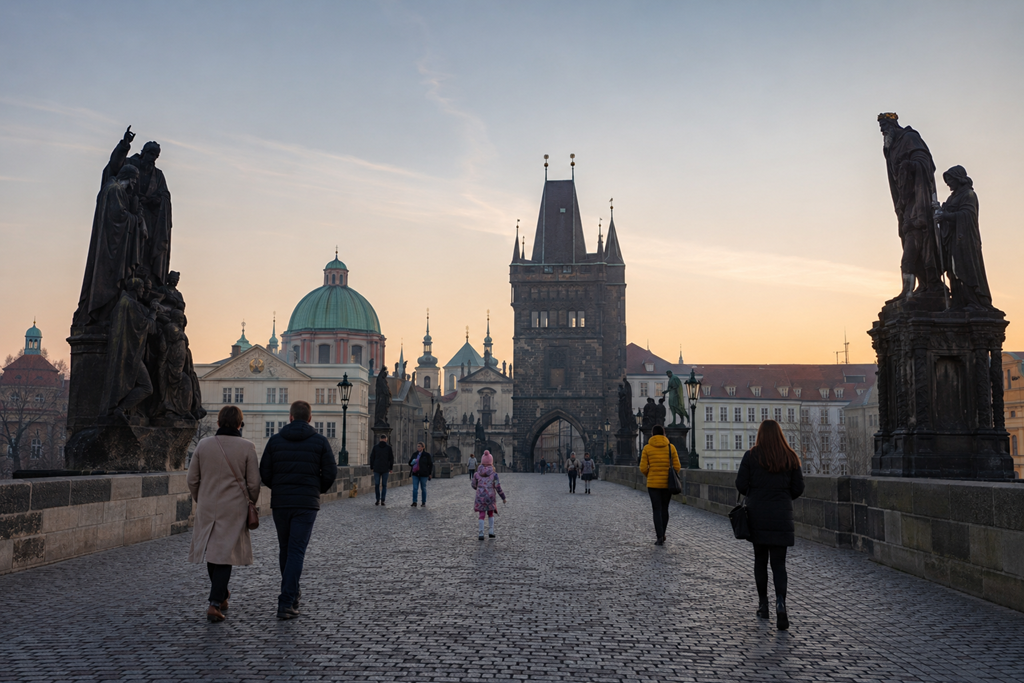
Charles Bridge connects Old Town with Malá Strana and is one of Prague’s most recognizable landmarks. It is a pedestrian bridge lined with statues and views of the river, towers, rooftops, and Prague Castle.
For a better experience, walk across early in the morning or later in the evening. During the middle of the day, it can be crowded, but it is still worth crossing at least once.
Visit Prague Castle
Prague Castle is one of the city’s most important historic areas and forms a major part of Prague’s skyline. The official Prague tourism site describes it as the largest castle complex in the Czech Republic and notes that visitors can see castle courtyards, the Old Royal Palace, St. Vitus Cathedral, St. George’s Basilica, and Golden Lane.
Give yourself enough time here. It is not just one building; it is a complex of courtyards, churches, lanes, viewpoints, and historic interiors. Check current opening hours and ticket details before you go.
See St. Vitus Cathedral
St. Vitus Cathedral is one of Prague Castle’s most striking sights. The official Prague Castle website describes it as the largest and most important temple in Prague, with a history tied to royal coronations and the burial places of saints, sovereigns, noblemen, and archbishops.
Even if you are not deeply interested in church architecture, the scale, stained glass, and setting make it one of the city’s most memorable interiors.
Wander Through Golden Lane
Golden Lane is a small, colorful street inside the Prague Castle complex. The official Prague Castle site notes that it was created at the end of the 15th century and is one of the Castle’s iconic sites, with small houses and exhibits connected to life in the lane over centuries.
It is compact, so it does not require a long visit, but it adds texture to the Castle experience.
Walk Through Malá Strana
Malá Strana is one of the best neighborhoods for unplanned wandering. After visiting Prague Castle, walk downhill through its streets, passing courtyards, churches, gardens, small shops, and cafés.
This is a good area to slow down. Instead of rushing straight back across Charles Bridge, take time to explore the side streets and river views.
Visit the Jewish Quarter
Prague’s Jewish Quarter, also known as Josefov, is one of the city’s most historically significant areas. Visitors often come for the synagogues, cemetery, and museum sites connected to Jewish history in Prague.
This is a place to approach thoughtfully. Give yourself time, avoid treating it as just another photo stop, and check current ticketing and opening details before visiting.
Enjoy the Vltava Riverfront
The Vltava River gives Prague much of its beauty. Walking along the river helps you see the city from a different angle, especially around Charles Bridge, Kampa Island, and the embankments south of Old Town.
A river cruise can be enjoyable, but it is not required. You can get excellent views simply by walking, crossing bridges, or finding a riverside bench.
Spend Time in Letná Park
Letná Park is a good place to step away from the densest tourist areas. It offers views over the river and Prague’s bridges, along with open space for walking and resting.
This is especially useful if your itinerary has been heavy on museums, churches, and crowded streets.
Visit Vyšehrad
Vyšehrad is a historic fortress area south of the main center, with river views, green space, walking paths, and a quieter atmosphere than Prague Castle. It is a good addition for travelers who have already seen the core sights or want a less crowded historic area.
It works well as a half-day outing or a relaxed stop on a longer stay.
Food and Drink in Prague
Prague’s food scene includes traditional Czech cooking, beer halls, cafés, bakeries, modern restaurants, and international options. For a first visit, try a mix of classic Czech dishes and everyday local cafés rather than planning every meal around “must-visit” spots.
Traditional Czech food is often hearty. Common dishes include roasted meats, sauces, dumplings, soups, potato dishes, and pastries. Czech beer culture is also important, and Prague has everything from traditional pubs to modern beer-focused restaurants.
A few practical food tips:
Look for restaurants slightly away from the busiest landmark streets.
Check menus before sitting down, especially in very tourist-heavy areas.
Make reservations for popular restaurants during busy travel periods.
Try at least one traditional Czech meal, but balance it with lighter meals, cafés, or modern restaurants if you prefer variety.
How to Get Around Prague
Prague is one of those cities where walking and public transportation work well together. Many first-time visitors can walk between major central sights, then use trams or the metro for longer distances.
Walking
Walking is the best way to experience Old Town, Malá Strana, the riverfront, and many historic areas. Wear comfortable shoes because many streets are cobblestoned, and some routes near Prague Castle involve hills.
Do not plan your days by distance alone. A short route on a map can take longer when you factor in crowds, photos, hills, and stops.
Metro, Tram, and Bus
Prague has a dense public transportation network of metro, trams, and buses. The official Prague Public Transit Company says visitors can use this network to reach monuments and sights throughout the city.
Trams are especially useful because they keep you above ground and can be scenic. Prague’s official tourism site describes trams as a reliable and convenient form of surface transport.
Getting From the Airport
Prague Airport is not directly connected to the metro, so public transportation usually involves a bus connection to the metro system. Check current airport transfer details before arrival, especially if you are landing late or carrying heavy luggage.
Taxis and rideshare-style services may be more convenient after a long flight, but confirm pickup points and pricing in advance.
How Many Days Do You Need in Prague?
Two Days
Two days is enough for the essentials: Old Town, Charles Bridge, Malá Strana, Prague Castle, and a few classic views. It will feel full, so avoid adding too many museums or side trips.
Three Days
Three days is a strong first-visit length. You can see the major landmarks, explore neighborhoods at a better pace, visit the Jewish Quarter or a museum, and enjoy some slower meals and walks.
Four or More Days
With four or more days, Prague becomes easier to enjoy beyond the famous sights. Add Vyšehrad, Letná, Vinohrady, Holešovice, more museums, longer café breaks, or a day trip outside the city.
A Simple First-Time Prague Plan
Day One: Old Town and Charles Bridge
Start in Old Town Square, see the Astronomical Clock area, wander the surrounding streets, and walk toward Charles Bridge. Cross into Malá Strana, explore the neighborhood, and return by the river or another bridge.
Keep this day flexible. Your first day is about getting oriented.
Day Two: Prague Castle and Malá Strana
Visit Prague Castle, St. Vitus Cathedral, Golden Lane, and the castle courtyards. Afterward, walk downhill through Malá Strana and stop for a slower lunch or coffee.
In the evening, enjoy river views or return to Charles Bridge when the crowds are thinner.
Day Three: Jewish Quarter, Riverfront, and a Local Neighborhood
Spend part of the day in the Jewish Quarter, then walk along the Vltava River or visit Kampa Island. Later, head to Vinohrady, Letná, or Holešovice for a meal outside the busiest tourist streets.
Day Four: Parks, Vyšehrad, or Museums
Use an extra day for Vyšehrad, Letná Park, a museum, or a slower neighborhood day. This is also a good buffer day if weather changes or you want to revisit an area you liked.
Practical Tips for First-Time Visitors
Book Strategically, Not Excessively
You do not need to schedule every hour. Book ahead for major attractions when timed entry or guided tours matter, but leave space for wandering. Prague rewards curiosity.
Start Early at the Most Popular Sights
Old Town Square, Charles Bridge, and Prague Castle are more enjoyable when you visit before the busiest part of the day. Even one early morning can make a big difference.
Choose Shoes Over Style
Prague is beautiful but hard on uncomfortable shoes. Cobblestones, hills, stairs, and long walking days are part of the experience.
Be Thoughtful in Crowded Historic Areas
The historic center is both a visitor destination and part of a living city. Keep noise reasonable at night, stay aware on narrow sidewalks, and treat residential streets with respect.
Check Current Details Before Visiting
Opening hours, ticket systems, transportation routes, and reservation rules can change. Before you visit major attractions, check current details directly with the attraction or official tourism sources.
Common First-Time Mistakes to Avoid
Staying Only in the Most Crowded Streets
The famous sights are worth seeing, but do not spend your entire trip in the tightest part of Old Town. Prague becomes more enjoyable when you explore Malá Strana, Vinohrady, Letná, Holešovice, Vyšehrad, and the riverfront.
Trying to See Everything in One Day
Prague looks compact on a map, but the best experience comes from pacing. Give yourself room for long walks, unexpected views, and breaks.
Ignoring Public Transportation
Walking is wonderful, but trams and the metro make the city much easier. Use public transit for longer distances so you can save energy for the places you actually want to explore.
Eating Only Beside Major Landmarks
Some central restaurants are convenient, but the best meals are often a few streets away from the busiest squares and bridges. Look for places that feel steady, welcoming, and not overly dependent on passing tourist traffic.
What to Pack for Prague
Pack for walking and changing weather. Useful items include:
Comfortable walking shoes
A light rain jacket or compact umbrella
Layered clothing
A small day bag
A portable charger
A reusable water bottle
A nicer outfit if you plan to attend a concert, dinner, or cultural performance
In colder months, bring warm layers, gloves, and shoes with good traction. In warmer months, focus on breathable clothing and sun protection for long walking days.
Is Prague Good for First-Time Visitors?
Yes. Prague is an excellent first-time European destination because it combines major landmarks, strong public transportation, walkable neighborhoods, good food, and a historic center that is easy to understand after a day or two.
The key is to balance the famous sights with quieter experiences. See Old Town, Charles Bridge, and Prague Castle, but also leave room for river walks, parks, local neighborhoods, and slower meals. That mix will give you a fuller and more satisfying first trip.
Download Our Free E-book!