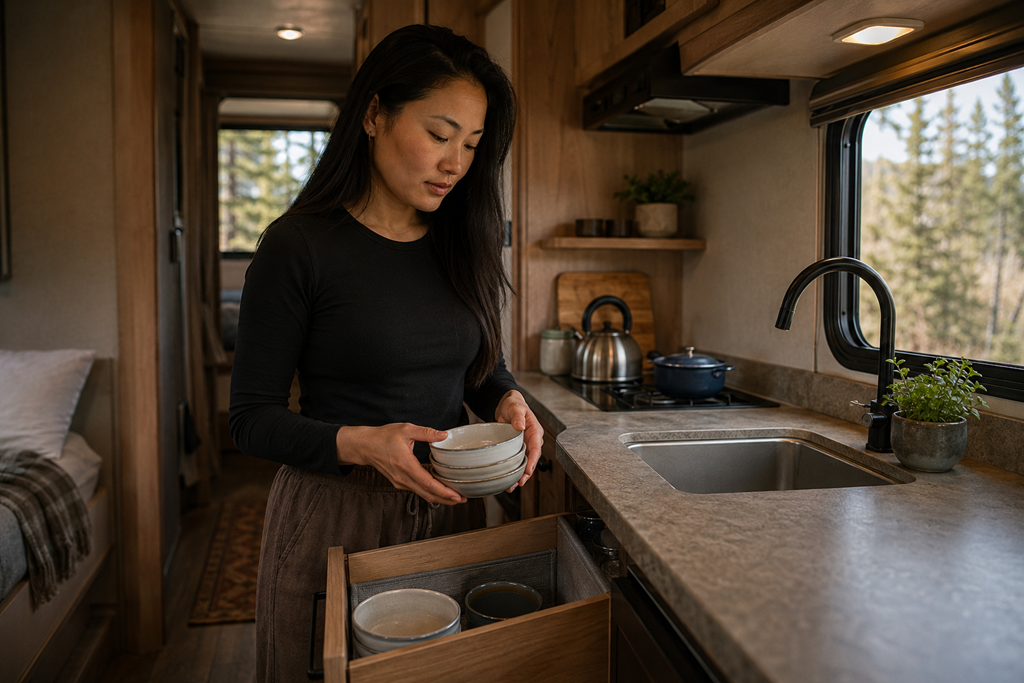
RV living becomes less stressful when the space, schedule, and expectations are simplified enough to support real life instead of constantly demanding adjustment. The goal is not to make every day feel like a perfect road trip. It is to create a rhythm that helps daily life feel calmer, more manageable, and easier to enjoy inside a smaller, more mobile home.
For many people, RV living sounds peaceful from the outside. There is the idea of open roads, quiet mornings, scenic views, and more freedom. But in everyday reality, RV life can also bring tight spaces, limited storage, weather changes, maintenance issues, campground noise, travel planning, and the feeling that there is always something to figure out.
That does not mean RV living is a mistake. It simply means the lifestyle works better when it is approached as a real way of living, not just an extended vacation.
RV Living Feels Easier When It Stops Trying To Feel Perfect
One of the biggest sources of stress in RV living is the pressure to enjoy every part of it.
People often expect RV life to feel lighter, freer, and more adventurous all the time. So when they feel irritated by clutter, tired from moving days, overwhelmed by campground logistics, or frustrated by small-space living, they may assume they are doing something wrong.
But RV living includes ordinary life. There are still dishes, laundry, budgeting decisions, repairs, bad weather, uncomfortable nights, and days when nobody feels especially adventurous.
The experience becomes more enjoyable when you stop measuring it against a polished version of freedom. RV life does not have to feel magical every day to be meaningful. It only needs to become livable in a way that fits your energy, your routines, and your real needs.
Stress Often Comes From Too Much Motion And Not Enough Rhythm
RV living can become stressful when every day feels slightly different and nothing feels settled.
Even small decisions can add up. Where will you park next? How long will you stay? Is the tank full? Is the weather changing? Is there enough food? Is the campsite level? Is the route safe for the RV? Are you spending too much? Is something making a strange noise?
This constant decision-making can quietly wear people down.
A calmer RV lifestyle usually needs some repeatable rhythm. That might mean slower travel, familiar morning routines, predictable meal habits, regular laundry days, or simple rules for when to move and when to rest.
The more your brain has to solve from scratch every day, the more stressful RV life can feel. Enjoyment often grows when fewer parts of daily life feel improvised.
A Smaller Space Needs Fewer Decisions, Not Just Better Storage
Storage matters in an RV, but storage alone does not solve the emotional side of small-space living.
A cramped RV can make ordinary objects feel more stressful. Shoes near the door, dishes in the sink, jackets on chairs, cords on counters, and bags on the floor can make the whole space feel unsettled. Because the living area is compact, small amounts of clutter feel bigger than they would in a house.
The helpful reframe is this: the RV does not just need a place for everything. It needs fewer things competing for attention.
This does not mean living with nothing. It means being honest about what supports daily life and what mostly creates friction. Extra kitchen gadgets, too many clothes, bulky decor, duplicate tools, and “just in case” items can quietly make the RV feel harder to live in.
RV living often becomes more enjoyable when the space feels easy to reset. A home on wheels should not require constant effort just to feel usable.
Comfort Matters More Than Constant Adventure
Some people make RV life harder by prioritizing travel goals over daily comfort.
They may try to visit too many places too quickly, pack the schedule too tightly, or choose scenic locations that are beautiful but inconvenient for everyday needs. Over time, the lifestyle can start to feel like a series of tasks instead of a calmer way to live.
Enjoyment usually improves when comfort is treated as part of the plan, not a reward after the plan.
That can mean staying longer in one place, choosing campgrounds with better amenities, protecting quiet evenings, keeping meals simple, or allowing some days to be ordinary. It may also mean accepting that not every location has to be impressive. Sometimes the most enjoyable stop is the one that lets you sleep well, cook easily, do laundry, walk safely, and feel settled.
RV living becomes less stressful when the lifestyle supports your nervous system, not just your sense of adventure.
Maintenance Feels Less Overwhelming When It Is Expected
RV maintenance can feel especially stressful when every issue feels like an interruption.
A leak, strange sound, battery concern, tire pressure issue, or appliance problem can quickly shift the mood of the day. Because the RV is both home and transportation, problems can feel more personal than normal household repairs.
A helpful clarification is that maintenance is not a sign that RV living is going badly. It is part of the lifestyle.
The more you expect small fixes, checks, and adjustments, the less emotionally disruptive they become. RVs move, flex, weather, age, and respond to changing environments. Even well-kept RVs need attention.
Stress increases when maintenance is treated as a failure. It decreases when it becomes a normal part of the rhythm, like cleaning, fueling, or planning groceries.
Enjoyment Grows When Everyone Has A Little Personal Space
RV living can feel tense when people do not have enough room to mentally exhale.
Even people who love each other may struggle in a small space. Sounds carry. Mess spreads. Privacy is limited. One person’s routine can easily interrupt another person’s rest. This can create stress that feels like a relationship problem when it may actually be a space problem.
A calmer RV lifestyle often needs small forms of personal space, even when physical space is limited.
That might be a regular solo walk, a quiet reading spot, headphones, separate morning routines, a small personal bin, or an agreement that not every moment has to be shared. These small boundaries can help the RV feel less crowded emotionally.
Enjoying RV life together does not mean being together constantly. Sometimes the lifestyle feels better when everyone has permission to reset in their own way.
The Outside Environment Affects The Inside Mood
RV living is deeply shaped by surroundings.
A noisy campground, poor weather, cramped site, uneven parking spot, lack of shade, bad internet, or difficult neighbor situation can affect the entire mood inside the RV. Because the home is compact, the outside environment becomes part of the living experience in a very direct way.
This is easy to underestimate.
Sometimes the problem is not your attitude, your setup, or your ability to adapt. Sometimes the location is simply making life harder. Recognizing that can be relieving.
When RV living feels unusually stressful, it helps to ask whether the environment is supporting the life you are trying to live. A better site, slower pace, quieter campground, safer walking area, or more comfortable weather window can make a noticeable difference.
Simple Routines Make The Lifestyle Feel More Like Home
RV life becomes more enjoyable when it includes familiar anchors.
A calm morning routine, a favorite meal, a regular cleaning reset, a short evening walk, a weekly planning moment, or a consistent place for important items can make the RV feel less temporary. These small patterns create a sense of home even when the scenery changes.
The routines do not need to be complicated. In fact, simple routines are usually better.
The point is not to make RV living rigid. The point is to reduce the feeling of being constantly unsettled. A little predictability can make the freedom of RV life easier to enjoy.
What Often Makes RV Living More Stressful Than It Needs To Be
RV living becomes harder when every challenge is treated as something that should not be happening.
It is easy to believe that stress means you are not cut out for the lifestyle. But often, stress is a sign that something needs to be adjusted: the pace, the amount of stuff, the campground choice, the expectations, the travel schedule, or the daily rhythm.
Another common pattern is trying to solve emotional stress with more gear. Gear can help, but it cannot replace rest, space, communication, realistic planning, or simpler routines.
There is also a tendency to compare your RV life to someone else’s version. That can quietly create pressure to travel faster, decorate better, stay in more scenic places, or appear more carefree than you actually feel.
The most enjoyable RV lifestyle is usually not the most impressive one. It is the one that feels sustainable from the inside.
RV Living Can Be Both Imperfect And Worthwhile
RV living does not become enjoyable because every stress disappears. It becomes enjoyable when the stress feels manageable enough that the good parts can be noticed again.
A quiet morning outside. A slower cup of coffee. A beautiful drive. A simple meal after a long day. A campground walk. A small space that feels easier to reset. A travel rhythm that leaves room to breathe.
Those moments are easier to appreciate when the lifestyle is not overloaded with constant motion, clutter, pressure, and unrealistic expectations.
The calmer version of RV living is not about doing everything perfectly. It is about building a way of life that feels lighter, steadier, and more honest about what real people need to feel at home on the road.
Download Our Free E-book!