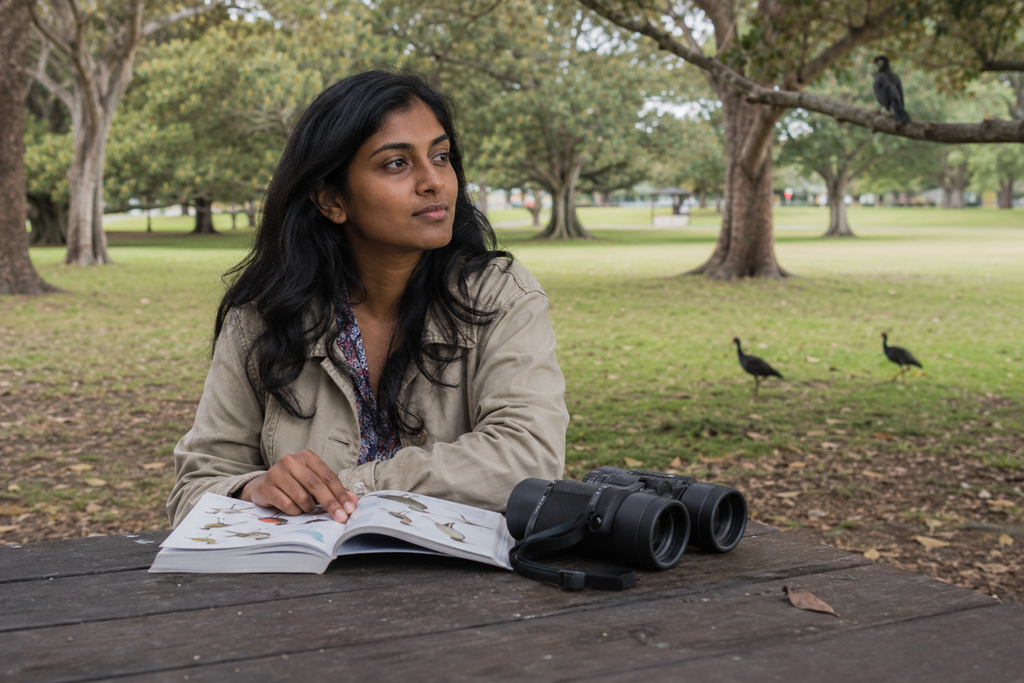
Starting a bird-watching lifestyle does not have to mean becoming an expert, buying expensive gear, memorizing hundreds of species, or planning long outdoor trips. At its simplest, bird-watching begins when you start paying gentle attention to the birds already around you.
That might mean noticing the birds outside your window, walking more slowly through a local park, listening for different calls in the morning, or keeping a pair of binoculars nearby when you spend time outdoors. The lifestyle does not begin with mastery. It begins with noticing.
For many beginners, the overwhelming part is not the birds themselves. It is the feeling that there is too much to learn before they are “allowed” to enjoy it.
Bird-watching can look technical from the outside. There are field guides, apps, checklists, migration seasons, camera lenses, rare sightings, birding groups, and long lists of species names. But the heart of the habit is much quieter than that. It is simply learning to observe nature with more patience and attention.
Bird-Watching Can Start Smaller Than You Think
A beginner does not need to travel to wetlands, forests, coastlines, or wildlife preserves to begin. Those places can be wonderful later, but they are not required at the beginning.
You can start with the birds you already see in ordinary places: sidewalks, backyards, apartment courtyards, neighborhood trees, local ponds, grocery store parking lots, and small parks. Birds are part of everyday life, even in busy areas.
This is one reason bird-watching can feel approachable once you let go of the idea that it has to be impressive. A quiet moment watching a sparrow hop along a fence can be just as valid as spotting a rare bird through high-end binoculars.
The lifestyle grows best when it feels repeatable. A person who watches birds for five peaceful minutes several times a week may build a stronger connection than someone who waits for the perfect outdoor adventure and rarely goes.
Why Beginners Often Feel Overwhelmed
Bird-watching can feel intimidating because it sits between two worlds. On one side, it is a simple relaxing activity. On the other side, it can become a detailed hobby with terminology, equipment, identification skills, and community traditions.
Both sides are real. The mistake is thinking you must enter through the advanced side.
A beginner might wonder:
“Am I supposed to know what every bird is called?”
“Do I need binoculars before I begin?”
“What if I mistake one bird for another?”
“Is this still bird-watching if I am just noticing birds casually?”
These questions are common because many hobbies become visible through their most enthusiastic participants. Online, people often share rare sightings, long species lists, beautiful photos, and expert-level observations. That can make the beginner stage seem smaller than it really is.
But the beginner stage is not something to rush through. It is where the lifestyle becomes personal.
The Real Starting Point Is Attention, Not Equipment
Binoculars, guidebooks, and birding apps can be useful, but they are not the foundation. The foundation is attention.
A good starting point is simply choosing one familiar place and observing it more closely. This could be a window, a bench, a walking route, a backyard, or a quiet spot near water. When you return to the same place, you start noticing patterns.
You may notice that certain birds appear at the same time of day. Some move quickly through shrubs, while others perch openly. Some travel in groups. Some are more active after rain. Some seem bold around people, while others stay hidden.
These small observations matter. They help bird-watching feel less like a test and more like a relationship with your surroundings.
Instead of trying to identify everything immediately, you can begin by noticing shape, size, color, movement, sound, and behavior. Even without knowing the name of the bird, you are learning how to see.
You Do Not Have To Turn It Into A Performance
One of the easiest ways to make bird-watching stressful is to treat it like something you must prove.
You do not have to keep a perfect list. You do not have to post your sightings. You do not have to join a group right away. You do not have to wake up before sunrise unless you enjoy that rhythm. You do not have to know the difference between similar-looking species on your first try.
Bird-watching can be private, quiet, and slow.
For some people, the appeal is not identification at all. It is the pause. It is having a reason to step outside, look up from screens, breathe a little more deeply, and reconnect with the natural world in a way that does not demand much.
That still counts.
A bird-watching lifestyle does not have to look like a serious hobby from the outside. It can simply become one of the ways you soften your day.
Let Curiosity Lead Before Accuracy
Accuracy matters more as your interest grows, but curiosity is more important at the beginning.
When you see a bird, it is okay to ask simple questions first:
What is it doing?
Is it alone or with others?
Is it eating, calling, resting, flying, or searching?
Does it seem comfortable near people?
Have I seen this bird here before?
These questions help you become more observant without making the experience feel like homework. Identification can come afterward, when it feels natural.
Many beginners put too much pressure on naming the bird immediately. But bird-watching is not only about naming. It is also about noticing behavior, setting, season, and rhythm.
A person who says, “I saw a small brown bird pulling at dry grass near the path,” is already observing. That observation has value, even before the bird has a name.
Choose Comfort Over The “Perfect” Birding Setup
Another reason beginners feel overwhelmed is the belief that they need the right setup before starting. In reality, comfort matters more than perfection.
Comfort might mean wearing shoes that make walking easy, choosing a place where you feel safe, bringing water, sitting instead of standing, or going at a time of day that fits your life.
The best bird-watching routine is one you will actually repeat. If a short neighborhood walk feels pleasant, start there. If sitting near a pond feels peaceful, do that. If watching birds from your kitchen window is what your schedule allows, that is still a real beginning.
Over time, you may choose to add binoculars, a simple field guide, or an app. But those tools should support the habit, not become barriers to it.
Common Beginner Traps That Make Bird-Watching Feel Harder
A few patterns can make bird-watching feel more complicated than it needs to be.
One is trying to identify every bird immediately. This can turn a peaceful outing into a mental exam. It is better to notice what you can and let some sightings remain incomplete.
Another is comparing yourself to experienced birders. Someone who has been observing birds for years will naturally recognize more species and sounds. Their skill does not mean you are behind. It only means they have spent more time noticing.
A third pattern is waiting for the perfect location. Beautiful birding destinations can be inspiring, but they are not the only places where bird-watching happens. Ordinary places often become interesting once you slow down enough to see them.
There is also the trap of buying gear before building the habit. Good gear can help, but it cannot create patience, attention, or enjoyment on its own.
The simplest path is usually better: notice birds, return to familiar places, stay curious, and let the hobby expand gradually.
A Bird-Watching Lifestyle Can Be Gentle
The phrase “bird-watching lifestyle” may sound bigger than it needs to be. It does not have to mean organizing your whole life around birding.
It can mean making more room for quiet observation.
It can mean taking walks with more awareness.
It can mean recognizing the birds that share your neighborhood.
It can mean using nature as a steadying presence in an overstimulated life.
The lifestyle part develops when bird-watching becomes less like an occasional activity and more like a way of paying attention. You begin to notice seasonal changes. You hear birds before you see them. You become more aware of trees, water, weather, and time of day.
This kind of lifestyle does not require intensity. It grows through repetition.
Start With One Place, One Habit, And One Question
If you want to begin without feeling overwhelmed, keep the first version small.
Choose one place where birds are likely to appear. Visit it regularly or pay attention to it from where you already are. Let yourself observe without needing to know everything.
Then carry one simple question with you: “What do I notice today?”
That question is enough.
You may notice a bird call you have heard before but never paid attention to. You may notice a bird returning to the same branch. You may notice that a park feels different in the early morning than it does in the afternoon. You may notice that watching quietly changes your mood.
These small moments are not lesser versions of bird-watching. They are the foundation of it.
The First Step Is Permission To Begin Simply
You do not need to become a serious birder before you are allowed to enjoy birds. You do not need to know every name, own every tool, or understand every behavior.
You can begin as a quiet observer.
Let the lifestyle start with attention, not pressure. Let it be slow enough to enjoy. Let your knowledge grow because you are interested, not because you feel behind.
Bird-watching becomes much less overwhelming when you remember that the first goal is not expertise. The first goal is to notice the living world more clearly and feel a little more present inside it.
That is a meaningful beginning.
Download Our Free E-book!