Vienna is one of Europe’s easiest major cities to enjoy in a short trip. The historic center is walkable, the public transportation system is reliable, and many of the city’s most memorable experiences are built around timeless things: imperial architecture, classical music, grand cafés, museums, gardens, markets, and relaxed neighborhood walks.
This 3-day Vienna itinerary is designed for first-time visitors who want a clear, realistic plan without packing every hour. It balances major landmarks with slower moments, so you can see the essentials while still having time to sit in a café, wander side streets, and enjoy the character of the city.
Vienna’s subway, tram, and bus network makes it easy to move between major sights, and the official city tourism site describes public transportation as a quick and reliable way to get around by subway, streetcar, and bus.
Before You Start: How to Use This Vienna Itinerary
This itinerary works best if you stay near the Innere Stadt, MuseumsQuartier, Neubau, Wieden, Mariahilf, or close to a U-Bahn station. Vienna is well connected, so you do not need to stay directly beside every attraction.
The plan assumes three full sightseeing days. If you arrive late on your first day, use the Day 1 evening walk as your introduction and shift anything you miss into the next morning.
A few simple planning notes:
Check current opening hours before you go, especially for museums and palace interiors. Book ahead during busy travel periods for major sights like Schönbrunn Palace, the Belvedere, and popular classical music performances. Leave room for café breaks; they are part of the Vienna experience, not a pause from it.
Day 1: Historic Vienna, Imperial Streets, and Classic Cafés
Your first day is best spent in Vienna’s historic center. This area gives you the strongest first impression of the city: elegant streets, old churches, imperial buildings, pedestrian lanes, shops, cafés, and museums within a relatively compact area.
Morning: Start at St. Stephen’s Cathedral
Begin at St. Stephen’s Cathedral, one of Vienna’s defining landmarks and a natural starting point for exploring the old city. The square around the cathedral is busy, but it helps orient you quickly. From here, you can walk in almost every direction and find historic streets, courtyards, cafés, and shops.
Take time to view the cathedral from outside before going in. The roof, tower, and Gothic details are easier to appreciate if you pause in the square rather than rushing straight through. If you decide to climb a tower or visit specific interior areas, check current access details before you go.
Afterward, wander through nearby streets such as Graben and Kärntner Straße. These are central, polished, and more touristy than some other parts of Vienna, but they are still useful for getting a feel for the city’s layout.
Late Morning: Walk Toward the Hofburg
From St. Stephen’s Cathedral, make your way toward the Hofburg, the former imperial palace complex. This walk is one of the most rewarding parts of central Vienna because it connects the medieval heart of the city with its grand imperial side.
The Hofburg area includes palace courtyards, museums, ceremonial architecture, and access points to nearby gardens and major cultural institutions. You do not need to see everything here on your first visit. For a 3-day trip, it is better to choose one or two highlights instead of trying to cover the entire complex.
Good options include the Sisi Museum, the Imperial Apartments, the Imperial Treasury, or simply exploring the exterior courtyards and nearby streets. The Hofburg area is also close to many of Vienna’s major museum districts, making it easy to return later if something interests you.
Lunch: Choose a Traditional Café or Simple Austrian Meal
For lunch, keep things convenient. A traditional café, casual Austrian restaurant, or bakery-style stop near the center works well. This is a good time to try familiar Viennese staples such as schnitzel, goulash, potato salad, apple strudel, or a slice of cake with coffee.
Vienna’s café culture is part of the city’s identity, so do not feel like every meal needs to be a major dining event. Sitting with coffee and cake in a historic café can be just as memorable as visiting another landmark.
Afternoon: Ringstrasse, Rathaus, and the State Opera Area
In the afternoon, spend time around the Ringstrasse, the grand boulevard that circles Vienna’s historic center. Many of the city’s most recognizable buildings are found along or near this route, including the Vienna State Opera, Parliament, City Hall, Burgtheater, and major museums.
You can walk part of the Ringstrasse, take a tram for a more relaxed overview, or combine both. For first-time visitors, this is one of the simplest ways to understand Vienna’s scale and history. The buildings are large, formal, and impressive, but the route is still practical and easy to navigate.
If you enjoy architecture, give yourself extra time around the State Opera and the museum area near Maria-Theresien-Platz. Even if you do not enter any buildings, this part of Vienna gives you a strong sense of the city’s cultural depth.
Evening: Dinner and a Gentle Old Town Walk
For your first evening, stay central and avoid overcomplicating the plan. Have dinner in or near the historic center, then take a relaxed walk after dark. Vienna’s central streets feel especially atmospheric in the evening, when the buildings are lit and the daytime crowds begin to thin.
A good route is to loop back toward St. Stephen’s Cathedral, then wander along smaller streets nearby. If you want a cultural experience, consider a classical music concert, opera, or chamber performance, but book carefully and choose something that fits your energy level. Vienna’s music scene is one of its lasting appeals, but you do not need to force it into the first night if you are tired from travel.
Day 2: Schönbrunn Palace, Gardens, and Local Neighborhoods
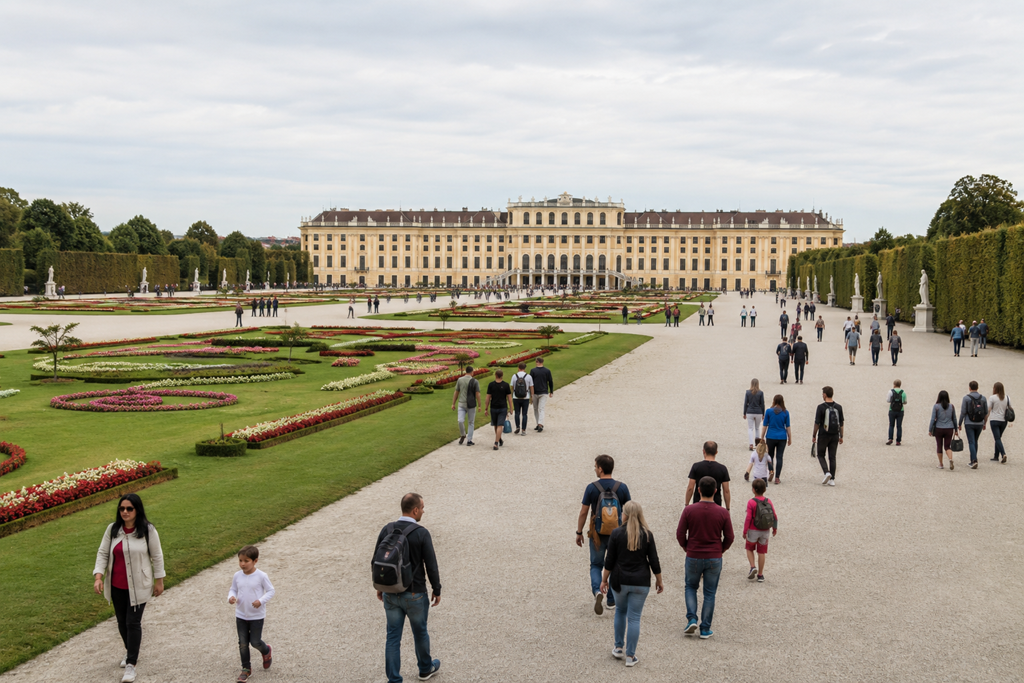
Day 2 takes you beyond the historic center to Schönbrunn Palace, one of Vienna’s essential first-time visitor experiences. The former imperial summer residence is widely recognized as one of the city’s major attractions, and official visitor information notes that it is directly reachable by public transportation, including the U4 underground line to Schönbrunn.
Morning: Visit Schönbrunn Palace
Start early and head to Schönbrunn Palace. This is one of the best places to understand Vienna’s imperial history outside the dense historic center. The palace itself is impressive, but the full experience includes the gardens, long paths, fountains, and views back toward the palace.
If you want to tour the interior, reserve enough time and check current ticketing details before your visit. Timed-entry systems and tour options can change, especially during busy periods. If you prefer a lighter visit, you can focus on the gardens and exterior areas instead.
The grounds are large enough that you should avoid rushing. Walk toward the Gloriette if you are comfortable with a gradual uphill stroll. The view back over the palace and city is one of the most satisfying parts of the visit.
Lunch: Eat Near Schönbrunn or Return Toward the Center
After Schönbrunn, you have two easy options. You can eat nearby if you want to keep the pace slow, or return toward the center by U-Bahn and have lunch closer to your next stop.
If you are traveling with children, older relatives, or anyone who prefers a more relaxed schedule, staying near Schönbrunn a little longer may be the better choice. If you enjoy covering more ground, return toward the city and continue with an afternoon neighborhood walk.
Afternoon: Explore Naschmarkt and the MuseumsQuartier Area
In the afternoon, head toward Naschmarkt and the surrounding area. Naschmarkt is one of Vienna’s best-known market areas and works well for a casual browse, light food stop, or simple change of scenery after the formality of Schönbrunn.
From there, continue toward the MuseumsQuartier, one of the city’s major cultural areas. Vienna has many museums clustered around the Innere Stadt, Neubau, the Hofburg, and MuseumsQuartier, giving visitors several easy options in a compact area.
You do not need to visit multiple museums in one afternoon. Pick based on your interests:
If you love art, consider the Kunsthistorisches Museum or Leopold Museum. If you prefer design, architecture, or modern culture, explore MuseumsQuartier more casually. If you are more interested in city atmosphere than museum time, use the area as a starting point for walking into Neubau.
Late Afternoon: Walk Through Neubau or Mariahilf
Neubau and nearby Mariahilf offer a different side of Vienna from the old imperial center. Expect smaller streets, independent shops, cafés, residential blocks, and a more everyday city feeling.
This is a good part of the trip to slow down. Browse a few shops, sit for coffee, or walk without a strict destination. Vienna rewards this kind of unstructured time because the city’s appeal is not limited to formal attractions.
Evening: Dinner Away From the Most Touristy Streets
For dinner, consider staying outside the most central tourist corridors. Neighborhoods like Neubau, Wieden, Josefstadt, or parts of Mariahilf can offer a more relaxed evening atmosphere while still being easy to reach.
This is a good night for Austrian comfort food, wine tavern-style dining, or a simple modern restaurant. Rather than chasing a current “best” restaurant list, choose a place that fits your location, budget, and mood. Reservations are wise for popular spots, but Vienna also has many casual options if you prefer flexibility.
Day 3: Belvedere, Art, Parks, and a Memorable Final Evening
Your final day brings together art, gardens, and a slower look at Vienna’s everyday elegance. The Belvedere is the anchor, but the day also leaves space for parks, cafés, and a final walk through the historic center.
Morning: Visit the Belvedere
Start at the Belvedere, a palace complex known for its architecture, gardens, and art collections. For many first-time visitors, the Upper Belvedere is the main focus, especially if they want to see Austrian art in a historic setting.
The Belvedere works well on the third day because it feels grand but not as sprawling as Schönbrunn. You can spend a focused morning here without losing the whole day. As with other major attractions, check current opening hours and ticketing details before you go.
Take time to enjoy the gardens and exterior views, even if your main reason for visiting is the art. The palace setting is part of the experience.
Late Morning: Walk Toward Karlsplatz
After the Belvedere, walk or take transit toward Karlsplatz. This area gives you a useful transition between palace Vienna, museum Vienna, and local Vienna. You can see Karlskirche from the outside, stop for coffee nearby, or continue toward the Vienna State Opera area if you want to reconnect with the historic center.
Karlsplatz is also a convenient place to adjust your day. If you want more art, return toward the museums. If you want a slower final day, head toward a park or café. If the weather is poor, use this part of the itinerary for an indoor museum or longer lunch.
Lunch: Keep It Flexible
By Day 3, you will probably have a better sense of how you like Vienna. Use lunch as a flexible break rather than a fixed appointment.
Good choices include a café meal, a casual Austrian restaurant, a market snack, or a simple bakery stop. If you have not yet tried a classic Viennese cake, this is a good time. Coffee and dessert are not just extras in Vienna; they are part of how the city is experienced.
Afternoon: Choose One Final Vienna Experience
For your final afternoon, choose one experience based on your interests. This keeps the itinerary useful without making it too rigid.
Option 1: More Art and Museums
Return to the Kunsthistorisches Museum, MuseumsQuartier, Albertina, or another museum that fits your interests. Vienna is especially strong for art, imperial history, music history, and decorative arts, so this is a good choice if museums are a major reason for your trip.
Option 2: Stadtpark and a Slower Walk
If you want a gentler afternoon, spend time in Stadtpark or walk through central green spaces near the Ringstrasse. This gives you a break from interiors and lets you enjoy Vienna at a slower pace.
Option 3: Prater and the Giant Ferris Wheel Area
For something different, head toward the Prater. The amusement park area and surrounding green space offer a more relaxed contrast to the city’s formal architecture. This can be especially enjoyable if you are traveling with family or want a less museum-heavy final day.
Option 4: A Café-Focused Afternoon
Choose a classic café, order coffee and cake, and let that be the experience. This is one of the most Vienna-appropriate ways to end a trip. Bring a book, review your photos, or simply sit and watch the room.
Evening: A Final Walk and Optional Music Performance
Spend your last evening in a way that feels complete rather than rushed. If you have not yet attended a concert, opera, or classical music performance, this can be a meaningful final-night activity. Choose carefully, check the venue, and book ahead if needed.
If you prefer something simpler, return to the historic center for one last walk. Start near the State Opera, pass through central streets toward St. Stephen’s Cathedral, and end with dessert or a quiet drink. Vienna’s beauty is not only in its major attractions; it is also in the way ordinary walks pass by extraordinary buildings.
Where to Stay for a 3-Day Vienna Trip
For a first visit, convenience matters more than finding the most unique neighborhood. You will have a better trip if you can reach the U-Bahn easily and return to your hotel without complicated transfers.
The Innere Stadt is the most central and convenient, but usually more expensive. Neubau and Josefstadt are good for visitors who want atmosphere, cafés, and access to museums. Wieden and Mariahilf can be practical, well-connected choices with easy access to both the center and neighborhoods.
If you stay farther out, choose a place close to a reliable U-Bahn or tram connection. Vienna’s public transportation system covers the city well, with buses, trams, trains, and underground lines serving most areas visitors are likely to use.
How to Get Around Vienna
Vienna is a strong walking city in the center, but you should still plan to use public transportation. The U-Bahn is useful for longer distances, trams are pleasant for seeing the city above ground, and buses fill in local gaps.
For this itinerary, you will likely use transit for Schönbrunn, the Belvedere depending on where you stay, and possibly Prater or outer neighborhoods. Within the historic center, walking is often the best choice.
A few practical notes:
Validate or activate your ticket according to the current system. Keep your ticket accessible in case of inspection. Check whether your airport route requires a separate ticket or supplement, since the airport is outside the central city zone in many ticketing contexts. For day-to-day sightseeing inside Vienna, most major visitor areas are easy to reach without a car.
Best Time to Visit Vienna for This Itinerary
This itinerary works year-round, but the experience changes by season.
Spring and early autumn are especially comfortable for walking, gardens, outdoor cafés, and palace grounds. Summer offers long days but can bring more crowds and warmer afternoons. Winter can be beautiful, especially in the historic center, but you will want to plan more indoor time and dress for cold weather.
Because this itinerary includes both outdoor walks and indoor museums, it is easy to adjust for weather. On rainy or cold days, spend more time in museums, cafés, palace interiors, and churches. On clear days, give more time to gardens, parks, and neighborhood walks.
What to Eat and Drink in Vienna
Vienna is a good city for travelers who enjoy traditional food, cafés, and desserts. You do not need a complicated dining plan to eat well.
Classic foods and drinks to consider include Wiener schnitzel, tafelspitz, goulash, sausages, potato salad, apple strudel, Sachertorte, and Viennese coffee drinks. You can also find international restaurants, modern bakeries, wine bars, and casual market food.
The most important advice is to leave time for cafés. Even if you do not normally plan coffee stops while traveling, Vienna is a place where a café can become one of the best parts of the day.
A Realistic 3-Day Vienna Itinerary at a Glance
Day 1: Historic Center and Imperial Vienna
Start at St. Stephen’s Cathedral. Walk through Graben and central streets. Visit or explore around the Hofburg. Spend the afternoon along the Ringstrasse and near the State Opera. End with dinner and an evening walk in the old city.
Day 2: Schönbrunn, Naschmarkt, and Neighborhoods
Visit Schönbrunn Palace and gardens in the morning. Return toward the city for lunch. Explore Naschmarkt and the MuseumsQuartier area. Walk through Neubau or Mariahilf. Have dinner outside the busiest tourist streets.
Day 3: Belvedere, Parks, Cafés, and a Final Evening
Visit the Belvedere in the morning. Walk toward Karlsplatz. Choose a museum, park, café, or Prater for the afternoon. End with a final historic center walk or an optional music performance.
Final Thoughts for Planning Your First Vienna Trip
Three days in Vienna is enough time to see the city’s essential sights without turning the trip into a checklist. The key is to group your days by geography: historic center first, Schönbrunn and nearby neighborhoods second, Belvedere and flexible final experiences third.
Leave space for walking, cafés, gardens, and small discoveries between the major landmarks. Vienna is impressive because of its palaces and museums, but it becomes memorable when you slow down enough to enjoy the streets, the coffee, the music, and the everyday elegance between them.