Starting a vegan lifestyle does not have to mean changing your entire life overnight. At its simplest, it means gradually choosing more meals, products, and habits that avoid animal-based ingredients while building a way of eating and living that still feels realistic for your everyday routine.
The part that often makes vegan living feel overwhelming is not the idea itself. It is the pressure to do it perfectly.
One person starts by swapping dairy milk for oat milk. Another begins by cooking one plant-based dinner a few nights a week. Someone else may first focus on learning which everyday foods are already vegan. These are all valid starting points.
A vegan lifestyle becomes easier when you stop treating it like a performance and start treating it like a set of choices you are learning how to make with more awareness.
The First Step Is Making It Feel Less All-Or-Nothing
Many people delay starting a vegan lifestyle because they think they need to know everything first. They imagine they must understand nutrition, grocery labels, restaurant menus, supplements, recipes, ethical arguments, and meal prep before they are allowed to begin.
That pressure can make the whole thing feel heavier than it needs to be.
In real life, most people do not become comfortable with vegan living by mastering everything at once. They become comfortable by repeating a few simple choices until those choices feel normal.
You might start with breakfast. You might start with snacks. You might start by replacing one familiar meal, such as chili, tacos, pasta, oatmeal, stir-fry, or sandwiches, with a plant-based version.
That kind of beginning may feel small, but it matters because it lowers the emotional friction. You are not trying to reinvent your whole kitchen in one weekend. You are simply giving yourself a calmer way to begin.
It Often Feels Confusing Because Food Is Personal
Changing how you eat is not just a practical decision. Food is connected to comfort, culture, family routines, convenience, budget, social life, and memory.
That is why starting a vegan lifestyle can feel surprisingly emotional.
You may wonder what you will eat at family gatherings. You may worry about being difficult at restaurants. You may feel unsure about giving up foods that have been part of your life for years. You may also feel excited, curious, or relieved to finally make changes that feel more aligned with your values.
All of those reactions can exist at the same time.
A calmer vegan transition allows room for that complexity. You do not have to pretend that every choice is easy. You only need to keep making the next manageable choice.
Build Around Foods You Already Like
One of the simplest ways to avoid overcomplicating vegan living is to begin with familiar foods instead of trying to eat like a completely different person.
If you already enjoy rice bowls, pasta, potatoes, soups, salads, smoothies, oatmeal, beans, lentils, tacos, curries, or roasted vegetables, you already have a foundation. The goal is not to abandon your normal preferences. The goal is to adjust them.
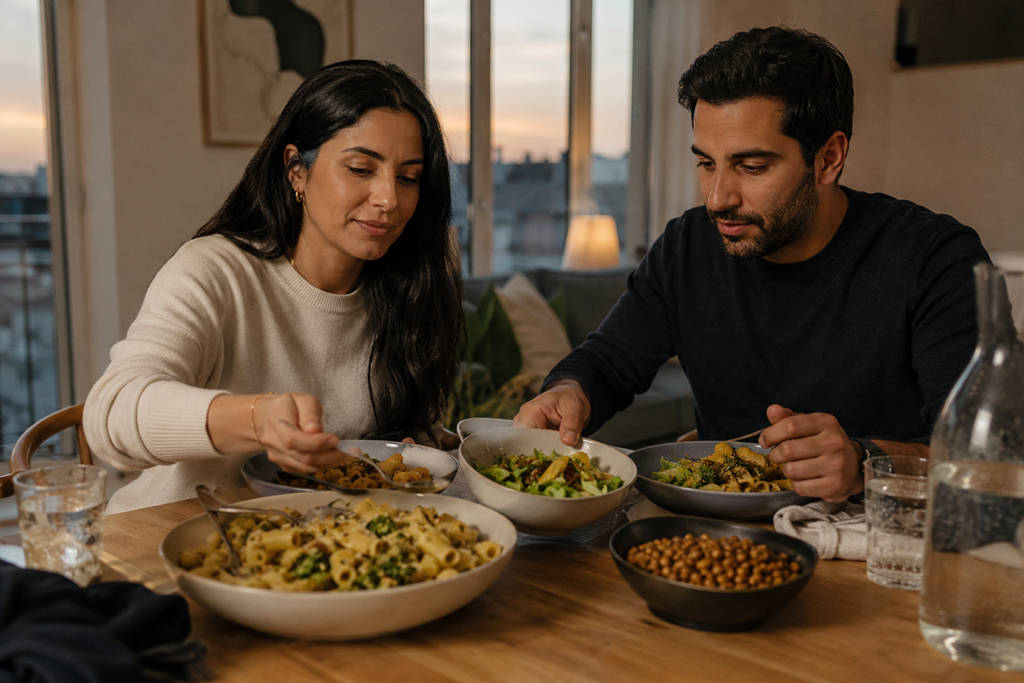
A familiar pasta dish can use marinara, vegetables, mushrooms, olive oil, herbs, or a dairy-free sauce. A taco night can use beans, lentils, seasoned tofu, avocado, salsa, rice, peppers, and onions. A breakfast routine can shift toward oatmeal, fruit, nut butter, smoothies, toast, or plant-based yogurt.
This matters because novelty can be exhausting. When every meal feels unfamiliar, vegan living starts to feel like a project instead of a lifestyle.
Familiarity makes the transition more sustainable.
Do Not Let Perfect Grocery Lists Become the Starting Line
It is easy to think you need a perfectly stocked vegan pantry before you begin. But a vegan lifestyle does not require a dramatic grocery reset.
A few helpful basics can go a long way: grains, beans, lentils, vegetables, fruit, potatoes, nuts, seeds, pasta, sauces, plant-based milk, tofu, tempeh, or simple meat alternatives if you enjoy them.
You do not need every specialty product. You do not need the most expensive substitutes. You do not need to buy everything labeled “vegan” just because it exists.
In fact, overbuying can make the transition feel more stressful. You may end up with unfamiliar ingredients you do not know how to use, which can make vegan cooking seem harder than it really is.
A better approach is to build slowly around the meals you actually plan to eat.
Simple Replacements Are Enough At The Beginning
Early vegan living often becomes easier when you focus on direct swaps.
Instead of asking, “How do I become fully vegan immediately?” ask, “What is one thing I can replace this week?”
That might mean choosing almond, soy, oat, or coconut milk instead of dairy milk. It might mean using olive oil instead of butter in a recipe. It might mean trying a bean burger instead of a beef burger. It might mean choosing hummus, avocado, or nut butter as a spread instead of cheese or mayonnaise.
These simple replacements help you learn through experience.
You start noticing what tastes good, what fits your budget, what your household will actually eat, and what feels easy enough to repeat.
That is more useful than trying to follow someone else’s perfect version of vegan living.
Nutrition Matters, But It Does Not Have To Become A Fear Spiral
Some people overcomplicate vegan living because they become anxious about doing nutrition “wrong.” It is wise to think about nourishment, but it is not helpful to turn every meal into a test.
A balanced vegan lifestyle usually works best when meals include a mix of satisfying plant foods: protein sources, fiber-rich carbohydrates, healthy fats, fruits, vegetables, and enough overall food to feel nourished.
Common vegan protein sources include beans, lentils, tofu, tempeh, edamame, chickpeas, soy milk, nuts, seeds, seitan, and plant-based meat alternatives. Many people also pay attention to nutrients such as vitamin B12, vitamin D, iron, calcium, iodine, zinc, and omega-3 fats.
That does not mean you need to obsess. It means you should be thoughtful.
If you have a medical condition, are pregnant, have a history of disordered eating, take medications, or feel unsure about your nutritional needs, it is worth speaking with a qualified healthcare professional or registered dietitian. A vegan lifestyle should support your health, not make you feel afraid of food.
Your Social Life May Need Calm Boundaries
The food itself is only one part of becoming vegan. The social part can be just as important.
You may deal with questions, jokes, skepticism, curiosity, or family members who do not understand why you are making the change. You may also feel pressure to explain everything perfectly.
You do not have to turn every meal into a debate.
A simple explanation is often enough: “I’m trying to eat more plant-based right now,” or “I’m moving toward a vegan lifestyle and keeping it simple.” You can share more when the conversation feels respectful, but you are not required to defend every choice.
It also helps to plan gently around social situations. Look at menus before going out. Bring a dish to gatherings when appropriate. Keep snacks available when you are unsure what options will be there.
These small habits reduce stress without making vegan living feel like your whole identity has to be explained everywhere you go.
Labels Can Help, But They Can Also Slow You Down
Reading labels is part of vegan living, especially for packaged foods. But in the beginning, it can feel like a maze.
Some ingredients are obvious, such as milk, eggs, butter, cheese, honey, gelatin, meat, poultry, and fish. Others are less familiar. Over time, you will naturally learn what to look for.
The key is not to let label-reading become the reason you never start.
Begin with simple whole foods and clearly labeled vegan products when you can. As you gain confidence, you can learn more about hidden animal-derived ingredients and decide how detailed you want to be.
A vegan lifestyle is easier to sustain when learning is allowed to happen gradually.
The Most Helpful Mindset Is Progress With Attention
The purpose of starting a vegan lifestyle is not to create another source of guilt. It is to live with more intention around food, animals, the environment, health, or personal values.
That intention matters.
But intention does not require panic. It does not require perfection. It does not require you to shame your past choices or compare your transition to someone who has been vegan for years.
A calmer mindset sounds more like this:
You are learning what works.
You are building new habits.
You are paying closer attention.
You are allowed to improve over time.
That is a much more sustainable foundation than trying to be flawless from day one.
What Usually Makes Vegan Living Feel Harder Than It Has To Be
Vegan living often becomes stressful when people try to change too many things at once. They replace every grocery item, try complicated recipes, follow too many influencers, buy unfamiliar ingredients, and expect themselves to enjoy everything immediately.
Another common pattern is focusing only on restriction. If all you think about is what you are removing, the lifestyle can feel like loss. But when you focus on what you are adding—new meals, new flavors, new habits, new awareness—it becomes easier to stay open.
Comparison can also create unnecessary pressure. Someone else’s vegan lifestyle may look polished, expensive, highly disciplined, or recipe-heavy. Yours does not have to look that way.
A realistic vegan lifestyle should fit your budget, kitchen, schedule, family situation, energy level, and learning curve.
A Simple Beginning Is Still A Real Beginning
You do not have to make vegan living complicated for it to count.
A simple beginning might look like finding three vegan breakfasts you like, learning two easy dinners, keeping plant-based snacks available, choosing one dairy-free milk, or making your favorite comfort meal without animal products.
That is enough to start building confidence.
Over time, those small choices become familiar. Familiar choices become routines. Routines become a lifestyle.
The goal is not to rush into a perfect version of veganism. The goal is to create a way of living that feels thoughtful, doable, and aligned with the kind of life you are trying to build.
Starting a vegan lifestyle can be simple. Not effortless, not always smooth, but simple enough to begin.
And that is often the most important part.
Download Our Free E-book!