Edinburgh is one of those cities where a short trip can still feel deeply satisfying. Its historic center is compact, its views are dramatic, and many of its best experiences connect naturally on foot. In three days, you can explore the city’s castle, royal landmarks, museums, old streets, green spaces, and scenic viewpoints without turning the trip into a checklist.
This 3-day Edinburgh itinerary is designed for first-time visitors who want a practical, well-paced plan. It focuses on classic sights, logical walking routes, and durable travel experiences that are likely to remain worthwhile long after your visit.
How To Use This 3-Day Edinburgh Itinerary
This itinerary assumes you are staying in or near central Edinburgh, such as Old Town, New Town, Haymarket, or the area around Princes Street. Edinburgh is very walkable, but it is also hilly, with cobblestones, stairways, and uneven streets in parts of the Old Town.
Plan for comfortable shoes, flexible timing, and a willingness to slow down when the city gives you a good view. Some major attractions, including Edinburgh Castle, can sell out during busy periods, so it is wise to check current opening hours and book ahead when needed. The official Edinburgh Castle site notes that advance booking is recommended to help guarantee entry, especially at popular times.
Day 1: Edinburgh Castle, The Royal Mile, And Old Town
Your first day is all about Edinburgh’s historic core. Start high at the castle, then work your way downhill through the Old Town toward Holyrood.
Morning: Start At Edinburgh Castle
Begin your trip at Edinburgh Castle, the city’s most famous landmark. The castle sits on a volcanic rock above the city and has shaped Edinburgh’s skyline for centuries. Historic Environment Scotland describes it as a former royal residence and part of the Old and New Towns of Edinburgh UNESCO World Heritage Site.
Give yourself enough time here to explore without rushing. Inside the castle complex, you can see historic military spaces, royal rooms, sweeping city views, and Scotland’s Crown Jewels. The castle is not just a single building, so it helps to think of it as a hilltop fortress with multiple areas rather than a quick stop.
If you are visiting during a busy travel period, reserve tickets in advance and arrive early in the day. This gives you more breathing room and makes the rest of the day easier.
Late Morning: Walk Down The Royal Mile
After the castle, continue down the Royal Mile, the historic street that connects Edinburgh Castle with the Palace of Holyroodhouse. This is one of the most atmospheric walks in the city, lined with closes, old stone buildings, shops, churches, museums, and small courtyards.
Rather than trying to stop everywhere, take your time noticing the details. Look down narrow closes, pause near St Giles’ Cathedral, and let the street reveal itself gradually. The Royal Mile can be crowded, but it is still worth experiencing because it gives you a strong sense of Edinburgh’s layered history.
Lunch: Stay In The Old Town
For lunch, stay near the Royal Mile, Victoria Street, Grassmarket, or the area around George IV Bridge. You will find traditional pubs, casual cafés, bakeries, and restaurants serving Scottish dishes alongside international food.
This is a good day to try something local without overplanning it. Look for a simple meal that keeps you close to the afternoon route rather than crossing town for a specific restaurant.
Afternoon: Explore Victoria Street And Grassmarket
After lunch, walk toward Victoria Street, one of Edinburgh’s most photographed streets. Its curved shape, colorful shopfronts, and layered architecture make it a memorable Old Town stop without requiring much time.
From there, continue down to Grassmarket. This historic square has a different feel from the Royal Mile: more open, social, and relaxed, with views back toward the castle. It is a good place to pause for coffee, browse, or simply sit for a few minutes before continuing.
If you like viewpoints, walk up toward the Vennel, a stepped lane that offers one of the classic views of Edinburgh Castle. It is a short detour, but a rewarding one.
Late Afternoon: Visit The National Museum Of Scotland
Spend the later part of the afternoon at the National Museum of Scotland. It is centrally located on Chambers Street and covers Scottish history, natural history, science, design, world cultures, and more. The museum’s official visitor information lists free entry, making it especially useful if the weather turns or you want a flexible indoor stop.
You do not need to see every gallery. For a first visit, focus on the Scottish history sections, the main atrium, and any areas that naturally interest you. If the rooftop terrace is accessible during your visit, it can offer another worthwhile city view.
Evening: Settle Into The Old Town
For your first evening, stay in the Old Town or nearby New Town. Keep it simple: dinner, a short walk, and maybe a quiet drink if that suits your travel style.
Edinburgh is especially atmospheric after dark, when the stone buildings, narrow lanes, and castle views feel more dramatic. Just give yourself extra time walking back if you are staying uphill or across the city.
Day 2: Holyrood, Arthur’s Seat, Calton Hill, And New Town
Day 2 balances royal history with Edinburgh’s best natural views. It includes some uphill walking, so adjust the pacing based on weather, fitness, and how much hiking you want to do.
Morning: Visit The Palace Of Holyroodhouse
Start at the lower end of the Royal Mile with the Palace of Holyroodhouse. This is the King’s official residence in Scotland and one of Edinburgh’s key royal landmarks. The Royal Collection Trust describes it as the home of Scottish royal history and the official residence in Scotland of His Majesty The King.
The palace pairs well with Edinburgh Castle because it gives you the other end of the city’s historic royal route. Where the castle feels defensive and elevated, Holyrood feels more ceremonial and connected to Scotland’s royal and political life.
Check current visitor details before you go, especially because royal residences can occasionally have closures or adjusted access.
Late Morning Or Early Afternoon: Walk In Holyrood Park
After Holyroodhouse, continue into Holyrood Park. This large green space sits right beside the city center, which is part of what makes Edinburgh so special: you can move from palace gates to rugged open landscape in minutes.
The most famous climb here is Arthur’s Seat. Historic Environment Scotland notes that Arthur’s Seat rises 251 meters and offers 360-degree views of Edinburgh and the Lothians.
If you want the full experience, hike to the summit when the weather is clear and paths are safe. If you prefer something gentler, choose a lower route around Salisbury Crags or simply walk part of the park and enjoy the views without pushing to the top.
Wear shoes with good grip, bring water, and avoid exposed paths in poor weather. Check current path conditions or closures before hiking, as park access can be affected by weather, maintenance, or events.
Lunch: Keep It Flexible
After Holyrood Park, choose lunch based on your energy. You can return toward the Royal Mile, walk toward the Southside, or head into New Town depending on where you want the afternoon to go.
This is a good point in the itinerary to avoid rigid reservations unless you are sure of your pace. Hiking, weather, and photo stops can all stretch the morning.
Afternoon: Explore Calton Hill
In the afternoon, head to Calton Hill, one of Edinburgh’s easiest and most rewarding viewpoints. It is close to the east end of Princes Street and offers views across the city, including the Old Town, Arthur’s Seat, the Firth of Forth, and the New Town.
Edinburgh World Heritage describes Calton Hill as a volcanic hill with important monuments and panoramic views, tied to the city’s “Athens of the North” identity.
This is a good alternative if Arthur’s Seat feels too strenuous, but it is also worth visiting even if you did the morning hike. The views are different: Arthur’s Seat gives you height and open landscape, while Calton Hill gives you a more composed city panorama.
Late Afternoon: Walk Through New Town
From Calton Hill, continue into New Town. This part of Edinburgh has broad streets, Georgian architecture, shops, cafés, galleries, and a more orderly feel than the Old Town.
Walk along Princes Street Gardens if you want green space and castle views, or explore George Street and nearby side streets for a more polished city atmosphere. New Town works well as a slower afternoon because you can make it as structured or unstructured as you like.
Evening: Dinner In New Town Or Stockbridge
For dinner, New Town is convenient and has plenty of options. If you want a slightly more neighborhood feel, consider heading toward Stockbridge, a pleasant area with village-like streets, independent shops, and a more residential pace.
This is a good evening to try Scottish seafood, a traditional pub meal, or a relaxed modern restaurant. Avoid building the night around a single “must-visit” place unless you have a reservation, because Edinburgh’s best dining experiences are often about atmosphere as much as name recognition.
Day 3: Dean Village, Stockbridge, Gardens, And Scenic Edinburgh
Your final day moves away from the densest tourist core and gives you a softer look at Edinburgh. It includes riverside walking, neighborhoods, gardens, and optional museum or gallery time.
Morning: Walk To Dean Village
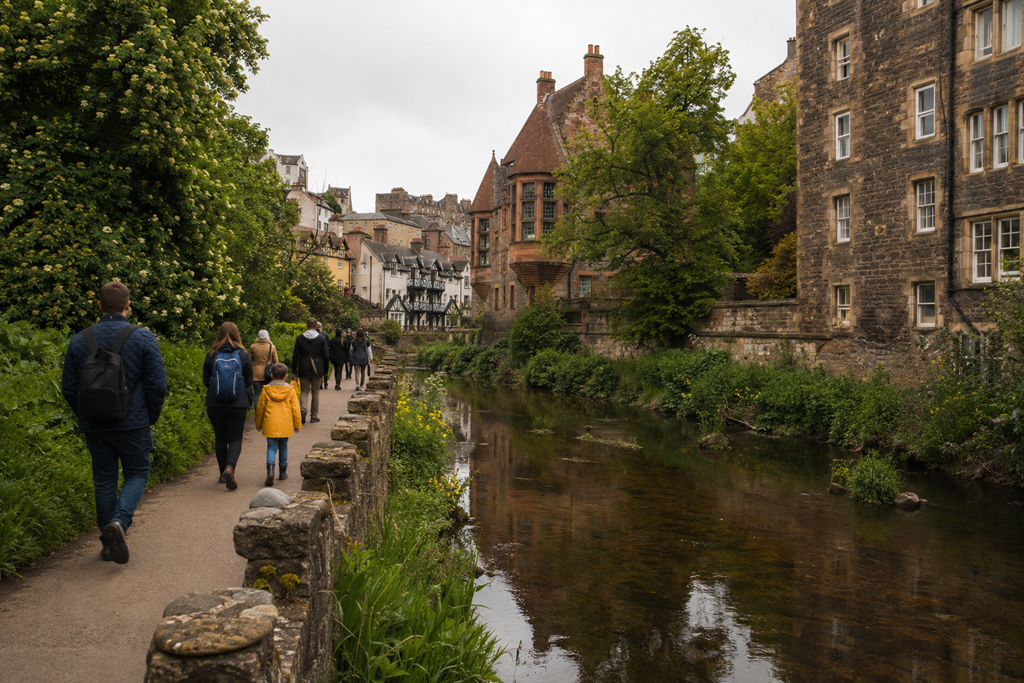
Start the day with a walk to Dean Village, a picturesque historic area northwest of the city center. It sits along the Water of Leith and feels quieter than the Royal Mile, with stone buildings, narrow paths, and a village-like setting.
This is best enjoyed slowly. Take photos, listen to the water, and continue along part of the Water of Leith walkway if the weather is pleasant. It is one of the best ways to see how Edinburgh changes beyond the main sightseeing streets.
Late Morning: Continue Toward Stockbridge
From Dean Village, continue toward Stockbridge. This neighborhood is a strong choice for a slower final day because it feels local, walkable, and easy to enjoy without a strict plan.
Browse shops, stop for coffee, or look for a casual lunch. If your visit falls on a market day, you may find local food and produce, but do not depend on that for the itinerary. Stockbridge is worthwhile even without a specific event.
Afternoon: Visit The Royal Botanic Garden Edinburgh
Spend the afternoon at the Royal Botanic Garden Edinburgh. The garden is one of the city’s most peaceful large green spaces and works well after two days of castles, hills, and stone streets. The official garden site describes free garden entry and advises visitors to check for updates, especially in extreme weather.
Walk the paths, enjoy the plant collections, and use this stop as a reset before your final evening. It is especially good for travelers who like nature, photography, or a quieter pace.
Because garden facilities and specific indoor areas can change, check current visitor information before you go.
Late Afternoon Option: Scottish National Gallery Or More Old Town Wandering
If you still have energy, return toward the center for one final cultural stop. The Scottish National Gallery area near Princes Street Gardens is convenient if you enjoy art, while the Old Town is always good for one last wander.
This is also a good time to revisit a place you liked earlier rather than adding something new. Edinburgh rewards repetition: a second walk through the same street can feel different in new light or weather.
Evening: End With A View
For your final evening, choose a simple scenic ending. Calton Hill, Princes Street Gardens, the castle area, or a quiet Old Town viewpoint can all work depending on where you are staying.
The goal is not to squeeze in one more attraction. It is to leave with a clear sense of the city: stone streets, layered history, green hills, and views that make Edinburgh feel larger than its compact center.
Where To Stay For A 3-Day Edinburgh Trip
For a first visit, central Edinburgh is usually the easiest choice. These areas work especially well:
Old Town
Old Town is best if you want to be close to Edinburgh Castle, the Royal Mile, Grassmarket, Victoria Street, and many historic sights. It is atmospheric and convenient, but some streets are steep and busy.
New Town
New Town is a good choice if you want elegant streets, shopping, restaurants, and easy access to both the Old Town and transport links. It tends to feel a little more open and orderly.
Haymarket
Haymarket can be practical if you are arriving by train, want slightly easier access to the airport tram, or prefer to stay just outside the busiest sightseeing zone.
Stockbridge
Stockbridge is appealing if you want a quieter neighborhood feel and do not mind being a bit farther from the main Old Town attractions. It works especially well for return visitors or slower-paced travelers.
Getting Around Edinburgh
Edinburgh is compact enough that many visitors can walk most of this itinerary. That said, the hills are real, and distances can feel longer than they look on a map.
Buses and trams are useful when you want to save energy or connect to areas outside the center. Edinburgh’s official visitor information notes that buses serve the city throughout the day and night, including regular service to the airport. Edinburgh Trams also connect the airport with the city center and onward toward Leith and Newhaven.
For a 3-day trip, the best approach is simple: walk when the route is scenic, use public transport when you are tired, and avoid overloading each day with cross-city travel.
Best Time To Visit Edinburgh For This Itinerary
This itinerary can work in any season, but the feel of the trip changes throughout the year.
Spring and early autumn often offer a good balance of daylight, manageable crowds, and comfortable walking weather. Summer brings long days and a lively atmosphere, but it can also be busier, especially around major travel periods. Winter has shorter days and colder weather, but the city’s historic streets can feel especially atmospheric.
No matter when you visit, pack for changeable weather. Edinburgh can shift from bright to rainy quickly, and the wind can make hilltop viewpoints feel cooler than the streets below.
Practical Planning Notes For A Better Trip
Book key attractions ahead when your schedule depends on them, especially Edinburgh Castle and the Palace of Holyroodhouse. Keep your museum and garden visits more flexible so you can adjust around weather.
Start earlier on the days that include major landmarks or hikes. Edinburgh’s popular streets are more enjoyable before the busiest part of the day.
Do not underestimate the hills. A route that looks short may include stairs, cobblestones, or steep climbs.
Leave room for wandering. Some of Edinburgh’s best moments happen between planned stops: a view down a close, a quiet courtyard, a sudden castle angle, or a street musician on a narrow lane.
A Simple 3-Day Edinburgh Itinerary At A Glance
Day 1: Old Town And Castle
Start at Edinburgh Castle, walk the Royal Mile, explore Victoria Street and Grassmarket, visit the National Museum of Scotland, and spend the evening in the Old Town.
Day 2: Royal Edinburgh And Scenic Hills
Visit the Palace of Holyroodhouse, walk or hike in Holyrood Park, see the views from Calton Hill, explore New Town, and have dinner in New Town or Stockbridge.
Day 3: Villages, Gardens, And Softer City Views
Walk through Dean Village, continue to Stockbridge, visit the Royal Botanic Garden Edinburgh, add an optional gallery or Old Town revisit, and end with a final city view.
Final Thoughts For Planning Your Edinburgh Trip
Three days in Edinburgh gives you enough time to see the city’s major landmarks while still enjoying its slower, more atmospheric side. The key is to group your days by geography: Old Town first, royal and scenic Edinburgh second, and quieter neighborhoods and gardens third.
You will leave with the essentials: the castle, the Royal Mile, Holyrood, Arthur’s Seat, Calton Hill, museums, village-like streets, and enough open time to feel the city rather than just move through it.
Download Our Free E-book!