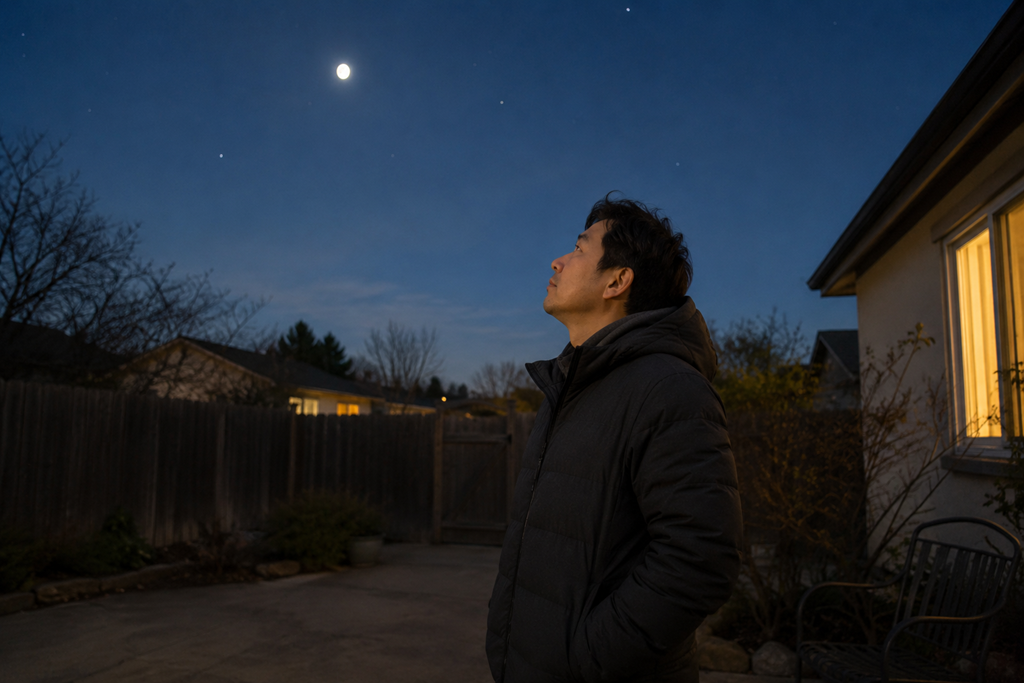
You do not need a telescope, camera, star tracker, or expensive gear to begin living an astronomy lifestyle. You can start with your own eyes, a quiet place to look up, a basic understanding of the night sky, and a habit of noticing what is already above you.
For many people, astronomy feels interesting but slightly out of reach. It can seem like something reserved for people with advanced equipment, dark-sky trips, technical knowledge, or years of experience. But the heart of astronomy is much simpler than that. It begins with attention.
Starting an astronomy lifestyle is less about buying your way into the hobby and more about creating a calmer relationship with the sky.
The Night Sky Is Already Enough To Begin
A beginner does not need to see distant galaxies on the first night. In fact, trying to start that way can make astronomy feel more complicated than it needs to be.
The moon, bright planets, seasonal constellations, meteor showers, and changing sky colors can all become part of an astronomy lifestyle before any equipment enters the picture. Even a few minutes outside after sunset can help you begin recognizing patterns.
This is often the most overlooked part of astronomy. The lifestyle does not begin when you own a telescope. It begins when you start paying attention regularly.
You might notice the moon rising in a different place than it did last week. You might recognize one bright “star” that turns out to be a planet. You might begin to know which direction gives you the clearest view from your backyard, balcony, driveway, or local park.
That kind of awareness is already astronomy.
Why Expensive Gear Can Make The Beginning Feel Harder
Equipment can be useful later, but it can also create pressure too early.
A beginner may start comparing telescopes, reading complicated reviews, worrying about magnification, or wondering whether a purchase is “good enough.” Instead of looking at the sky, they end up researching gear. Instead of feeling curious, they feel behind.
This is one reason many people quietly abandon astronomy before they ever really begin. They assume the hobby starts with a major purchase, then feel overwhelmed by choices.
But expensive equipment does not automatically create a meaningful astronomy habit. A telescope that sits unused in a closet will not help as much as a simple evening routine that gets you outside, looking up, and learning gradually.
The better first question is not “What should I buy?”
It is “How can I make looking at the sky part of my real life?”
Begin With What You Can See From Where You Are
You do not need perfect dark skies to begin. Light pollution may limit what you can see, but it does not erase the sky completely.
Many beginners can still observe the moon, some planets, bright stars, major constellations, and the changing rhythm of evening and morning skies from ordinary neighborhoods. A city balcony, suburban yard, apartment walkway, or quiet parking area can still become a starting point.
The goal at the beginning is not to see everything. The goal is to become familiar with something.
That may mean watching the moon for a month. It may mean learning where the sun sets at different times of year. It may mean recognizing Orion, the Big Dipper, Venus, Jupiter, or another bright object that becomes a personal landmark.
Small familiarity matters because it turns the sky from an abstract space into a place you are slowly getting to know.
A Simple Astronomy Lifestyle Is Built Around Rhythm
Astronomy becomes easier when it is connected to rhythm instead of effort.
You might step outside for five minutes after dinner. You might check the moon phase once or twice a week. You might look up before bed when the sky is clear. You might make a quiet habit of noticing what appears in the same part of the sky over time.
This kind of rhythm matters because astronomy is not always dramatic. Some nights are cloudy. Some nights are ordinary. Some nights you only notice one bright object and go back inside.
That still counts.
A grounded astronomy lifestyle is not about making every night special. It is about letting the sky become part of your normal awareness.
You Can Learn Slowly Without Turning It Into Homework
One common misunderstanding is that astronomy requires memorizing a large amount of information before you can enjoy it.
It does not.
You can begin with one object, one constellation, one moon phase, or one seasonal pattern. You can learn gradually, in small pieces, as your curiosity grows. The point is not to master the sky all at once. The point is to build a relationship with it.
This is especially helpful for people who already feel overloaded by work, screens, errands, and constant information. Astronomy can become a quiet counterbalance to that pace.
Instead of another thing to perform, it can become a way to slow down.
A few minutes of looking up can remind you that not every interest needs to be optimized, tracked, or turned into a project immediately.
The Best Beginner Tools Are Usually Simple
If you want some support, start with simple tools rather than expensive ones.
A basic sky app, a printed moon calendar, a notebook, a folding chair, a warm jacket, or a pair of ordinary binoculars can be enough to deepen the experience. These tools help you notice more without making the hobby feel technical too soon.
A notebook can be especially useful because it keeps the focus on observation. You can write down what you saw, where you were, what time it was, and what the sky felt like that night. Over time, those small notes become a personal record of attention.
This keeps astronomy grounded in lived experience instead of turning it into a shopping list.
The Lifestyle Part Matters More Than The Equipment
An astronomy lifestyle is not only about identifying objects in the sky. It is also about how the practice fits into your life.
It may give you a reason to spend more time outdoors. It may create a calming evening ritual. It may help you disconnect from screens. It may encourage quiet conversations with family, friends, or neighbors. It may give you a deeper sense of season, time, and place.
That is why starting small can actually be an advantage.
When you begin without expensive equipment, you are more likely to notice what astronomy gives you emotionally and practically. You learn whether you enjoy the quiet, the patience, the curiosity, and the rhythm before you invest money in gear.
If the habit grows naturally, equipment can come later with more confidence.
Avoid Turning The First Step Into A Purchase Decision
The biggest pattern that keeps beginners stuck is believing they need to choose the “right” equipment before they are allowed to begin.
This creates unnecessary pressure. It also skips the most important beginner stage: learning how you actually like to observe.
Some people enjoy quick backyard moon watching. Some enjoy planning dark-sky trips. Some like learning constellations. Some eventually enjoy photography. Some simply like sitting outside and feeling connected to the night.
You do not need to know your exact path at the beginning.
Start with observation first. Let your interest show you what kind of astronomy lifestyle fits your real life.
Let Curiosity Be Enough At First
Beginning an astronomy lifestyle without expensive equipment is not a lesser version of the hobby. It is often the most natural way to start.
You can begin by stepping outside, looking up, noticing one thing, and returning again another night. Over time, that simple habit can become a quiet source of curiosity, perspective, and calm.
The sky does not require you to arrive prepared, impressive, or fully equipped.
It only asks you to look.
Download Our Free E-book!