Dublin is one of Europe’s most approachable capital cities for first-time visitors. It has major historic landmarks, literary depth, walkable neighborhoods, welcoming pubs, green parks, coastal day trips, and a city center that is easier to understand than many larger capitals.
This guide is designed to help you plan a better first trip to Dublin without overcomplicating it. You’ll learn when to visit, where to stay, what areas to explore, which attractions are most worthwhile, how to get around, what to eat, and how to think about your time in the city.
Dublin rewards a mix of planning and wandering. Book the major sights you care about most, leave space for slow walks, and give yourself permission to enjoy the city in layers rather than trying to rush through everything.
This article was created from your uploaded master prompt for LifeStylenaire.com.
Why Visit Dublin?
Dublin is compact, historic, social, and full of character. The city’s streets carry traces of Viking settlement, medieval churches, Georgian architecture, Irish independence history, literary culture, and modern creative energy. Official tourism guidance describes Dublin as a walkable city with a compact center, which makes it especially friendly for first-time visitors.
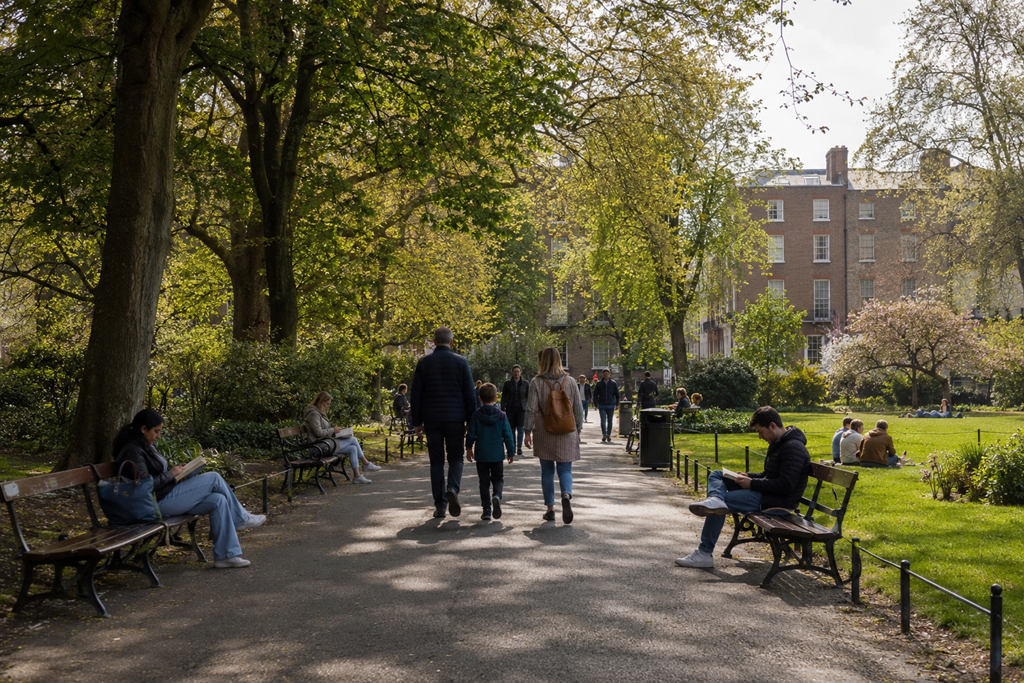
The city is not just a checklist of attractions. Much of Dublin’s appeal comes from ordinary moments: crossing the River Liffey, hearing live music in a pub, walking through Trinity College, browsing a bookshop, sitting in St Stephen’s Green, or taking a coastal train ride to a nearby village.
Dublin works well for a long weekend, but it also makes a strong base for a longer Ireland trip. Many first-time visitors spend two to four days in the city before continuing to places like Galway, Cork, Killarney, Belfast, or the west coast.
Best Time To Visit Dublin
Dublin can be visited year-round, but each season has a different feel.
Spring
Spring is a good choice if you want lighter crowds, fresh greenery, and comfortable walking weather. April and May are often appealing because parks and gardens begin to feel lively again, and the city is not usually as crowded as the height of summer.
Ireland’s weather is famously changeable, so bring layers and be ready for showers. Met Éireann describes Ireland’s climate as mild, humid, and changeable, with cool, windy winters and mostly mild summers.
Summer
Summer brings longer days, more visitors, and a fuller travel atmosphere. This is a strong season for first-time visitors who want maximum daylight for sightseeing, parks, and coastal walks.
The tradeoff is that hotels, popular attractions, and restaurants can be busier. If you are visiting in summer, book your accommodation early and reserve key attractions ahead when possible.
Autumn
Early autumn is one of the best times to visit Dublin. September and October often offer a good balance of comfortable weather, cultural energy, and fewer peak-season crowds. It is also a pleasant time for museums, pub evenings, city walks, and day trips.
Winter
Winter is quieter and can be a good fit if you enjoy museums, historic interiors, cozy pubs, and a slower pace. Days are shorter, and the weather can be wet or windy, but Dublin’s indoor attractions make it workable.
Winter travelers should plan fewer outdoor-heavy days and keep flexible options in mind.
How Many Days Do You Need In Dublin?
For a first visit, two to four days is a practical range.
With two days, focus on the historic center, Trinity College, Dublin Castle, Temple Bar, a major museum, and one classic pub or food experience.
With three days, add Kilmainham Gaol, the Guinness Storehouse, Phoenix Park, or a coastal trip to Howth or Dún Laoghaire.
With four or more days, you can slow down, explore neighborhoods more deeply, visit more museums, and take a day trip outside the city.
Dublin is not a city that requires rushing. A better first trip usually includes one or two major sights per day, plus time for walking, meals, and unplanned discoveries.
Best Areas To Stay In Dublin
Choosing where to stay matters because Dublin is easiest when you can walk to many of your main sights.
City Centre
The city center is the simplest choice for first-time visitors. Staying near Trinity College, Grafton Street, St Stephen’s Green, or the River Liffey puts you close to many major attractions, restaurants, shops, museums, and public transport.
This is a good fit if you want convenience and do not mind a busier atmosphere.
Temple Bar
Temple Bar is central and lively, with cobbled streets, pubs, restaurants, and nightlife. It can be fun to explore, but it is not always the best place to sleep if you want quiet evenings.
For many first-time visitors, Temple Bar is better as a place to visit than a place to base your entire stay.
St Stephen’s Green And Grafton Street
This area offers a strong balance of convenience and atmosphere. You are near shopping, parks, museums, Trinity College, and many restaurants. It is central without feeling quite as nightlife-heavy as Temple Bar.
Georgian Dublin
Areas around Merrion Square, Fitzwilliam Square, and Baggot Street are good for visitors who like architecture, museums, elegant streets, and a slightly more polished feel.
This part of Dublin works especially well if you want access to the National Gallery of Ireland, government buildings, and quieter walks.
Smithfield And The Liberties
Smithfield and The Liberties are good options if you want a slightly more local, historic, and less polished side of Dublin while still being close to key attractions. The Jameson Distillery Bow St., Christ Church Cathedral, St Patrick’s Cathedral, and the Guinness Storehouse are all connected to this side of the city.
Docklands
The Docklands area has a more modern feel, with newer hotels, offices, waterfront walks, and easy access to parts of the city by tram or foot. It can be a good fit for business travelers or those who prefer newer accommodation.
Best Things To Do In Dublin For First-Time Visitors
Dublin has enough to keep you busy, but first-time visitors should prioritize the places that best explain the city’s history, culture, and daily life.
Trinity College And The Book Of Kells
Trinity College is one of Dublin’s most important landmarks. The historic campus sits in the heart of the city and is worth visiting even if you do not tour the library.
The Book of Kells Experience introduces visitors to one of Ireland’s most treasured manuscripts, and Trinity notes that pre-booking is essential for some visitor categories and experiences, so it is wise to check current booking requirements before you go.
Even if you skip the paid experience, walking through the campus gives you a sense of Dublin’s academic and architectural heritage.
Dublin Castle
Dublin Castle is a key historic site for understanding the city’s political and colonial past. The complex has served many roles over the centuries and is located close to other important stops, including Christ Church Cathedral, Temple Bar, and the Chester Beatty.
It is a good attraction to pair with a walk through the older part of the city.
Christ Church Cathedral And St Patrick’s Cathedral
Dublin’s two famous cathedrals offer a strong introduction to the city’s medieval and religious history. Christ Church Cathedral is close to Dublin Castle and the old city core, while St Patrick’s Cathedral is associated with Jonathan Swift and sits beside a pleasant green space.
You do not need to visit both interiors unless you are especially interested in church history, architecture, or medieval Dublin. Seeing one in depth and walking by the other may be enough for a shorter trip.
Kilmainham Gaol
Kilmainham Gaol is one of the most powerful historic attractions in Dublin. It is closely connected with Ireland’s struggle for independence and offers a more serious, reflective experience than many central sights.
Because it is a popular timed-entry attraction, check current availability before planning your day around it.
Guinness Storehouse
The Guinness Storehouse is one of Dublin’s most famous visitor experiences. Even if you are not a major beer drinker, it can be worthwhile for the building, brand history, city views, and the role Guinness plays in Dublin’s identity.
It is located west of the main city center, so pair it with The Liberties, St Patrick’s Cathedral, Christ Church Cathedral, or nearby historic streets.
EPIC The Irish Emigration Museum
EPIC focuses on Irish emigration and the global Irish story. It is a strong choice for visitors who want context beyond the city itself, especially if you have Irish ancestry or an interest in migration, identity, and diaspora history.
It is located in the Docklands, making it a good anchor for exploring the more modern waterfront side of Dublin.
National Gallery Of Ireland
The National Gallery is an excellent choice for art lovers and a useful indoor option on rainy days. It is near Merrion Square, Trinity College, and other cultural institutions, which makes it easy to include in a relaxed sightseeing day.
Phoenix Park
Phoenix Park is one of Dublin’s great green spaces. It is large enough to feel like a break from the city and is home to walking paths, open fields, monuments, Dublin Zoo, and often-seen deer.
It is best visited when you want fresh air and a slower afternoon rather than another indoor attraction.
St Stephen’s Green And Iveagh Gardens
St Stephen’s Green is central, easy to visit, and ideal for a short pause between sightseeing stops. Iveagh Gardens, nearby, feels more tucked away and less obvious to many visitors.
These parks are especially useful when you want a break without leaving the city center.
Temple Bar
Temple Bar is famous for nightlife, pubs, music, and cobbled streets. It is worth seeing, especially on a first trip, but it is also one of Dublin’s most tourist-heavy areas.
Visit for a walk, photos, or a drink, but do not assume it represents the whole city. For a more rounded pub experience, explore other neighborhoods too.
Grafton Street And The Creative Quarter
Grafton Street is one of Dublin’s main pedestrian shopping streets and a good area for strolling, browsing, and hearing street performers. Nearby lanes and side streets lead toward cafés, shops, restaurants, and cultural stops.
This area works well between Trinity College, St Stephen’s Green, and the National Gallery.
The River Liffey And Ha’penny Bridge
The River Liffey divides the city and helps you understand Dublin’s geography. Walking along the quays and crossing the Ha’penny Bridge is a simple but memorable part of a first visit.
It is also a useful way to connect Temple Bar, O’Connell Street, the northside, and the Docklands.
Dublin Bay And Coastal Villages
One of Dublin’s underrated strengths is how easily you can reach the coast. DART rail connects the city with coastal areas such as Howth, Dún Laoghaire, Dalkey, and Malahide.
For a first-time visitor with three or more days, a half-day coastal trip can add fresh air, sea views, harbor walks, and a different perspective on the city.
Food And Drink In Dublin
Dublin’s food scene blends traditional Irish comfort, modern restaurants, casual cafés, pubs, markets, bakeries, seafood, and international influences. Tourism Ireland notes that food is an important part of contemporary Irish culture, shaped by local ingredients, markets, craft brewing, distilling, and chefs who connect food with place.
For a first trip, focus less on chasing the “best” restaurant and more on enjoying a variety of Dublin food experiences.
Try a traditional Irish breakfast if you are curious and have a full day of walking ahead. Look for Irish stew, seafood chowder, soda bread, fresh fish, local cheese, and classic pub meals. Dublin also has strong bakery and café culture, so leave time for coffee, pastries, and casual lunches.
Pubs are part of the city’s social fabric, but they vary widely. Some are tourist-focused, some are music-oriented, some are historic, and others are simply neighborhood gathering places. A good Dublin pub experience does not need to be loud or late. An early evening pint, live traditional music, or a simple meal can be enough.
If you enjoy whiskey or beer, consider one distillery or brewery experience rather than trying to fit in several. The Guinness Storehouse and Jameson Distillery Bow St. are two of the best-known visitor experiences, but smaller venues and guided tastings may also appeal depending on your interests.
How To Get Around Dublin
Dublin is easiest when you combine walking with public transport.
The central city is very walkable, especially around Trinity College, Temple Bar, Dublin Castle, Grafton Street, St Stephen’s Green, and the River Liffey. Comfortable shoes are essential because many of the best experiences involve walking on cobblestones, older pavements, and uneven streets.
For longer distances, Dublin has buses, Luas trams, DART rail, and commuter rail. The TFI Leap Visitor Card allows unlimited travel for a selected period on Dublin city bus services, Luas, DART, and commuter rail within the Dublin city travel zone.
Transport for Ireland also recommends the TFI Live app for planning journeys across the public transport network.
You usually do not need a rental car in Dublin. In fact, a car can be more of a burden than a benefit because of traffic, parking, one-way streets, and the walkable nature of the city center. If your Ireland trip includes rural areas later, consider renting a car after your Dublin stay.
Getting From Dublin Airport To The City
Dublin Airport is north of the city center. Most visitors reach central Dublin by airport bus, taxi, private transfer, or rental car if they are immediately leaving the city.
For most first-time visitors staying in the city, an airport bus or taxi is usually the simplest choice. Check current routes, stops, and travel times before arrival, especially if you land early in the morning or late at night.
Practical Dublin Travel Tips
Book Key Attractions Ahead
Some popular attractions use timed entry or sell out during busy periods. This is especially important for places such as the Book of Kells Experience and Kilmainham Gaol.
You do not need to over-plan every hour, but reserve the experiences that would genuinely disappoint you to miss.
Pack For Changeable Weather
Dublin weather can shift quickly. Bring layers, a light rain jacket, and shoes that can handle wet pavement. Avoid building your entire trip around perfect weather.
A good Dublin itinerary should include indoor and outdoor options each day.
Do Not Overload Your Days
Dublin looks compact on a map, but museums, historic tours, pub meals, and walks take time. A rushed schedule can make the city feel more stressful than it needs to.
Plan one major morning activity, one afternoon area, and one relaxed evening idea. That is often enough.
Use Neighborhoods To Structure Your Trip
Instead of bouncing across the city, group sights by area.
For example, pair Trinity College with Grafton Street and St Stephen’s Green. Pair Dublin Castle with Christ Church Cathedral and Temple Bar. Pair the Guinness Storehouse with The Liberties and St Patrick’s Cathedral.
This keeps your days easier and reduces unnecessary transit.
Be Sensible In Busy Tourist Areas
Ireland is generally considered a safe destination for travelers, but petty crime can happen, especially in popular tourist locations. The U.S. State Department advises visitors to stay aware of their surroundings and notes that crimes against visitors are often crimes of opportunity, such as pickpocketing or purse snatching.
Use the same common sense you would in any city: keep your phone and wallet secure, watch your bag in crowded pubs or transport areas, and avoid leaving valuables unattended.
Leave Space For Pub Culture Without Making It The Whole Trip
Dublin’s pub culture is part of the experience, but the city is much more than drinking. Balance pubs with museums, parks, historic sites, cafés, bookstores, and coastal walks.
If you do want live music, check whether a venue is offering traditional sessions and arrive early enough to settle in.
A Simple First-Time Dublin Itinerary
Day One: Historic Core And Classic Dublin
Start at Trinity College and visit the Book of Kells Experience if it is a priority. Walk toward Grafton Street, stop at St Stephen’s Green, and continue toward the National Gallery or Merrion Square.
In the afternoon, explore Dublin Castle and the surrounding historic streets. End the day with dinner and a walk through Temple Bar, but consider sleeping outside the busiest nightlife blocks if you prefer quiet.
Day Two: Deeper History And Local Texture
Visit Kilmainham Gaol if you can secure tickets, then continue to the Guinness Storehouse or explore The Liberties. Add St Patrick’s Cathedral or Christ Church Cathedral depending on your pace.
In the evening, choose a pub outside the most crowded stretch of Temple Bar or look for a traditional music session.
Day Three: Parks, Museums, Or The Coast
Use your third day to adjust the trip to your interests. Choose Phoenix Park for green space, EPIC for emigration history, the National Museum for culture, or a DART trip to Howth or Dún Laoghaire for sea air.
This is also a good day to slow down, revisit a favorite area, shop for books or gifts, and enjoy one last relaxed meal.
What To Skip On A Short First Visit
You do not need to do everything.
Skip attractions that do not match your interests just because they appear on a list. Skip long cross-city journeys for minor stops. Skip packing multiple paid tours into the same day. Skip any plan that leaves no time to walk, sit, eat, or simply notice the city.
For most first-time visitors, Dublin is best experienced through a balanced mix of major landmarks, thoughtful history, everyday streets, and unhurried meals.
Final Thoughts For Planning Your First Dublin Trip
Dublin is a welcoming city for first-time visitors because it is compact, layered, and easy to explore at a human pace. The best trips usually combine a few essential sights with enough flexibility to enjoy the city’s smaller moments.
Choose a central base, pack for changing weather, book your most important attractions ahead, and organize your days by neighborhood. Give yourself time to walk along the Liffey, step into a museum, listen to music, sit in a park, and take at least one slow meal.
Dublin does not need to be rushed to be memorable. Let the city reveal itself one street, story, and conversation at a time.
Download Our Free E-book!