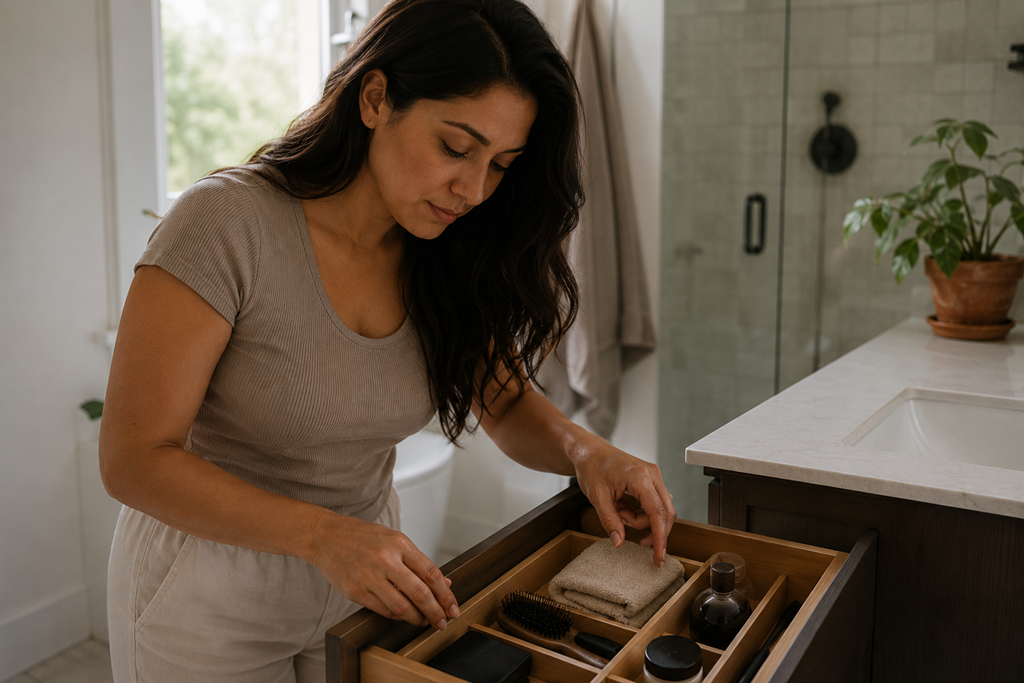
A minimalist lifestyle does not have to mean getting rid of most of what you own, living in an almost-empty home, or following strict rules about what “counts” as enough. For everyday life, realistic minimalism usually means making small changes that reduce visual clutter, decision fatigue, and daily maintenance so your home, schedule, and habits feel easier to live with.
That is what makes minimalism useful for many people. It is not about creating a perfect-looking life. It is about removing some of the extra weight from ordinary routines.
For some people, that might mean clearing one kitchen counter so making breakfast feels calmer. For others, it might mean owning fewer duplicate items, saying no to unnecessary commitments, or creating a simpler morning routine. The point is not to become a different person overnight. The point is to make daily life feel less crowded.
Realistic Minimalism Starts With What Feels Heavy
Most people do not become interested in minimalism because they dislike all their belongings. They become interested because something about daily life starts to feel too full.
The closet is packed, but getting dressed still feels frustrating. The kitchen has plenty of tools, but cooking feels harder than it should. The calendar is busy, but not always meaningful. The home has storage bins, drawers, and shelves, yet things are still difficult to find.
This is where realistic minimalist changes can help. Instead of asking, “How much can I remove?” a better question is, “What is making this part of my life harder than it needs to be?”
That question keeps minimalism grounded. It shifts the focus away from appearances and toward relief.
You Do Not Have To Declutter Everything At Once
One of the biggest misunderstandings about minimalism is the idea that it requires a dramatic cleanout. That can make the whole idea feel exhausting before a person even starts.
Everyday minimalism works better when it begins with one small area that affects your daily rhythm. A nightstand, entryway, bathroom drawer, kitchen counter, work bag, or laundry area can be enough.
Small spaces matter because they are often tied to repeated moments. A calmer entryway can make leaving the house easier. A clearer bathroom drawer can make mornings smoother. A simpler laundry setup can reduce the feeling of constantly being behind.
These changes may not look dramatic from the outside, but they can make life feel more manageable from the inside.
Minimalism Is More About Friction Than Aesthetic
Minimalism is often shown as a visual style: white walls, open shelves, neutral clothing, spotless counters, and very few objects. That version can be beautiful, but it is not the whole point.
For everyday life, minimalism is more useful when it is understood as a way to reduce friction.
Friction is the small resistance that makes normal tasks feel harder. It shows up when you have to move five things to reach the item you actually use. It shows up when your closet is full of clothes that no longer fit your real life. It shows up when every surface becomes a temporary holding zone because nothing has a clear place to go.
A realistic minimalist change does not have to look impressive. It only needs to make one part of life easier to use, maintain, or return to.
Keeping Useful Things Is Not A Failure
Some people avoid minimalism because they assume it means owning as little as possible. But a minimalist lifestyle does not require letting go of things that genuinely serve your life.
A family with children may need more dishes, shoes, school supplies, and household systems than a person living alone. Someone who works from home may need equipment that would look unnecessary to someone else. A person who cooks often may reasonably keep more kitchen tools than someone who prefers simple meals.
Minimalism becomes unrealistic when it ignores the actual shape of your life.
The goal is not to own the fewest things. The goal is to stop managing things that no longer earn their place through use, meaning, comfort, or genuine support.
Everyday Changes That Often Feel Manageable
Realistic minimalist lifestyle changes are usually quiet. They do not require a major announcement or a weekend-long overhaul.
They might look like keeping only the mugs you actually reach for. They might involve clearing the dining table at the end of each day so it does not become a long-term storage area. They might mean unsubscribing from emails that constantly pull your attention. They might mean keeping fewer backup products if those extras make your cabinets harder to use.
They can also be emotional or schedule-based. A person may simplify by leaving more open space between commitments, reducing unnecessary errands, or choosing fewer goals at one time.
Minimalism becomes more sustainable when it is allowed to touch more than physical stuff. A cluttered life is not always caused by objects alone. Sometimes the pressure comes from too many options, too many obligations, or too many unfinished decisions.
The Best Changes Are The Ones You Can Maintain
A minimalist change is only helpful if it fits the life you are actually living.
This is why extreme rules often fail. A drawer can be perfectly organized for one week, but if the system is too complicated, it will not hold up. A closet can be reduced too aggressively, but if the remaining clothes do not support real routines, frustration returns. A beautiful empty counter may feel peaceful, but if the family uses that space every day, the real solution may be a better landing spot rather than a completely bare surface.
Sustainable minimalism respects maintenance.
The best changes are usually simple enough to repeat even when life is busy. They make cleanup easier, choices clearer, and routines more forgiving.
It Helps To Notice What You Keep Re-Handling
One useful way to recognize clutter is to notice what you keep moving but never truly using.
These are the items that travel from counter to chair, from chair to basket, from basket to closet, and then back out again. They may not seem like a problem individually, but over time they create a sense of low-level unfinished business.
The same pattern can happen with decisions. A subscription you keep meaning to cancel, a pile of mail you keep avoiding, or a project you no longer care about can all create mental clutter.
Realistic minimalism often begins when you stop re-handling the same things and decide whether they still belong in your life.
Minimalism Should Make Life Feel Kinder, Not Stricter
Minimalism can lose its value when it becomes another way to judge yourself.
If you feel guilty for owning sentimental items, needing practical supplies, or living in a home that looks lived-in, the idea has become too rigid. A minimalist lifestyle should not make you feel like your normal human needs are a problem.
A calmer life does not require perfection. It may simply require fewer things competing for space, fewer routines that drain your energy, and fewer decisions that repeat every day without adding much value.
The most realistic version of minimalism is not severe. It is supportive.
A Clearer Life Can Begin In Ordinary Places
Minimalist lifestyle changes that feel realistic usually start with one ordinary point of pressure. A crowded drawer. A stressful morning. A kitchen counter that never stays clear. A closet full of clothes that make getting dressed harder.
You do not have to simplify everything. You can begin with the place where relief would be most noticeable.
That is enough to make minimalism feel less like an identity and more like a practical tool. Used gently, it can help everyday life feel calmer, lighter, and easier to return to.
Download Our Free E-book!