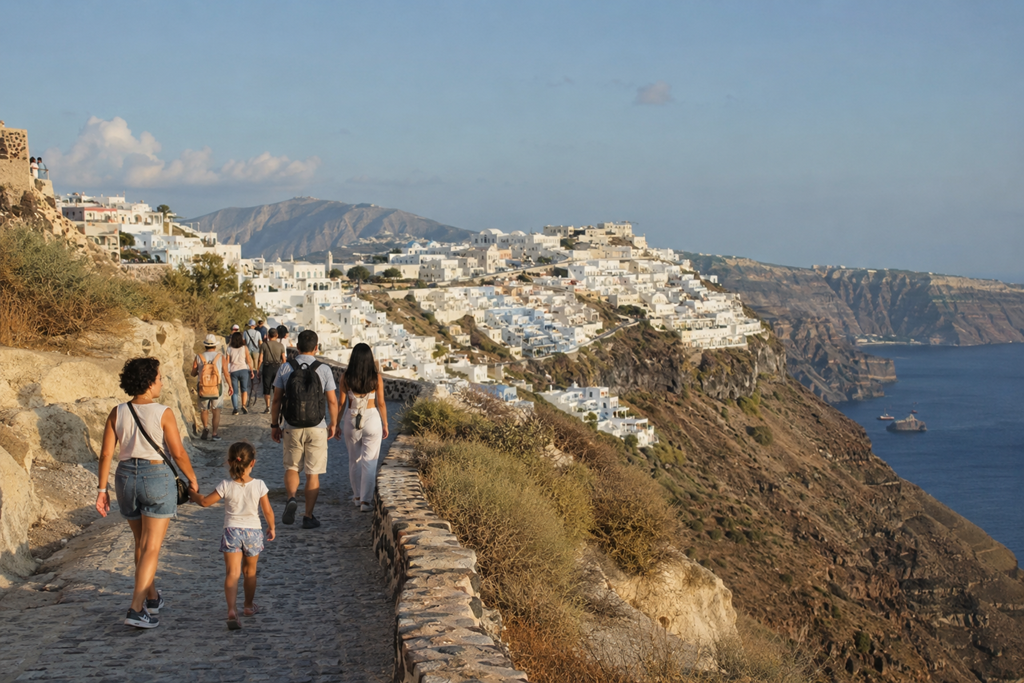
Santorini is one of Greece’s most recognizable islands, but planning a good trip there takes more than choosing a hotel with a view. The island is small, dramatic, and beautiful, with whitewashed villages, volcanic cliffs, black-sand beaches, archaeological sites, wineries, and walking paths that all offer different versions of the Santorini experience.
This guide will help you understand where to stay, when to go, how to get around, what to prioritize, and how to plan a trip that feels thoughtful rather than rushed.
Santorini At A Glance
Santorini is part of the Cyclades island group in Greece. Its most famous feature is the caldera, a vast volcanic sea basin lined by steep cliffs and cliffside villages. Fira, the island’s capital, sits on the edge of the caldera, while Oia, Imerovigli, and Firostefani are also known for their views, narrow lanes, and whitewashed architecture.
The island is especially well suited for travelers who enjoy scenery, photography, slow walks, food, wine, history, and sea views. It is less ideal for travelers looking for quiet, empty beaches in peak season or a low-cost Greek island escape.
A good Santorini trip usually balances three things: caldera views, village time, and time away from the busiest viewpoints.
Best Time To Visit Santorini
The best time to visit Santorini depends on what kind of trip you want.
Spring And Early Summer
Spring into early summer is one of the most comfortable times to visit. The weather is usually pleasant for walking, sightseeing, and outdoor meals, while the island is generally less intense than the busiest summer period. This is a strong choice if you care more about views, villages, and exploring than spending every day swimming.
High Summer
Summer brings the warmest beach weather, the busiest streets, and the most competition for popular sunset spots. It can still be a beautiful time to visit, especially if swimming and boat trips are priorities, but you’ll want to book lodging early, make dinner reservations where needed, and start popular walks or excursions earlier in the day.
Early Autumn
Early autumn is often one of the best overall windows for Santorini. The sea is typically warmer than in spring, the light is beautiful, and the island often feels more manageable than in peak summer. Many travelers find this period a good balance between beach time and comfortable sightseeing.
Winter And Low Season
Santorini is quieter in winter, but some hotels, restaurants, tours, and seasonal services may close or operate on reduced schedules. It can be rewarding for travelers who mainly want atmosphere, views, and fewer crowds, but it is not the best time for a classic beach-focused trip.
How Many Days Do You Need In Santorini?
For most first-time visitors, three to four days is a practical amount of time. That gives you enough room to explore the caldera villages, visit Akrotiri, spend time at a beach, enjoy a sunset, and take a boat or wine experience without feeling overly packed.
A shorter two-day visit can work if Santorini is part of a larger Greek island itinerary, but you’ll need to prioritize carefully. A longer stay of five or more days is best if you want a slower pace, multiple beach days, or day trips around the island.
Where To Stay In Santorini
Where you stay will shape your trip more than many travelers expect. Santorini is compact, but each area has a different feel.
Fira
Fira is the island’s capital and one of the most practical places to stay. It has restaurants, shops, nightlife, transportation connections, and easy access to caldera views. It is a good base if you want convenience and plan to move around the island by bus or tour transfer. Visit Greece describes Fira as the island’s capital, perched along the caldera edge with views over the Aegean and Nea Kameni.
Best for: first-time visitors, travelers without a rental car, nightlife, convenience.
Oia
Oia is Santorini’s most famous village, known for its cliffside lanes, cave-style buildings, blue-domed churches, and sunset views. It is beautiful, but it can also be crowded, especially around sunset.
Best for: romantic stays, photography, iconic views, slower mornings before day visitors arrive.
Imerovigli
Imerovigli sits along the caldera and often feels quieter than Fira or Oia. It is known for expansive views and a more relaxed atmosphere. For many travelers, it offers one of the best balances of scenery and breathing room.
Best for: couples, view-focused stays, quieter evenings.
Firostefani
Firostefani is close to Fira but usually feels a little more peaceful. It works well for travelers who want caldera access without staying directly in the busiest part of the capital.
Best for: walkability, views, convenience without as much bustle.
Kamari And Perissa
Kamari and Perissa are beach-oriented areas on the eastern and southeastern sides of the island. They are usually more practical for travelers who want beach time, easier parking, and a more casual resort-style stay.
Best for: families, beach days, better value, travelers less focused on caldera views.
Pyrgos
Pyrgos is an inland village with traditional architecture, winding lanes, and elevated views. It can be a good option for travelers who want a more local-feeling base and do not need to be directly on the caldera.
Best for: quieter stays, village atmosphere, returning visitors.
Best Things To Do In Santorini
Santorini is not only about sunsets. The best trips include a mix of scenery, history, food, walking, and time near the water.
Walk Through Oia
Oia is worth visiting even if you are not staying there. Go early in the day if you want quieter lanes and better space for photography. Wander slowly rather than treating it only as a sunset stop. The best moments often come from side streets, small viewpoints, and quiet corners away from the most crowded paths.
Explore Fira, Firostefani, And Imerovigli
These villages connect beautifully along the caldera edge. You can stroll between them, stop for views, and get a strong sense of Santorini’s cliffside landscape without needing a complicated plan. Imerovigli and Firostefani are especially good for sunset views that can feel less compressed than Oia’s most famous lookout areas.
Hike The Caldera Path From Fira To Oia
The walk from Fira toward Oia is one of Santorini’s classic experiences. It follows the caldera edge through villages and open stretches with wide sea views. Start early, bring water, wear real walking shoes, and avoid the hottest part of the day.
You do not have to complete the full route to enjoy it. Even a shorter walk between Fira, Firostefani, and Imerovigli can be rewarding.
Visit Akrotiri Archaeological Site
Akrotiri is one of Santorini’s most important historic sites. The excavations revealed a major prehistoric settlement in the Aegean, offering a deeper perspective on the island beyond its views and beaches.
This is a strong choice for history lovers, families with curious older children, and travelers who want to understand Santorini’s ancient past. Check current opening details before you go.
See Red Beach From A Safe Viewpoint
Red Beach is known for its dramatic red volcanic cliffs and unusual landscape. Conditions can change, and access may vary, so it is best treated as a scenic stop rather than a place where you must spend a full beach day. Follow posted safety guidance and view it from stable, permitted areas.
Spend Time At Black-Sand Beaches
Santorini’s beaches are different from the soft white-sand beaches some travelers imagine. The island’s volcanic nature gives many beaches darker sand or pebbles. Kamari and Perissa are two of the most popular beach areas, with organized beach facilities, restaurants, and a more relaxed daytime rhythm.
Take A Boat Trip Around The Caldera
A boat trip is one of the best ways to understand Santorini’s shape. From the water, the cliffs, villages, and volcanic islands make more visual sense. Many boat trips include swimming stops or views of the caldera from below.
Book ahead during busy travel periods, and choose a trip style that fits your comfort level. Some are lively and social; others are quieter and more scenic.
Visit A Santorini Winery
Santorini has a long wine tradition shaped by volcanic soil, wind, and dry conditions. A winery visit can be a memorable way to slow down, learn about local agriculture, and enjoy views away from the busiest village lanes.
This is especially worthwhile for couples, food-focused travelers, and anyone looking for an experience that feels rooted in the island rather than purely scenic.
Watch The Sunset Thoughtfully
Santorini sunsets are famous, but the experience depends heavily on where you watch from. Oia is iconic but often crowded. Imerovigli, Firostefani, Fira, and certain restaurants or hotel terraces can offer beautiful alternatives.
The key is to avoid building your entire evening around one crowded viewpoint. Arrive early, be patient, and remember that the best sunset is often the one you can enjoy comfortably.
Food And Drink In Santorini
Santorini’s food culture is one of the best reasons to slow down. Look for simple Greek dishes, fresh seafood, tomato fritters, fava, local cheeses, grilled meats, salads, and dishes built around seasonal vegetables.
The island is also known for local wines, especially crisp whites. A winery visit or a meal with local wine can add context to what you are tasting.
For dining, try to mix scenic meals with simpler local tavernas. Caldera-view restaurants can be memorable, but some of the most satisfying meals may be away from the busiest lanes. During popular travel periods, reserve ahead for restaurants where the view or location is part of the appeal.
How To Get Around Santorini
Santorini has several transportation options, and the best choice depends on where you stay and how much exploring you plan to do.
Walking
Walking is excellent within villages and along parts of the caldera. However, Santorini is not a place where you can comfortably walk everywhere. Roads can be narrow, sidewalks may be limited, and distances between areas can feel longer than they look on a map.
Buses
Local buses are useful for major routes, especially if you are based in or near Fira. Many routes connect through Fira, making it the most practical base for travelers relying on public transportation. Santorini’s bus network commonly operates as a hub system centered around Fira, so traveling between two other areas may require changing buses there.
Check current schedules locally, especially outside peak season or when timing matters.
Rental Cars And ATVs
A rental car can make it easier to visit beaches, wineries, Akrotiri, Pyrgos, and viewpoints at your own pace. Parking can be challenging in popular villages, and roads may feel tight for nervous drivers.
ATVs are common, but they require caution. Choose this only if you are comfortable with local road conditions, sun exposure, and traffic.
Taxis And Transfers
Taxis and private transfers are helpful for airport arrivals, ferry port transfers, late evenings, and luggage-heavy moves. Booking transfers in advance can reduce arrival-day stress, especially during busy periods.
Practical Travel Tips For Santorini
Choose Your Base Around Your Priorities
Stay on the caldera if views are the heart of your trip. Stay near the beaches if you want easier, more casual days by the water. Stay in Fira or nearby if transportation convenience matters most.
Book Key Lodging Early
Santorini’s best-located stays can book up well ahead of busy travel periods. This is especially true for caldera-view rooms, boutique hotels, and places with sunset-facing terraces.
Do Not Overload Your Days
Santorini looks small, but heat, hills, crowds, and transportation logistics can make packed days tiring. One major activity, one flexible meal, and one scenic walk or sunset plan is often enough for a satisfying day.
Wear Better Shoes Than You Think You Need
Village lanes can be uneven, steep, and slippery in places. Comfortable walking shoes are more useful than dressy sandals for daytime exploring.
Be Realistic About Crowds
Santorini is popular for good reason. Instead of expecting empty streets in the most famous places, plan around the rhythm of the island. Go early, explore less famous villages, and give yourself downtime away from the busiest viewpoints.
Check Details Before You Go
Opening hours, ferry schedules, bus times, museum access, and tour availability can change. Before committing to a plan, verify current details directly with the attraction, operator, hotel, or official local source.
A Simple First-Time Santorini Plan
For a balanced first visit, consider this loose structure:
Day One: Arrive, settle in, explore your base village, and enjoy a low-effort sunset.
Day Two: Walk part of the caldera path, visit Fira, Firostefani, and Imerovigli, then have a relaxed dinner.
Day Three: Visit Akrotiri, see Red Beach from a safe viewpoint, and spend time at Kamari or Perissa.
Day Four: Take a boat trip or visit a winery, then return to your favorite village for a final evening.
This plan keeps the trip flexible while still covering Santorini’s main strengths: views, history, beaches, food, and time on the water.
Planning The Perfect Santorini Trip
The best Santorini trip is not necessarily the busiest one. It is the one that gives you enough time to enjoy the island’s views, understand its volcanic landscape, taste its food, and step away from the most crowded places when you need space.
Choose your base carefully, build your days around realistic pacing, and leave room for simple moments: a quiet morning in Oia, a slow walk along the caldera, a glass of local wine, or a sea view you did not schedule in advance.
Santorini rewards travelers who plan well but do not try to control every hour.
Download Our Free E-book!