You do not need a complicated garden system to deal with pests naturally. In most cases, the best approach is to notice the problem early, identify what is actually causing the damage, use the gentlest effective option first, and avoid doing anything that harms the healthy parts of your garden in the process.
Natural pest control works best when it is calm and targeted. It is not about spraying everything, trying every home remedy online, or turning a small pest problem into a full garden emergency. It is about helping your plants stay healthier while making the garden less inviting to pests over time.
For many home gardeners, the frustrating part is not just seeing bugs. It is wondering whether the bugs are ruining everything, whether the plants are still safe to eat, and whether “natural” methods will actually work. That uncertainty can make a small issue feel bigger than it is.
A more grounded approach starts with one simple idea: not every insect in your garden is a problem.
Some Bugs Are Part of a Healthy Garden
A garden is a living space. That means insects, worms, spiders, beetles, bees, butterflies, and other small creatures will show up. Some may damage plants, but many are neutral or helpful.
Beneficial insects can help control pest populations naturally, and pollinators are essential for many food-producing plants. Integrated pest management, often called IPM, focuses on monitoring, prevention, and using lower-risk controls before reaching for stronger treatments. The goal is not to remove every insect, but to manage real pest damage with the least disruption possible.
This matters because overreacting can sometimes make garden problems worse. If you spray too broadly, even with something considered less toxic, you may harm the insects that were helping keep pests under control.
A calmer first question is not, “How do I kill all the bugs?” It is, “What is actually damaging the plant, and how much damage is happening?”
Start With the Damage, Not the Panic
When leaves have holes, curled edges, sticky residue, yellowing, or tiny specks, it is easy to assume the garden is in trouble. But different damage points to different causes.
Soft-bodied pests like aphids, whiteflies, mealybugs, thrips, and spider mites often need a different response than caterpillars, beetles, slugs, or larger chewing insects. Insecticidal soaps, for example, are commonly used for soft-bodied pests and work through direct contact, but they do not leave much residual control after application.
That means random spraying is rarely the best first move. A little observation can save time, protect beneficial insects, and help you avoid using the wrong method.
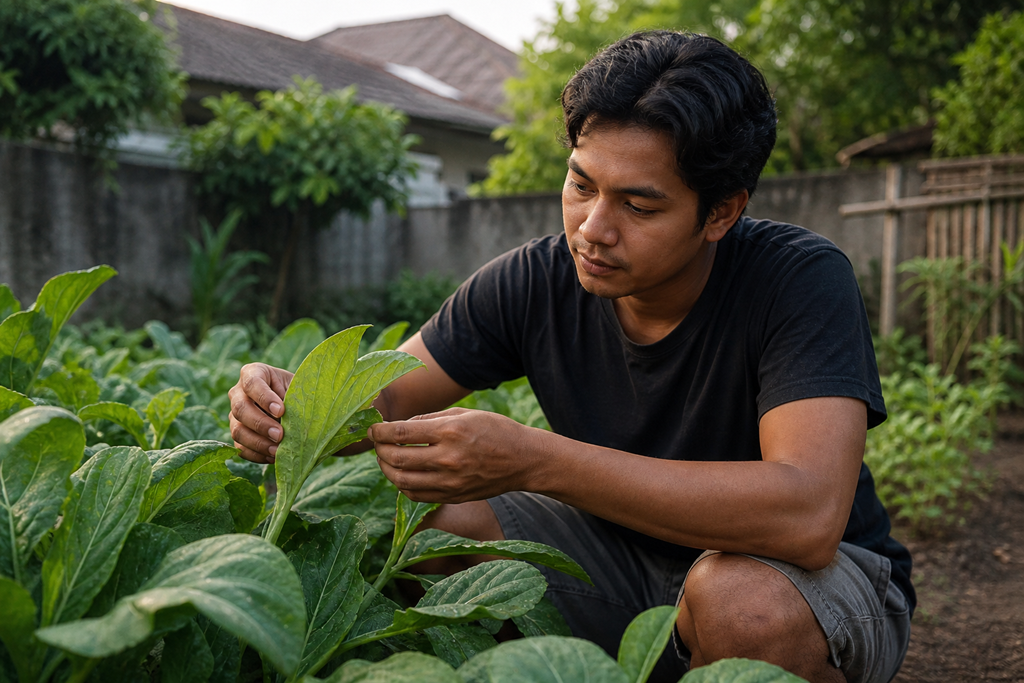
Look under leaves. Check new growth. Notice whether damage is spreading quickly or staying limited. If you see a few damaged leaves but the plant is still growing well, the problem may not need a dramatic response.
The Simplest Natural Methods Are Often Physical
Before sprays, powders, or products, some of the most useful natural pest-control methods are physical.
You can remove badly damaged leaves, hand-pick visible pests, rinse small insects off sturdy plants with water, or use lightweight row covers to protect young plants. Row covers are often recommended for certain vegetable pests, especially when plants are young and vulnerable.
This kind of approach feels almost too simple, but that is part of why it works. It keeps you from treating the entire garden when only one plant or one small area needs attention.
Physical methods are especially helpful when:
- the problem is still small
- the pest is easy to see
- the plant is young and needs temporary protection
- you want to avoid spraying near flowers or pollinators
- you are not fully sure what pest you are dealing with yet
Natural pest control does not have to begin with a product. Often, it begins with paying closer attention.
Neem Oil and Insecticidal Soap Can Help, But They Are Not Magic
Neem oil and insecticidal soap are two of the most common natural pest-control options home gardeners hear about. They can be useful, but they work best when used thoughtfully.
Neem oil comes from the seeds of the neem tree, and one of its active components, azadirachtin, can affect pest feeding and development. Purdue Extension notes that neem may act more like a repellent for some pests, which means it is often more useful before an infestation becomes severe.
Insecticidal soap is usually better suited for soft-bodied insects and needs direct contact to be effective. It is not a long-lasting shield over the plant.
The misunderstanding is thinking that “natural” means effortless or risk-free. These products still need to be used according to the label. They can affect sensitive plants, and they can also harm beneficial insects if sprayed carelessly.
A practical rule is to treat the specific problem, not the whole garden.
Homemade Sprays Deserve More Caution Than They Usually Get
Many gardeners search for homemade pest sprays because they want something simple, cheap, and less toxic. That instinct makes sense. But homemade does not automatically mean safe, effective, or gentle.
Some online recipes use ingredients that can burn plants, irritate skin, harm beneficial insects, or fail to control the pest. UC IPM has cautioned that homemade pesticides generally should not be recommended unless they are supported by peer-reviewed guidance, because many have not been tested well enough for reliable pest control.
This does not mean every DIY approach is bad. It means the garden should not become an experiment in random mixtures.
If you want a lower-tox approach, it is usually better to rely on proven practices first: monitoring, hand removal, row covers, healthier soil, proper watering, beneficial insects, and carefully selected products with clear labels.
Prevention Is Less Overwhelming Than Repeated Rescue
The most sustainable way to manage garden pests is to make the garden less vulnerable in the first place.
Pests often become more frustrating when plants are already stressed. Weak plants, overcrowding, poor airflow, inconsistent watering, and neglected plant debris can all make pest issues harder to manage. Organic pest management often combines prevention, monitoring, cultural practices, and careful treatment rather than relying on one single fix.
This does not require perfection. A simple prevention rhythm might mean walking through the garden every few days, checking the undersides of leaves, removing unhealthy foliage, spacing plants well, and noticing changes before they become severe.
That small routine can feel less stressful than waiting until the garden looks damaged and then trying to fix everything at once.
Natural Pest Control Should Protect the Good Parts of the Garden Too
A garden is not just plants and pests. It is also pollinators, soil life, beneficial insects, birds, water, and the household environment around it.
That is why natural pest control should be selective. The best choice is usually the one that solves the real problem while creating the least unnecessary disruption.
Cornell Cooperative Extension emphasizes choosing pest-control approaches that protect pollinators and natural enemies whenever possible, including using non-pesticide IPM tools first. This fits especially well for home gardeners who want a lower-tox garden, not just a pest-free one.
A garden can have a few imperfect leaves and still be healthy. In fact, a little imperfection is often part of growing food and plants in a real outdoor space.
When Natural Methods Are Enough—and When They Are Not
Natural methods are often enough when the pest problem is small, caught early, and limited to a few plants. They are also helpful when your goal is prevention, balance, and reducing unnecessary chemical use.
But natural does not mean unlimited. If a plant is heavily infested, if damage is spreading quickly, or if you cannot identify the pest, it may be time to get more specific guidance from a local extension office, nursery, or trusted gardening resource.
The most grounded approach is not to keep trying random natural remedies forever. It is to respond with proportion.
Start small. Observe carefully. Use the least disruptive option that fits the problem. Give the method time to work. Then adjust based on what you actually see.
A Simpler Way to Think About Garden Pests
Getting rid of pests naturally does not have to mean becoming an expert gardener overnight.
It means learning to pause before reacting, protect the helpful parts of your garden, and choose solutions that match the actual problem. Some pests can be rinsed off. Some can be blocked with covers. Some may need a carefully chosen product. Some are better prevented through healthier garden habits.
The goal is not a perfect garden. The goal is a garden you can care for without feeling like every bug is a crisis.
When you keep the approach simple, natural pest control becomes less about chasing every possible remedy and more about building a garden that is easier to understand, easier to maintain, and calmer to enjoy.
Download Our Free E-book!