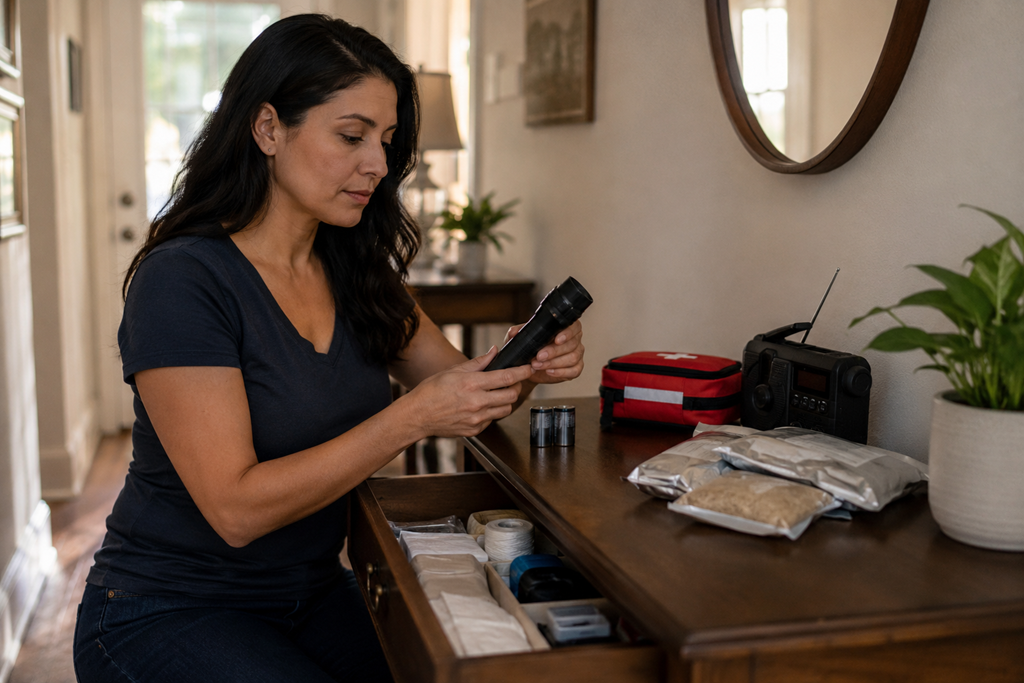
A better home preparedness routine does not have to be dramatic, expensive, or built around fear. For most households, it simply means creating small, repeatable habits that help you stay calmer and more capable when everyday disruptions happen.
That might mean knowing where your flashlight is during a power outage, keeping basic supplies in the same place, checking expiration dates before they become a problem, or making sure everyone in the home understands a few simple routines. Preparedness works best when it becomes part of normal household life instead of something you only think about when stress is already high.
For many people, the hard part is not caring about preparedness. The hard part is making it feel manageable.
Preparedness Feels Harder When It Lives Only In Your Head
Home preparedness often starts as a mental list.
You think about needing extra water. You remember that batteries are probably somewhere in a drawer. You wonder whether the first aid kit is complete. You mean to organize important papers. You plan to talk with your family about what to do during an outage, storm, evacuation warning, or unexpected household issue.
But when those thoughts stay scattered, preparedness can feel heavier than it really is.
The goal of a better routine is not to turn your home into a survival project. It is to reduce the number of things you have to remember from scratch. A simple routine gives your preparedness a place to live.
That alone can make the whole subject feel less overwhelming.
Everyday Preparedness Works Best When It Feels Ordinary
One reason people avoid preparedness is that it can sound extreme. But the most useful home routines are often quiet and ordinary.
A household that keeps flashlights in predictable places is practicing preparedness. A family that stores a few extra pantry staples is practicing preparedness. Someone who keeps copies of key documents together is practicing preparedness. A person who checks smoke detectors, rotates water, or keeps basic medication organized is doing practical, everyday preparedness.
These actions are not about expecting the worst. They are about making normal disruptions easier to handle.
A power outage is less stressful when you are not searching through random drawers in the dark. A sudden illness is easier to manage when basic supplies are already in one place. A weather delay feels less chaotic when your home has a little margin built in.
Good preparedness routines make the home feel more steady, not more anxious.
The Best Routine Is Usually The One You Can Repeat
A common mistake is trying to build the “perfect” preparedness system all at once.
That approach can quickly become frustrating. You may start researching supplies, storage methods, emergency plans, food rotation, first aid, water storage, backup power, communication plans, and home safety all at the same time. Before long, preparedness feels like a second job.
A better approach is to think in terms of repeatable household habits.
For example, you might choose one simple rhythm: check one preparedness area at the beginning of each month. One month could be pantry basics. Another could be batteries and flashlights. Another could be documents. Another could be first aid supplies.
The routine matters more than the size of the task.
A small habit repeated consistently will usually do more for your home than a big burst of energy that disappears after one weekend. Preparedness becomes more useful when it fits into your real life.
A Prepared Home Does Not Need To Be Perfectly Stocked
Many people delay preparedness because they believe they need everything figured out first. They imagine shelves full of supplies, detailed binders, expensive gear, and a perfectly organized storage system.
That can create unnecessary pressure.
In real life, a prepared home is not always a perfectly stocked home. It is a home where the basics are easier to find, easier to use, and easier to maintain.
You do not need to solve every possible situation. You need enough structure to handle the most likely disruptions with more calm and less confusion.
That may include:
Basic lighting during an outage. A little extra water. Shelf-stable food your household actually eats. A first aid kit that is not buried or expired. Important phone numbers or documents kept somewhere accessible. A shared understanding of what to do if plans change suddenly.
This kind of preparedness is not about perfection. It is about reducing friction.
Put Supplies Where People Will Actually Look For Them
A routine becomes stronger when it matches how your household already behaves.
If emergency supplies are hidden in a place no one remembers, they may not help when needed. If batteries are stored separately from flashlights, you may create extra stress during an outage. If important papers are scattered across folders, drawers, and email inboxes, they become harder to gather quickly.
Preparedness routines should make useful things easier to reach.
This does not mean everything has to be visible or perfectly arranged. It means your home should have a few obvious places where preparedness items belong.
The easier it is to find something, the more likely your routine will hold up under stress.
Preparedness Conversations Should Be Calm And Practical
Home preparedness routines are not only about supplies. They are also about communication.
In many households, one person quietly carries most of the preparedness thinking. They know where things are, what needs to be replaced, and what the loose plan is. But if no one else understands the routine, the system may not work well when that person is unavailable or distracted.
A short, calm conversation can help.
You do not need to make the topic heavy. You can simply talk through where key items are, what to do during a power outage, how to contact each other if phones are unreliable, or where important supplies are stored.
The tone matters. Preparedness conversations should make people feel steadier, not scared. When the discussion is practical and ordinary, it becomes easier for everyone to participate.
Avoid Turning Preparedness Into Constant Worry
Preparedness can become unhealthy when it turns into constant checking, endless buying, or frequent worst-case thinking.
A good routine should reduce worry over time. It should not feed it.
If your preparedness habits leave you feeling more tense, it may help to narrow the focus. Instead of trying to prepare for every possible event, focus on the most realistic household disruptions in your area and life situation.
Power outages, minor injuries, weather delays, temporary illness, transportation interruptions, or short-term supply gaps are common enough to plan for without becoming consumed by fear.
Preparedness is most useful when it gives you a sense of practical steadiness. If it starts to create more anxiety than confidence, the routine may need to become simpler.
Make Maintenance Part Of The Routine
Preparedness is not something you finish once and never revisit.
Supplies expire. Batteries lose power. Family needs change. Children grow. Medications change. Important documents get updated. Food preferences shift. Storage areas become cluttered.
That is why maintenance matters.
A home preparedness routine should include small moments of review. Not constant review. Not obsessive review. Just enough attention to keep your system usable.
The most sustainable routines are often boring in the best way. You check a few things. You replace what needs replacing. You notice what is missing. You move on with your life.
That is the point.
The Smallest Useful Routine Is Often Enough To Begin
If preparedness feels overwhelming, start smaller than you think you should.
Choose one area of your home where better organization would make a real difference. Maybe it is the pantry. Maybe it is a drawer with flashlights and batteries. Maybe it is the first aid kit. Maybe it is a folder for key documents.
The first goal is not to build a complete system. The first goal is to create one small point of order.
That small point of order gives you momentum. It also helps you understand what kind of routine your household will actually maintain.
A preparedness routine that fits your real home is more valuable than an impressive plan that no one follows.
Preparedness Is Built Through Repetition
Better home preparedness routines are not about fear, gear, or perfection. They are about making useful actions easier to repeat.
When supplies have a place, conversations stay calm, and maintenance becomes normal, preparedness starts to feel less like a project and more like a steady household habit.
That is where the real value is.
A prepared home does not need to feel tense or extreme. It can feel organized, practical, and quietly ready for the kinds of disruptions ordinary life sometimes brings.
Download Our Free E-book!