A home gym is easier to maintain when it feels simple to start, easy to return to, and realistic for your actual life. The most useful home gym habits are not usually dramatic routines or perfect workout plans. They are small environment and behavior habits that lower friction, reduce decision-making, and make exercise feel like something you can repeat.
For many people, the hard part is not knowing that exercise matters. It is getting started on ordinary days when energy is uneven, schedules shift, the house is busy, or motivation feels lower than expected.
That is where simple home gym habits can help. They make exercise less dependent on mood and more connected to rhythm.
Your Home Gym Does Not Have To Feel Like A Fitness Project
A home gym can become overwhelming when it starts to feel like another area of life that needs to be optimized.
You may think you need the perfect equipment setup, a strict weekly plan, a full hour, a polished routine, or a clear sense of motivation before you begin. But most people maintain exercise more easily when the home gym feels ordinary, accessible, and low-pressure.
The goal is not to create a miniature commercial gym at home. The goal is to create a space that quietly supports movement.
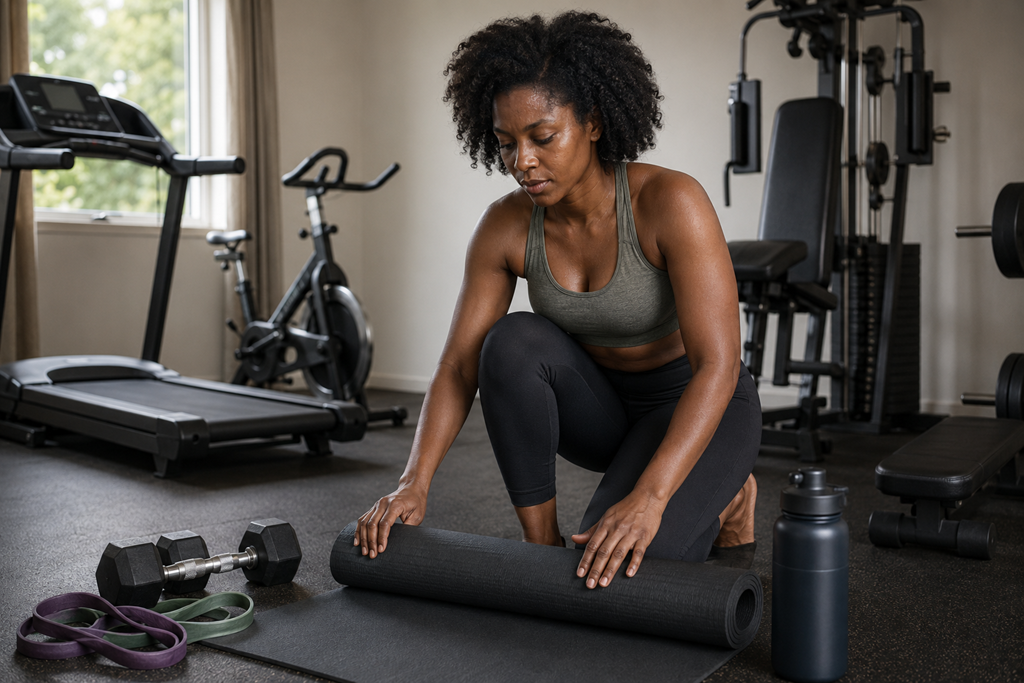
That might mean a yoga mat in the corner, a pair of adjustable dumbbells near a bench, resistance bands in a basket, or a treadmill that is easy to use without moving furniture first. The simpler the starting point feels, the easier it becomes to show up.
The First Habit Is Reducing Setup Time
One of the biggest reasons home workouts get skipped is not laziness. It is friction.
If you have to move clutter, find equipment, charge headphones, choose a workout, change into perfect clothes, and decide what to do before you begin, the workout already feels heavy.
A useful home gym habit is keeping the first step visible and easy.
This could mean leaving your mat unrolled, keeping your shoes near the workout area, placing dumbbells where you can see them, or having one basic “default workout” ready for days when you do not want to think.
The easier it is to begin, the less your brain has to negotiate.
A Default Routine Makes Low-Motivation Days Easier
A home gym habit that often helps is having a simple fallback routine.
This is not meant to replace a full workout plan. It is there for the days when you feel tired, busy, distracted, or unsure. A fallback routine gives you an answer before the internal debate starts.
It might be ten minutes of walking, a few sets of bodyweight exercises, light stretching, or a short dumbbell circuit. The exact routine matters less than the fact that it is familiar and easy to repeat.
When every workout requires a fresh decision, consistency becomes harder. When you already know what “just do something” looks like, exercise becomes easier to maintain.
Keep The Space Ready Enough, Not Perfect
A home gym does not need to look impressive to work well.
In real life, your workout area may share space with laundry, storage, a bedroom, a garage, or a living room. That does not mean it has failed. It only means your home gym has to fit real life instead of pretending real life is not there.
The helpful habit is keeping the space ready enough.
Ready enough means you can start without feeling annoyed. Ready enough means the equipment you use most often is accessible. Ready enough means the space feels safe, clear, and functional, even if it is not beautiful every day.
A home gym that is slightly imperfect but easy to use is often more valuable than a perfect setup that feels complicated to maintain.
Make Exercise Feel Like A Normal Part Of The Day
One reason home gym habits matter is that they help exercise feel less separate from the rest of life.
When exercise feels like a major event, it is easier to postpone. When it feels like brushing your teeth, making coffee, or tidying the kitchen, it becomes less emotionally loaded.
This does not mean exercise should feel effortless. Movement can still take energy. But the routine around it can feel calmer.
You might connect exercise to an existing daily rhythm, such as after work, before showering, after school drop-off, or before dinner. The home gym then becomes part of a familiar sequence instead of a separate decision that has to be rebuilt every day.
Short Workouts Still Count At Home
A common misunderstanding is that a home gym session only “counts” if it feels like a full workout.
That belief can quietly break consistency.
If you only exercise when you have enough time, energy, and motivation for a complete session, many ordinary days will feel like failures. But short workouts can preserve the habit, support your body, and keep you connected to the identity of someone who moves regularly.
Ten minutes is not pointless. A few sets are not pointless. A light session is not pointless.
Sometimes the most important function of a short workout is that it keeps the habit alive.
Avoid Turning Every Workout Into A Test
A home gym can be empowering because it gives you privacy and flexibility. But it can also become frustrating if every session becomes a test of discipline, intensity, or progress.
Not every workout has to prove something.
Some sessions build strength. Some maintain momentum. Some reduce stiffness. Some help you clear your head. Some simply remind you that you can return.
This matters because people often quit home exercise when they believe every session has to be intense, measurable, or impressive. A calmer approach gives you more ways to succeed.
The Best Habits Make Returning Easier
Consistency does not mean never missing a workout. It means having a way to return without turning the missed day into a bigger story.
A helpful home gym habit is making the next workout easy to resume.
That might mean writing down your last exercise, keeping your equipment in the same place, repeating familiar routines, or choosing a lighter session after a busy week instead of trying to “make up for” what you missed.
The easier it is to return, the less likely a small gap becomes a long break.
Your Home Gym Should Support Your Real Personality
Some people enjoy structure. Some need variety. Some like quiet workouts. Some prefer music, videos, timers, or written plans. Some want a peaceful corner. Others need everything visible or they forget it exists.
A maintainable home gym habit fits how you actually operate.
If you dislike complicated plans, keep the routine simple. If you get bored easily, rotate a few familiar options. If you are visually motivated, keep the space inviting. If you get distracted, remove unnecessary choices.
The goal is not to copy someone else’s home gym lifestyle. The goal is to make your own movement space easier to use.
Small Habits Make The Home Gym Feel Less Fragile
The most sustainable home gym routines usually come from small habits that reduce resistance.
Keep the equipment easy to reach. Have a default workout. Let short sessions count. Return gently after missed days. Keep the space ready enough. Connect movement to a normal part of the day.
These habits do not make exercise perfect. They make it easier to maintain.
And for many people, that is the real turning point: not finding the most intense routine, but creating a home environment where exercise feels possible again.
Download Our Free E-book!