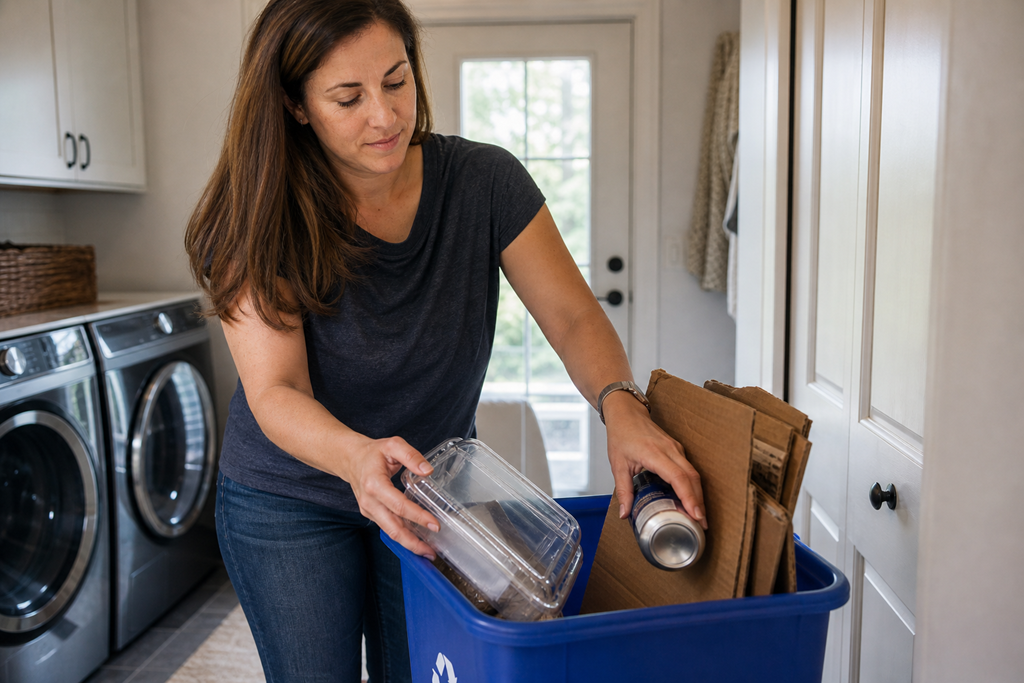
Recycling at home gets easier when you stop trying to recycle everything perfectly and focus on a few repeatable habits: know what your local program accepts, keep common recyclables clean enough, avoid plastic bags in the bin, and make recycling easy to do where waste actually happens.
That is the simple answer. Most people do not need a complicated sustainability system. They need a home setup that removes friction.
Recycling can feel confusing because the rules are not always obvious. A container may have a recycling symbol but still not be accepted where you live. A pizza box may look recyclable but become questionable if it is soaked with grease. A plastic bag may seem harmless, but many curbside recycling systems do not want loose bags or bagged recyclables because they can create problems at sorting facilities. The EPA repeatedly recommends checking with your local recycling program because accepted materials vary by community.
The goal is not to become perfect overnight. The goal is to make the right choice easier most of the time.
Recycling Works Best When It Stays Simple
A good home recycling habit starts with the items you handle again and again: paper, cardboard, cans, bottles, jars, and accepted plastic containers. These are the everyday materials most households see often, and they are usually easier to manage than unusual packaging or hard-to-recycle items.
This matters because confusion often leads to two opposite problems. Some people give up because recycling feels too complicated. Others put almost everything in the bin and hope it can be recycled. That second habit is sometimes called “wish-cycling,” and it can create contamination when non-recyclable items are mixed with accepted materials.
A calmer approach is to recycle fewer things more correctly.
That may sound less ambitious, but it is often more effective. Recycling is not about proving how much you care by filling the bin. It is about helping usable materials move through the system with less sorting trouble and less contamination.
Start With What Your Household Uses Most
The easiest way to recycle more consistently is to pay attention to your real household patterns.
For most homes, recycling opportunities show up in predictable places:
- the kitchen
- the pantry
- the home office
- the bathroom
- the garage or entryway
The kitchen is usually the best place to start because it produces frequent packaging waste: cans, jars, bottles, boxes, cartons, and plastic containers. If recycling is inconvenient there, the habit will probably break down quickly.
You do not need a perfect-looking recycling station. You need a visible, easy-to-reach place where accepted items can go without extra thought. A simple bin near the trash can is often enough. If the recycling bin is hidden in the garage or across the house, people are more likely to toss recyclable items into the regular trash without thinking.
Recycling at home becomes easier when the setup matches real behavior instead of an ideal version of how the household “should” operate.
Clean Enough Is Usually Enough
One common misunderstanding is that every recyclable container needs to be spotless. That can make recycling feel like extra housework.
In many cases, the more useful standard is “empty and reasonably clean.” The EPA says that, when a food container is accepted by the local program, food residue should be rinsed or scraped off, and “spatula-clean” can be clean enough.
This is a helpful reframe. You are not washing dishes for the recycling bin. You are removing enough food and liquid so the material does not contaminate other recyclables.
A quick rinse, scrape, or shake-out is often enough for common containers. A jar does not need to sparkle. A can does not need to look new. But containers with leftover food or liquid can cause problems, especially when they leak onto paper and cardboard.
When in doubt, think practical, not perfect: empty, quick-clean, dry enough, then recycle if accepted.
The Bin Is Not the Place for Every “Green” Choice
One reason home recycling gets complicated is that people start treating the recycling bin as the answer for every unwanted item.
But recycling is only one part of a lower-waste home. The EPA’s waste hierarchy places reducing and reusing ahead of recycling, meaning products should generally be reduced or reused before recycling becomes the next option.
That does not mean recycling is unimportant. It means recycling works best when it is not asked to solve everything.
For example, a reusable container may be better than repeatedly recycling single-use packaging. Donating usable household items may be better than throwing them away. Buying less packaging in the first place may make recycling easier because there is less to sort later.
This is where LifeStylenaire’s practical approach fits well: sustainable living does not have to mean overhauling your home. Sometimes it means reducing one repeat purchase, reusing one category of items, and recycling the common materials your local program actually accepts.
Plastic Bags Are a Common Source of Confusion
Plastic bags are one of the easiest recycling mistakes to make.
They look recyclable. They are plastic. They often have symbols on them. So it makes sense that people assume they belong in the curbside bin.
But many recycling programs do not accept loose plastic bags in curbside recycling. Waste Management’s basic recycling guidance says not to put loose plastic bags or bagged recyclables into the recycling container, and EPA archive guidance says plastic bags should be taken back to grocery store collection bins rather than placed in curbside recycling.
The practical home habit is simple: do not bag your recyclables unless your local program specifically tells you to. Keep them loose in the bin, and handle plastic bags separately according to local options.
This one change can make home recycling feel clearer almost immediately.
Local Rules Matter More Than Packaging Symbols
A recycling symbol on a package does not always mean your local recycling program accepts it.
This is frustrating, but it is also one of the most important things to understand. Recycling systems vary by city, county, hauler, facility, and material market. That is why a calm recycling routine should include one local check.
Look up your city, county, or waste hauler’s recycling guide and use that as the household standard. You do not need to research every package every day. Just get familiar with the main yes/no items in your area.
A simple household rule might be:
- recycle the common accepted items confidently
- keep questionable items out until you check
- avoid using the bin as a catch-all for “maybe” items
This prevents the habit from turning into a daily research project.
Hard-to-Recycle Items Need a Separate Plan
Some household items should not be treated like regular curbside recyclables.
Batteries, electronics, cords, light bulbs, hazardous materials, plastic bags, foam, and certain mixed-material packages often need special handling. The EPA has separate guidance areas for materials such as electronics, batteries, and household hazardous waste, which is a good reminder that not everything belongs in the regular home recycling bin.
A practical way to handle this is to create a small “special recycling” spot in your home. This could be a box in a closet, garage, laundry room, or utility area. Use it for items you know need a drop-off location or special disposal option.
The goal is not to solve every hard-to-recycle item immediately. The goal is to stop those items from going into the wrong bin just because there is no plan.
A Better Home Recycling Habit Is Usually a Smaller One
Many people make recycling harder by trying to build a perfect system right away.
They want labeled bins, zero waste, composting, special drop-offs, plastic-free shopping, perfectly rinsed containers, and a household that follows every rule. Those are not bad goals, but they can be too much at once.
A better starting point is smaller:
- recycle the easiest accepted items
- keep food and liquid out
- do not bag recyclables
- check local rules for confusing items
- set aside hard-to-recycle things separately
That is enough to create a meaningful home routine.
Recycling at home should not feel like a test you are always failing. It should feel like a simple household rhythm that becomes easier with repetition.
The Clearer Way to Think About Recycling at Home
The most helpful mindset is this: recycling is not about doing everything. It is about making better sorting decisions with the materials your household already uses.
You do not have to become an expert in every resin code, packaging label, or municipal rule. You only need to understand your local basics, reduce the most common mistakes, and create a setup that makes recycling easier to follow on an ordinary day.
Start where the waste actually happens. Keep the system visible. Focus on clean, common, accepted materials. Leave questionable items out until you know where they belong.
That is how recycling becomes less complicated: not by adding more pressure, but by making the next right choice easier.
Download Our Free E-book!