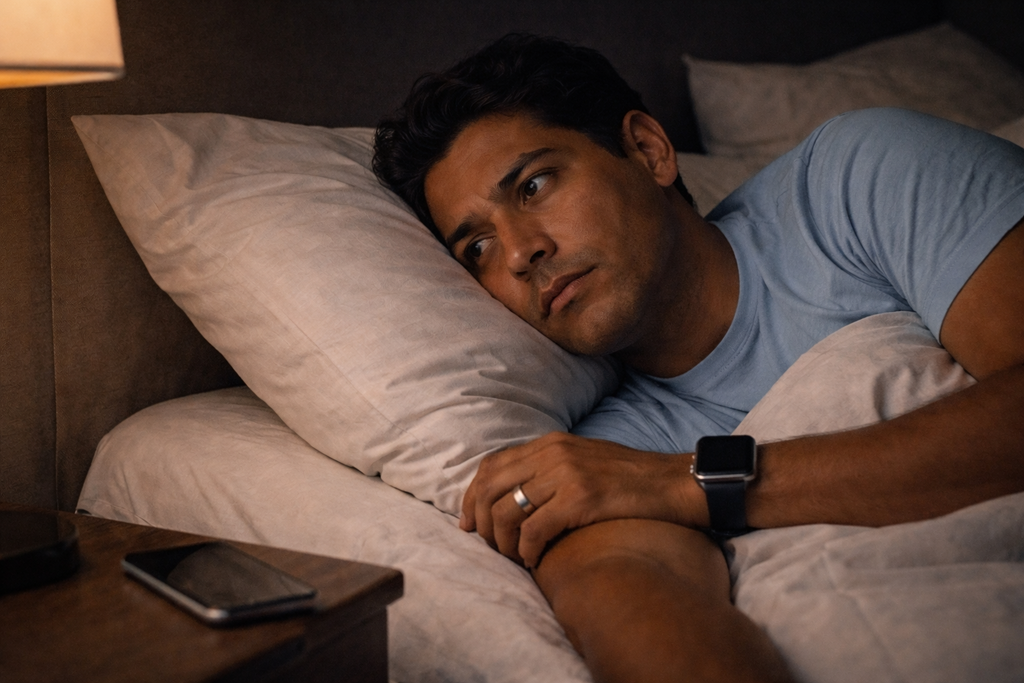
Tracking sleep can start to create more sleep pressure when the data stops feeling informative and starts feeling personal. Instead of helping you notice patterns over time, it begins to shape how you feel about the night in real time. You check your numbers in the morning, judge the night before your body has a chance to speak for itself, and start carrying that verdict into the next evening.
For some people, sleep tracking is mildly useful. For others, it quietly turns sleep into something to monitor, score, and worry about. A rough number can make you feel as though the night failed, even if you function reasonably well the next day. A “good” score can bring relief, but it can also raise the stakes. You start wanting to repeat it, protect it, or avoid anything that might disturb it.
That is where extra pressure often begins. The device may be measuring sleep, but your mind may start treating sleep like a performance.
When helpful information starts to feel like nightly judgment
Most people do not begin tracking sleep because they want more stress. They do it because they want clarity. They are tired, they want answers, or they are trying to improve their routines in a thoughtful way. That makes sense.
The problem usually develops more gradually.
A person starts checking how long they slept, how often they woke up, or how much deep sleep they got. At first it may feel interesting. Then it starts to feel important. Soon the numbers influence mood, confidence, and expectations for the day. A low score may make someone feel depleted before they have even stood up. A decent score may be questioned because they do not feel as rested as they think they should.
Over time, sleep can begin to feel less like a natural process and more like a result you are waiting to be graded on.
That shift matters because sleep already becomes harder when it feels high-stakes. When tracking adds another layer of evaluation, the nervous system may bring more pressure into bedtime and more scrutiny into the morning.
Why this matters more than people often realize
Sleep tracking does not just affect how you interpret the night after it happens. It can also change how you enter the next one.
If you are already worried about sleep, the data can become part of the worry loop. You may start wondering whether tonight will “go well,” whether your routine is working, or whether one off evening choice will show up in the numbers tomorrow. That kind of mental involvement can increase vigilance, which is the opposite of the state most people need for sleep to come more easily.
This is one reason tracking can feel strangely destabilizing. The original goal was to understand sleep better, but the process can make someone more watchful, more self-conscious, and less trusting of their own internal cues.
A clarifying insight here is that sleep data is not the same thing as sleep experience. A device may offer estimates, trends, and approximations, but it cannot fully capture how rested, tense, uneasy, or pressured a person feels. When the numbers begin to outrank your lived experience, sleep can start to feel less embodied and more externally defined.
Sleep pressure often grows when the numbers start deciding how you feel
One of the most common patterns is waking up and looking for the score before checking in with yourself.
You might feel neutral for a moment, then see a disappointing number and immediately think, That explains why I feel bad, or No wonder today will be hard. Sometimes the opposite happens. You slept better than expected according to the data, but now your body feels like it is supposed to match the report, which creates another kind of tension.
This can make sleep feel more fragile than it is.
Instead of treating sleep as a living process with some natural variation, tracking can tempt people into seeing each night as evidence. Evidence that they are doing well. Evidence that they are slipping. Evidence that they have solved it. Evidence that something is wrong.
Once that mindset takes hold, bedtime can start to carry more emotional weight. You are not just going to sleep. You are waiting to find out how you did.
The issue is usually not the tracker itself, but the relationship forming around it
Sleep tracking is not automatically harmful. For some people, it stays neutral. For others, it becomes stressful because of the meaning attached to it.
That meaning often sounds like:
- I need the data to tell me whether last night was okay
- If my numbers are off, I need to fix something immediately
- If I do not get a good sleep score, tomorrow will be a mess
- If the tracker says I woke up a lot, I must have had a bad night even if I do not remember it that way
- If I can optimize the data enough, I will finally feel safe around sleep
These thoughts are understandable, especially for people who are anxious, health-conscious, or trying to solve an ongoing sleep issue responsibly. But they can also shift attention away from trust and toward control.
That shift is subtle, which is why it is so easy to miss. The tracker still looks like a wellness tool. But emotionally, it may be functioning more like a source of pressure.
More data does not always create more calm
It is easy to assume that more information will naturally reduce uncertainty. Sometimes it does. But in areas tied closely to fear, performance, or bodily trust, more information can sometimes feed more checking.
Sleep is especially vulnerable to this dynamic because it is not fully voluntary. You cannot command it on cue, and you cannot guarantee a perfect night by caring more. When a tracker enters that space, it can accidentally reinforce the idea that sleep should be tightly monitored in order to become reliable.
That is one of the central misunderstandings. Better sleep does not always come from better surveillance.
In some cases, it comes from less mental involvement. Less score-watching. Less interpreting every night as a referendum on your wellbeing. Less giving imperfect data the power to define how secure or alarmed you feel.
A calmer approach usually begins with loosening the tracker’s authority
For people who recognize themselves in this pattern, the helpful shift is often not dramatic. It is more about changing the role the data plays.
Instead of using tracking as a final judgment, it can help to hold it more lightly. Trends may be more useful than single nights. Estimates may be less meaningful than the mind wants them to be. And your lived experience still deserves a central place in the picture.
At a high level, this often means:
- noticing when checking has become compulsive rather than informative
- recognizing when the numbers are shaping fear more than understanding
- remembering that sleep varies, and variation is not always a problem
- treating subjective rest, mood, and functioning as meaningful signals too
For some people, even this reframe softens the pressure. It creates room for sleep to be something experienced rather than constantly audited.
It is very easy to mistake vigilance for responsibility
One reason this pattern is so common is that it often feels responsible on the surface.
Tracking can look like self-awareness. Checking can look like diligence. Optimizing can look like care. And in some contexts, those things are useful. But when sleep is already emotionally loaded, vigilance can quietly become a way of staying fused to the problem.
That does not mean you are doing something foolish by paying attention. It means there is a point where attention stops supporting rest and starts making rest feel conditional.
Many people need permission to notice that distinction.
They do not need to become careless about sleep. They just may need a less pressured way of relating to it.
Sleep usually feels safer again when it stops being constantly scored
The deeper issue is not whether a device can estimate your sleep. It is whether the process of measuring has started to make sleep feel monitored, fragile, or easier to fear.
When that happens, the goal is not perfection. It is a calmer relationship with uncertainty. A rough night does not always mean a downward spiral. An imperfect score does not always mean your body failed. And more tracking does not always create more trust.
In many cases, trust begins to rebuild when every night no longer needs to be interpreted so intensely.
If this pattern connects with the bigger picture of sleep anxiety for you, the Hub article, Why Anxiety About Not Sleeping Can Make Sleep Harder, explores how fear, monitoring, and pressure can quietly keep sleep feeling harder than it needs to.
Over time, many people find that sleep becomes less loaded when it is no longer treated like a nightly report card. That does not solve everything at once. But it often creates a quieter, steadier place to begin.
Download Our Free E-book!