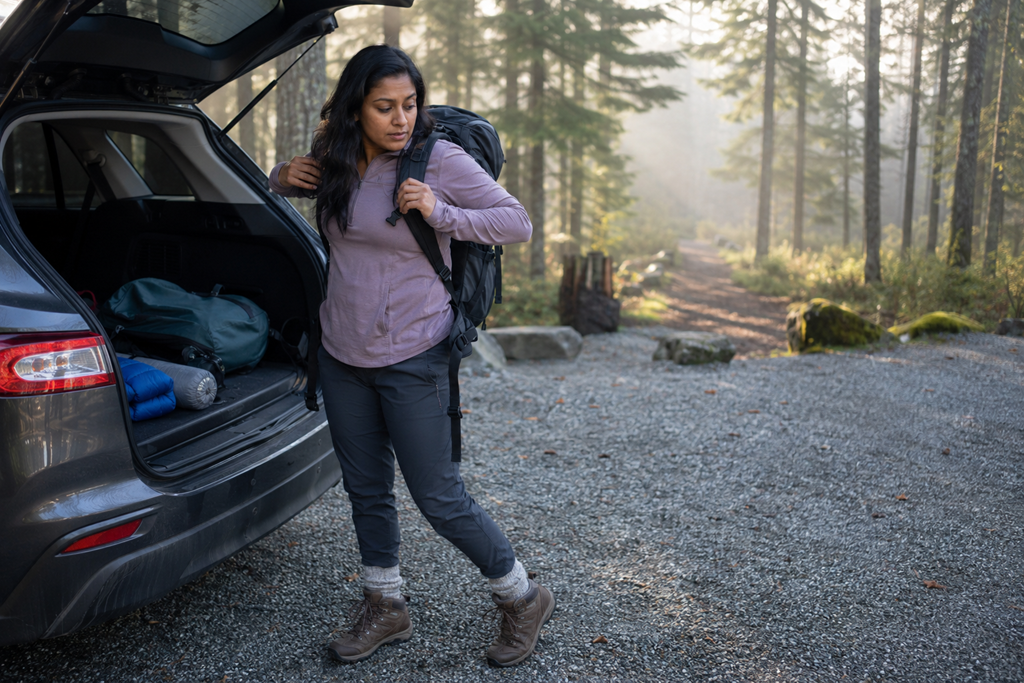
Many people choose backpacking because it gives them a simple, physical way to step outside the pressure, repetition, and mental noise of everyday life. It is not only about hiking far or seeing beautiful places. For many people, backpacking creates a rare kind of reset: fewer distractions, fewer decisions, more movement, more quiet, and a stronger sense of being present.
In daily life, stress often builds quietly. Work tasks, bills, messages, family responsibilities, social pressure, and constant screens can make a person feel as if their mind never fully rests. Even when there is nothing seriously wrong, the routine itself can start to feel heavy.
Backpacking appeals to people because it changes the rhythm. Instead of moving through a day built around emails, errands, appointments, and obligations, the day becomes simpler: walk, eat, rest, notice, sleep. That simplicity can feel deeply relieving.
This article was created from the standalone article prompt you provided for LifeStylenaire’s Backpacker Lifestyle category.
Backpacking Offers A Break From Constant Mental Clutter
One reason backpacking feels so different from normal life is that it removes many of the small demands that compete for attention.
At home, the mind often jumps from one thing to another. A person may be answering a message while thinking about dinner, worrying about money, noticing clutter, checking the calendar, and remembering something they forgot to do yesterday. None of those things may feel overwhelming by itself, but together they can create a background hum of tension.
Backpacking narrows the day.
There may still be effort involved, but the effort is more direct. The trail asks clear questions: Where am I going? Do I have enough water? Is this a good place to rest? What does my body need right now?
That kind of focus can feel calming because it gives the mind fewer open loops. Instead of managing dozens of invisible concerns, the backpacker is dealing with what is immediate and real.
The Routine Changes From Performance To Presence
Everyday life often rewards performance. People are expected to be productive, responsive, organized, efficient, pleasant, and available. Over time, that can make life feel like a long series of roles to maintain.
Backpacking shifts attention away from performance and back toward presence.
On the trail, there is less pressure to appear successful, polished, or constantly “on.” Clothing is practical. Food is simple. Progress is measured in steps, weather, daylight, and energy. The body becomes part of the experience again instead of just a tool for getting through responsibilities.
This is one of the quiet reasons backpacking can feel emotionally refreshing. It gives people a chance to exist without constantly proving something.
Simplicity Can Feel Like Relief, Not Deprivation
From the outside, backpacking can look uncomfortable. A person carries gear, sleeps outside, eats basic meals, and accepts a smaller range of choices. But for many backpackers, that reduction is part of the appeal.
Modern life often offers too many choices while giving people too little true rest. What to buy, what to watch, what to answer, what to improve, what to plan, what to fix — the list never really ends.
Backpacking reduces the number of decisions. A person brings what they need and works within that limit. Instead of constantly optimizing, they adapt.
That limitation can create a surprising sense of freedom. When there is less to manage, there is more room to notice the air, the trail, the trees, the quiet, the sound of water, or the feeling of finishing a long day under open sky.
Nature Helps People Feel Less Boxed In
Stress can make life feel narrow. A person may move between the same rooms, roads, buildings, screens, and routines until the world starts to feel smaller than it really is.
Backpacking expands the frame.
Being outside for longer than a quick walk or weekend errand allows the nervous system to experience a different environment. The scale of mountains, forests, lakes, desert trails, or open fields can gently remind a person that their daily stress is real, but it is not the whole world.
That does not make responsibilities disappear. But it can change the way they feel.
A problem that seemed huge while sitting at a desk or scrolling late at night may feel more manageable after a day of walking, breathing fresh air, and being away from constant input. The problem may still need attention, but the person may return with more space around it.
Backpacking Gives Stress Somewhere To Go
Some stress stays stuck because it has no outlet. People may spend hours thinking, worrying, or replaying situations without any real movement or release.
Backpacking adds physical rhythm.
Walking for hours with a pack is not always easy, but it gives the body something steady to do. The movement is repetitive in a grounding way. Step by step, the mind often settles. Thoughts can rise, pass, return, and soften without needing to be solved immediately.
This is different from escaping in a distracted way. Backpacking does not simply numb the mind. It often gives a person enough distance and movement to process what has been building up.
For some people, that is the real gift of the trail. They do not come back with every answer, but they come back less tangled.
The Appeal Is Not Always About Adventure
A common misunderstanding is that people backpack because they are thrill-seekers or because they want extreme adventure. Some do. But many people are drawn to backpacking for quieter reasons.
They want stillness.
They want fewer interruptions.
They want to feel capable again.
They want to remember what it is like to move through a day without being pulled in ten directions.
They want to hear themselves think.
Backpacking can include challenge, but the emotional appeal is often less dramatic than people assume. It is not always about conquering nature or collecting impressive stories. Often, it is about finding a more human pace.
Leaving Routine Can Reveal What Routine Has Been Hiding
One reason backpacking can feel meaningful is that it creates contrast. When a person steps away from everyday life, they may notice things they had stopped noticing.
They may realize how tired they were.
They may notice how often they reach for their phone.
They may see how much of their stress comes from constant availability.
They may recognize that their schedule leaves very little room for quiet.
This can feel uncomfortable at first. Slowing down sometimes makes stress more visible before it feels better. But that visibility can be useful. It helps a person understand what they are actually carrying — emotionally, mentally, and practically.
The backpack itself can become a simple metaphor, but not in a dramatic way. You feel what you bring. You notice what is necessary. You understand that extra weight matters.
That kind of clarity can stay with a person after the trip ends.
Backpacking Does Not Have To Fix Everything To Be Worthwhile
It is easy to overstate the power of getting away. Backpacking is not a cure for burnout, financial pressure, relationship problems, work stress, or deeper emotional strain. A few days outside will not automatically solve the realities waiting at home.
But it can still matter.
A backpacking trip can interrupt a stressful pattern. It can remind someone that they are more than their obligations. It can help them feel their body again, breathe more deeply, sleep under a different rhythm, and return with a little more perspective.
That is enough for many people.
The value is not that backpacking makes life simple forever. The value is that it gives people a direct experience of simplicity, which can make everyday stress feel less permanent and less defining.
The Quiet Reset Many People Are Looking For
Many people choose backpacking to escape everyday stress and routine because it offers something daily life often does not: space, quiet, movement, simplicity, and a slower relationship with time.
It gives people a break from being constantly reachable. It replaces mental clutter with physical presence. It turns the day into something more basic and understandable. It lets the mind loosen without forcing it to perform.
For someone who feels worn down by sameness, pressure, or constant noise, backpacking can feel like stepping back into a more grounded version of life.
Not because the trail is perfect.
Because, for a little while, life becomes simpler enough to feel again.
Download Our Free E-book!