Many people find snorkeling more peaceful than fast-paced water sports because it invites them to slow down instead of perform. Rather than chasing speed, height, distance, or intensity, snorkeling lets a person float, breathe, observe, and stay present with the ocean at a calmer pace.
That simple difference can change the entire feeling of being in the water.
For some people, the appeal of snorkeling is not about adrenaline. It is about quiet movement, gentle curiosity, and the rare feeling of being surrounded by nature without needing to conquer it. The experience can feel active enough to be engaging, but slow enough to let the body and mind settle.
Snorkeling Gives The Water A Softer Pace
Fast-paced water sports often come with a sense of motion and energy. Surfing, wakeboarding, jet skiing, and similar activities can be exciting, but they usually ask the body to react quickly. There may be balance, speed, waves, equipment, timing, or physical effort involved.
Snorkeling feels different.
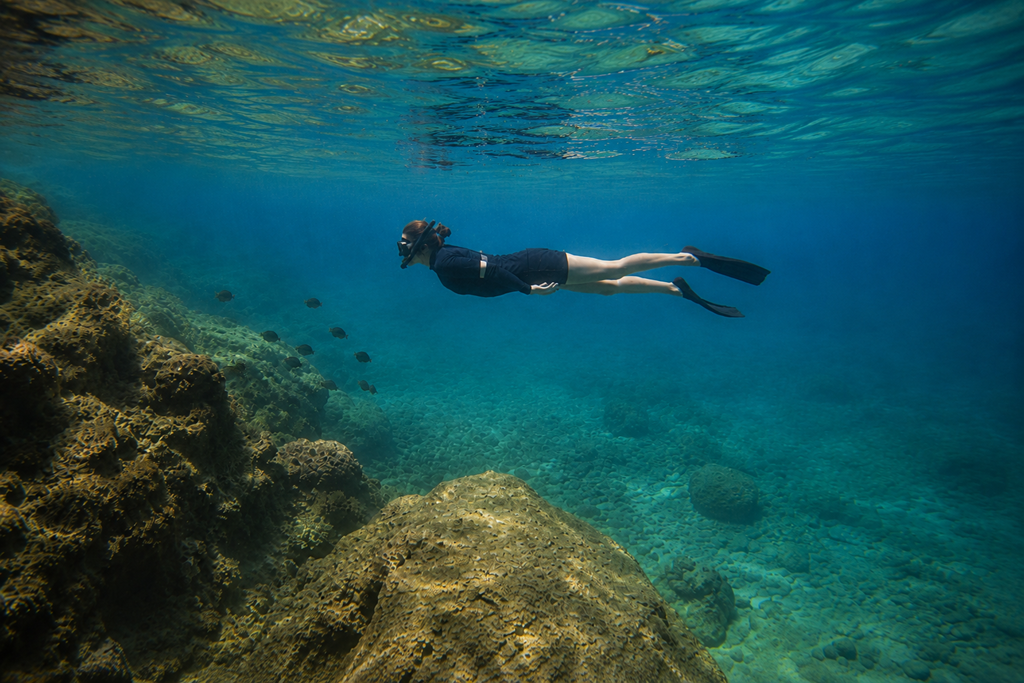
The pace is usually gentler. A snorkeler can move slowly across the surface, pause when something catches their attention, or simply float and look below. Instead of trying to control the water, the person is learning to move with it.
This is part of why snorkeling can feel peaceful even when the ocean itself is full of life. The reef, fish, light, sand, and current may all be changing, but the snorkeler does not have to rush through it.
The Experience Often Feels Quiet Without Being Empty
One of the most calming parts of snorkeling is the way it changes what a person notices.
Above the surface, a beach can feel busy. There may be voices, music, boats, towels, people walking by, and the general activity of a public place. But once someone puts their face in the water, the world can feel quieter almost immediately.
The sound of breathing through the snorkel becomes noticeable. The movement of water becomes more present. The visual focus shifts downward. Instead of scanning the beach or thinking about what comes next, the person starts noticing small things: a fish moving through coral, sunlight on the sand, seagrass swaying, or the slow rhythm of their own body in the water.
That quiet is not empty. It is full, but not overwhelming.
For many people, that is the appeal.
Snorkeling Does Not Ask You To Prove Anything
A major reason snorkeling can feel more peaceful than faster water sports is that it does not usually carry the same pressure to perform.
Many water activities involve a visible skill level. Someone may be trying to catch a wave, stay upright, steer, jump, race, or keep up with a group. That can be fun for people who enjoy challenge, but it can also make the experience feel public and pressured.
Snorkeling is often less performative. The goal is not to look impressive. The goal is usually to experience the underwater world in a simple, accessible way.
A person can be new and still enjoy it. They can go slowly. They can stay in shallow water. They can pause. They can decide they only want to look around for a short time. There is no need to turn the moment into a test.
That lack of pressure can make snorkeling especially appealing to people who want water-based recreation without the emotional weight of “being good at it.”
The Breathing Rhythm Can Help The Body Settle
Snorkeling naturally draws attention to breathing.
Because the face is in the water and the breath moves through a snorkel, people often become more aware of inhale and exhale. They may not think of it as a breathing practice, but the body can still respond to the rhythm.
Slower breathing can make the experience feel steadier. The person may begin to relax their shoulders, kick less aggressively, and float with more ease. The water supports the body, while the breath gives the mind something simple to return to.
This does not mean snorkeling is automatically relaxing for everyone at first. Some beginners feel awkward with the mask, snorkel, fins, or the sensation of breathing while looking underwater. But once the basic comfort level is there, the breathing rhythm often becomes part of what makes snorkeling feel peaceful.
The Underwater View Creates A Different Kind Of Attention
Fast-paced water sports often focus attention outward and ahead. A person may be watching for waves, speed, obstacles, turns, balance, or direction.
Snorkeling shifts attention downward and inward at the same time.
The snorkeler is looking at another world, but the way they look is usually slow and absorbed. There is no need to process everything at once. A small patch of reef can become interesting. A single fish can hold attention. A shadow, color, or movement can become enough.
This kind of attention feels different from entertainment. It is more like observation.
That matters because many people spend daily life surrounded by fast information, fast decisions, and fast reactions. Snorkeling offers a rare form of attention that is still active but not frantic.
Peaceful Does Not Mean Boring
A common misunderstanding is that peaceful activities are less interesting than exciting ones. Snorkeling shows why that is not always true.
Peaceful does not mean dull. It means the experience does not rely on intensity to feel meaningful.
Snorkeling can still be surprising, beautiful, memorable, and emotionally rich. Seeing marine life in its natural environment can feel deeply engaging. Floating over clear water can feel restorative. Noticing details that are easy to miss from land can make the ocean feel more personal.
The difference is that snorkeling usually offers interest without constant stimulation.
That is an important distinction. Some people are not looking for a water sport that raises their heart rate or pushes their limits. They are looking for something that helps them feel more connected, more present, and less pulled in every direction.
It Can Make The Ocean Feel More Approachable
For people who feel intimidated by the ocean, snorkeling can sometimes make the water feel more approachable than high-speed or high-skill activities.
Instead of entering the ocean through competition, performance, or force, snorkeling introduces the water through curiosity. The person can start in calm, shallow areas. They can stay near shore. They can move at their own pace and focus on comfort before distance.
This can be especially helpful for people who want to enjoy the ocean but do not identify as adventurous in a dramatic way. They may not want to jump into something intense. They may simply want to experience the water without feeling overwhelmed.
Snorkeling creates space for that kind of person.
It says, in effect, that enjoying the ocean does not have to mean being fearless, fast, or highly skilled. It can mean being attentive, patient, and open to what is already there.
The Calm Comes From Letting The Experience Be Simple
The peacefulness of snorkeling often comes from its simplicity.
There is a mask, a snorkel, usually fins, and a place to look. There is no need to turn the activity into a major achievement. The value is in the moment itself.
That simplicity can be refreshing because many hobbies become complicated quickly. Gear, goals, comparisons, social media, and expectations can turn a relaxing interest into another thing to manage. Snorkeling is not immune to that, but at its best, it reminds people that some experiences do not need to be maximized.
A short, gentle snorkel in clear, safe water can be enough.
That “enough” is part of the peace.
Why This Difference Matters
The difference between snorkeling and fast-paced water sports matters because people often assume recreation has to be exciting to be worthwhile.
But not everyone needs more intensity. Some people need softness. Some need quiet. Some need a way to reconnect with nature without feeling like they are chasing a result.
Snorkeling can offer that. It gives people a way to be active without being rushed, curious without being pressured, and engaged without being overstimulated.
For many, that is why snorkeling feels so peaceful. It is not just about what they see underwater. It is about how the experience allows them to feel while they are there: slower, steadier, quieter, and more present.
Download Our Free E-book!